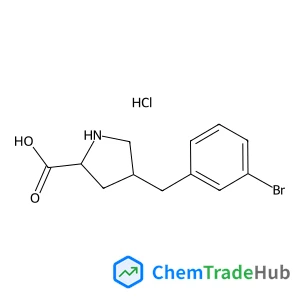
(2S,4R)-4-(3-Bromobenzyl)pyrrolidine-2-carboxylic acid hydrochloride
CAS番号:
1049734-10-2
分子式:
C12H15BrClNO2
Bhavesh Sinha, Ganesh Agawane, Sharad Vanalakar, In young Kim, Jin Young Kim, Sampat S. Kale, Pramod Patil, Jin Hyeok Kim
The sulfur ion concentration dependent morphological evolution and its subsequent effect on photo-electrochemical properties of chemically synthesized CdS thin films have been systematically investigated. The plausible growth mechanism for the morphological evolution of CdS thin films due to a change in sulfur ion concentration has been proposed. Scanning electron micrographs (SEMs) reveal that the morphology of CdS thin films has been changed from spherical grains to vertically aligned nanoflakes by systematic control of sulfur ion concentration. This article elucidates the astute relationships between precursor concentrations, reaction rate and morphological evolution. The X-ray diffraction (XRD) patterns reveal the formation of hexagonal wurtzite CdS thin films with the preferred (002) orientation for CdS nanoflakes, which is further supported by the analysis of the high resolution transmission electron micrographs (HRTEMs). Optical absorption studies show a red shift in the absorption edge with an increase in sulfur concentration. The beneficial role of nanoflake formation is easily reflected in the photo-electrochemical performance. Improved solar cell performances are observed for CdS nanoflakes grown with a sulfur to cadmium ion concentration ratio of 4 (S : Cd = 4).
H. Kearns, N. C. Shand, W. E. Smith, K. Faulds, D. Graham
DOI: 10.1039/C4CP04281F
Mrinmoy Biswas, Madhab Dule, Pabitra N. Samanta, Sharmistha Ghosh, Tarun K. Mandal
DOI: 10.1039/C4CP01324G
DOI: 10.1039/C4CP01351D
Aihua Wu
DOI: 10.1039/C4CP01858C
M. Yu. Lavrentiev, J. S. Wróbel, D. Nguyen-Manh, S. L. Dudarev
DOI: 10.1039/C4CP01366B
Paola Nava, Yannick Carissan
DOI: 10.1039/C4CP01695E
Sebastian Zuluaga, Li-Hong Liu, Natis Shafiq, Sara M. Rupich, Jean-François Veyan, Yves J. Chabal, Timo Thonhauser
DOI: 10.1039/C4CP05164E
Nabin Kumar Pal, Carola Kryschi
DOI: 10.1039/C4CP03683B
Hazim F. EL-Sharif, Daniel M. Hawkins, Derek Stevenson, Subrayal M. Reddy
DOI: 10.1039/C4CP01798F
Jaroslav V. Burda
DOI: 10.1039/C4CP02307B
4'-ブロモビフェニル-3-メトークシーディ.ActionBarは、冷暗所で、直射日光を避け、密栓の容器に保存し、遠隔場所に保管してください。温度は常温(0〜2...
2-異丙基フェニルヒドラジン塩酸塩は、CAS番号58928-82-8を有する化合物で、構造式はC11H14N2HClです。これは塩基性化合物であり、水に溶けやす...
5-(4-クロロフェニル)-4H-1,2,4-三氮唑-3-アミンは取り扱いに注意が必要です。PPEとして防塵マスク、ゴーグル、手袋を使用し、ドラフトチャンバーを...
去甲基雷贝拉唑硫醚は、ベンジミダゾール硫化物と3-メチル-4-ピリジノールの反応によって合成されます。具体的には、2-チオキシドベンジミダゾールと3-メチル-4...
2-ブロモ-5-フロロ-N-(2-フェノールメチル)ベンゼンウレアは、毒性や刺激性の実験データに基づき、適切な取扱いと防護措置を講じることで安全に使用できます。...
対甲苯磺酸酯-四聚乙二醇-四氢吡喃醚のCAS番号は86259-89-4です。この化合物は無色の液体で、分子量は約724.8です。高濃度では溶血性が報告されており...
2-(3-(二氟甲基)-4-氟苯基)-4,4,5,5-四甲基-1,3,2-二噁硼戊環は、室温で暗い場所に保管し、直射日光から遠ざけ、容器は密閉状態で保存してくだ...
この化合物の代替品には、ピロリミジン酸やその類似物、またピロリミジンカルボン酸の他の異性体があります。これらの代替品は、特定の化学反応や目的に応じて選択すること...
5-クロロベンゾ[1,3]二オキセイン-4-アミンはCAS番号379228-45-2に該当します。この化合物はGHS分類でH314(接触により急性毒性がある)と...

Physical Chemistry Chemical Physics (PCCP) is an international journal co-owned by 19 physical chemistry and physics societies from around the world. This journal publishes original, cutting-edge research in physical chemistry, chemical physics and biophysical chemistry. To be suitable for publication in PCCP, articles must include significant innovation and/or insight into physical chemistry; this is the most important criterion that reviewers and Editors will judge against when evaluating submissions. The journal has a broad scope and welcomes contributions spanning experiment, theory, computation and data science. Topical coverage includes spectroscopy, dynamics, kinetics, statistical mechanics, thermodynamics, electrochemistry, catalysis, surface science, quantum mechanics, quantum computing and machine learning. Interdisciplinary research areas such as polymers and soft matter, materials, nanoscience, energy, surfaces/interfaces, and biophysical chemistry are welcomed if they demonstrate significant innovation and/or insight into physical chemistry. Joined experimental/theoretical studies are particularly appreciated when complementary and based on up-to-date approaches.
![(1S)-1,5-Anhydro-2-O-alpha-L-arabinopyranosyl-1-[5-hydroxy-7-({6-O-[3-(4-hydroxy-3-methoxyphenyl)propanoyl]-beta-D-glucopyranosyl}oxy)-2-(4-hydroxyphenyl)-4-oxo-4H-chromen-6-yl]-D-glucitol structure](https://static.chemtradehub.com/structs/225/2252345-81-4-bcff.webp "(1S)-1,5-Anhydro-2-O-alpha-L-arabinopyranosyl-1-[5-hydroxy-7-({6-O-[3-(4-hydroxy-3-methoxyphenyl)propanoyl]-beta-D-glucopyranosyl}oxy)-2-(4-hydroxyphenyl)-4-oxo-4H-chromen-6-yl]-D-glucitol structure")
![Ethyl thieno[3,2-f]quinoline-2-carboxylate structure](https://static.chemtradehub.com/structs/299/29948-26-3-f62b.webp "Ethyl thieno[3,2-f]quinoline-2-carboxylate structure")