












![[(2R)-6,6-Dimethyl-2-morpholinyl]methanol hydrochloride (1:1) structure](https://static.chemtradehub.com/structs/141/1416444-88-6-e06a.webp "[(2R)-6,6-Dimethyl-2-morpholinyl]methanol hydrochloride (1:1) structure")
Establishing the pivotal role of local aromaticity in the electronic properties of boron-nitride graphene lateral hybrids
文献情報
出版日
2016-08-16
DOI
10.1039/C6CP04502B
インパクトファクター
3.676
著者
Claude Pouchan, Michel Rérat, Panaghiotis Karamanis
原文を見る
要旨
Within an attempt to unravel the conundrum of irregular bandgap variations in hybrids of white-graphene (hBN) and graphene (G) observed in both experiment and theory, strong proofs about the decisive role of aromaticity in their electronic properties are brought to light. Sound numerical experiments conducted on zero-, one- and two-dimensional hBNG hybrids demonstrate that upon structural and/or electronic perturbation caused by foreign doping agents, the uniformity in local cyclic electron delocalization of ideal graphene restructures locally creating carbon hexagons of contrasting cyclic electron delocalization (c.c. local aromatic patterns) which may dominate the bandgap size of the resulting systems. In addition, relying on the quantum chemical aspect of aromaticity in terms of quantitative computations of cyclic electron delocalization together with pictorial intrinsic polarizability density representations, this work provides a solid and handy rule-of-thumb to be used in qualitative and intuitive predictions. According to this empirical rule, the origin of any nonmonotonic bandgap variation observed in stoichiometric 0D (BN)n/graphene hybrids with increasing hBN segment lies in instabilities caused by partially substituted benzenoid rings formed locally at the hBNG interfaces. This relationship, established in 0D graphene flakes and extended to 1D periodic ribbons, can be used to understand and qualitatively predict conflicting bandgap variations of vacancy-free 2D periodic lattices, pointing at the property of aromaticity as the missing link needed to solve the puzzle of conflicting bandgap variations in hBNG hybrids observed in experiment.
関連文献
Hyaluronan-coated polybenzofulvene brushes as biomimetic materials
Andrea Cappelli, Marco Paolino, Giorgio Grisci, Vincenzo Razzano, Germano Giuliani, Alessandro Donati, Claudia Bonechi, Raniero Mendichi, Salvatore Battiato, Filippo Samperi, Cinzia Scialabba, Gaetano Giammona, Francesco Makovec
2016-10-05
Paper
DOI: 10.1039/C6PY01644H
Facile synthesis and chiral recognition of block and star copolymers containing stereoregular helical poly(phenyl isocyanide) and polyethylene glycol blocks
Na Liu, Cui-Hong Ma, Rui-Wen Sun, Jian Huang, Chonglong Li, Zong-Quan Wu
2017-03-09
Paper
DOI: 10.1039/C7PY00028F
Post-polymerization modification of the side chain in optically active polymers by thiol–ene reaction
Naoya Kanbayashi, Sou Miyamoto, Yuki Ishido, Taka-aki Okamura, Kiyotaka Onitsuka
2016-12-06
Paper
DOI: 10.1039/C6PY01946C
RAFT polymerization to form stimuli-responsive polymers
2016-11-22
Review Article
DOI: 10.1039/C6PY01849A
Correction: Synthesis of midblock-quaternized triblock copolystyrenes as highly conductive and alkaline-stable anion-exchange membranes
Meng Zhu, Quan Chen, Yanxia Su, Zhijie Zhang, Lei Liu, Yiguang Wang, Linan An, Nanwen Li
2017-03-23
Correction
DOI: 10.1039/C7PY90053H
Copolymerization of alkyl diazoacetates with α,β-unsaturated aldehydes: synthesis and application
Yan Li, Cheng Chen, Jinlong Wu, Xiangxiang Jia, Yufan Lu, Fangjuan Chen, Lijian Liu
2016-10-03
Paper
DOI: 10.1039/C6PY01666A
Efficient unimolecular photoinitiators for simultaneous hybrid thiol–yne–epoxy photopolymerization under visible LED light irradiation
Zhiquan Li, Weizhen Shen, Xiaoya Liu, Ren Liu
2017-01-30
Paper
DOI: 10.1039/C7PY00159B
The ring-opening polymerization of ε-caprolactone and l-lactide using aluminum complexes bearing benzothiazole ligands as catalysts
Yen-Tzu Huang, Wei-Chu Wang, Chun-Pin Hsu, Wei-Yi Lu, Wan-Jung Chuang, Yi-Chun Lai, Hsuan-Ying Chen
2016-05-31
Paper
DOI: 10.1039/C6PY00569A
Mussel-inspired post-heparinization of a stretchable hollow hydrogel tube and its potential application as an artificial blood vessel
Yingying Teng, Chuanxiong Nie
2017-03-13
Paper
DOI: 10.1039/C7PY00071E
こちらもおすすめ
化合物よくある質問
2,3-スチオエポキシマドルを取り扱う際の実験室安全事項は何ですか?
取り扱いにはPPE(プロテクティブ・パーソナル・エイド)が必要で、防ぐ手袋と保護眼鏡を着用してください。ドラフトチャンバーの使用を推奨します。漏洩した場合は、適...
4267-80-52,3-Thioepoxy Madol
53981-25-22-Amino-6-fluorophen...
化合物よくある質問
BOC-S-3-アミニ-4-(4-メチオキシベンチル)-ブタン酸の代替品はありますか?
この化合物の代替品としては、BOC保護基を有さないアミノ酸やその他の保護基化合物が考えられます。また、メチオキシ基を有しない他の芳香族アミノ酸も代替品として挙げ...
126800-59-7(3S)-4-(4-Methoxyphe...
化合物よくある質問
Methyl 2-(chloromethyl)-3-nitrobenzoate(1218910-61-2)の代替品はありますか?
Methyl 2-(chloromethyl)-3-nitrobenzoate(1218910-61-2)の代替品としては、化学組成を変えることで効果を達成する...
1218910-61-2Methyl 2-(chlorometh...
化合物よくある質問
(2R)-2-アミノ-N-ベンジル-3-ヒドロキシプロパナミドを含む廃棄物はどのように処理すべきですか?
(2R)-2-アミノ-N-ベンジル-3-ヒドロキシプロパナミドを含む廃棄物は、適切な廃棄物管理ガイドラインに基づき処理する必要があります。まず、廃棄物を適切に収...
175481-39-7(2R)-2-amino-N-benzy...
化合物よくある質問
6,7-二氢-咪唑並[1,2-a]ピリドイン-8(5h)-酮はどのように合成されますか?
6,7-二氢-咪唑並[1,2-a]ピリドイン-8(5h)-酮は、2-ブロモフェニルアセトインとリン酸ハロゲン化物を反応させることで合成できます。この反応は高温で...
457949-09-66,7-Dihydroimidazo[1...
化合物よくある質問
エチル(3R)-3-ピロリジニル酢酸水和塩とは何ですか?
エチル(3R)-3-ピロリジニル酢酸水和塩は、CAS番号1332459-32-1の化合物で、(R)-乙基2-(ピロリジン-3-基)酢酸塩水和塩と呼ばれます。この...
1332459-32-1Ethyl (3R)-3-pyrroli...
化合物よくある質問
(2S)-{[(2-メチルエチルオキシ]カルボニル}アミノ)[2-(トリアフルオロメチルフェニル]エチカシック酸の物理化学的性質は何ですか?
(2S)-{[(2-メチルエチルオキシ]カルボニル}アミノ)[2-(トリアフルオロメチルフェニル]エチカシック酸のCAS番号は1203454-45-8です。この...
1203454-45-8(2S)-({[(2-Methyl-2-...
化合物よくある質問
2-ブロモ-1-(2-メチル-2-プロパニル)-4-ニトロベンゼンはどのように保存すればよいですか?
2-ブロモ-1-(2-メチル-2-プロパニル)-4-ニトロベンゼンは、直射日光を避けて暗所で、室温(約15℃〜25℃)、乾燥した場所に保存する必要があります。ま...
6310-17-42-Bromo-1-(2-methyl-...
化合物よくある質問
1-[(4-硝基フェニル)スルホニル]-1H-1,2,4-三唑の市場動向や研究トレンドはどうですか?
市場動向としては、1-[(4-硝基フェニル)スルホニル]-1H-1,2,4-三唑は主に農業用除草剤や合成化学製品の原料として利用されています。研究トレンドとして...
57777-84-11-[(4-Nitrophenyl)su...
掲載誌
Physical Chemistry Chemical Physics

CiteScore:
5.5
自己引用率:
10.3%
年間論文数:
3036
Physical Chemistry Chemical Physics (PCCP) is an international journal co-owned by 19 physical chemistry and physics societies from around the world. This journal publishes original, cutting-edge research in physical chemistry, chemical physics and biophysical chemistry. To be suitable for publication in PCCP, articles must include significant innovation and/or insight into physical chemistry; this is the most important criterion that reviewers and Editors will judge against when evaluating submissions. The journal has a broad scope and welcomes contributions spanning experiment, theory, computation and data science. Topical coverage includes spectroscopy, dynamics, kinetics, statistical mechanics, thermodynamics, electrochemistry, catalysis, surface science, quantum mechanics, quantum computing and machine learning. Interdisciplinary research areas such as polymers and soft matter, materials, nanoscience, energy, surfaces/interfaces, and biophysical chemistry are welcomed if they demonstrate significant innovation and/or insight into physical chemistry. Joined experimental/theoretical studies are particularly appreciated when complementary and based on up-to-date approaches.
おすすめ化合物
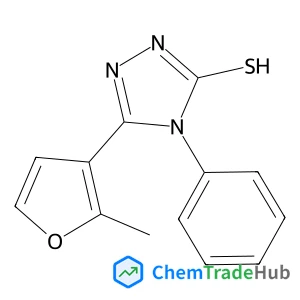
5-(2-Methyl-3-furyl)-4-phenyl-2,4-dihydro-3H-1,2,4-triazole-3-thione
CAS番号:
346464-59-3
分子式:
C13H11N3OS
![(R)-N-[(S)-1-[2-(Diphenylphosphino)phenyl]ethyl]-2-methylpropane-2-sulfinamide structure](https://static.chemtradehub.com/structs/159/1595319-98-4-33e7.webp "(R)-N-[(S)-1-[2-(Diphenylphosphino)phenyl]ethyl]-2-methylpropane-2-sulfinamide structure")
![N-[2-(2-Pyridinyl)ethyl]-1-propanamine structure](https://static.chemtradehub.com/structs/554/55496-57-6-22b4.webp "N-[2-(2-Pyridinyl)ethyl]-1-propanamine structure")
おすすめサプライヤー





免責事項
このページに表示される学術雑誌情報は、参考および研究目的のみを目的としています。当社は雑誌出版社とは提携しておらず、投稿の取り扱いも行っておりません。出版に関するお問い合わせは、各雑誌出版社に直接ご連絡ください。
表示されている情報に誤りがある場合は、support@chemtradehub.com までご連絡ください。迅速に確認し、対応いたします。