












Transfer of complexed and dissociated ionic species at soft interfaces: a voltammetric study of chemical kinetic and diffusional effects
文献情報
出版日
2016-03-10
DOI
10.1039/C6CP00780E
インパクトファクター
3.676
著者
Eduardo Laborda, José Manuel Olmos, Ángela Molina
原文を見る
要旨
A new transfer mechanism is considered in which two different ionic species of the same charge can be transferred across a soft interface while they interconvert with each other in the original phase through a homogeneous chemical reaction: the aqueous complexation–dissociation coupled to transfer (ACDT) mechanism. This can correspond to a free ion in aqueous solution in the presence of a neutral ligand that complexes it leading to a species that can be more or less lipophilic than the free ion. As a result, the transfer to the organic phase can be facilitated or hindered by the aqueous-phase chemical reaction. Rigorous and approximate explicit analytical solutions are derived for the study of the above mechanism via normal pulse voltammetry, derivative voltammetry and chronoamperometry at macrointerfaces. The solutions enable us to examine the process whatever the species' lipophilicity and diffusivity in each medium and the kinetics and thermodynamics of the chemical reaction in solution. Moreover, when the chemical reaction is at equilibrium, explicit expressions for cyclic voltammetry and square wave voltammetry are obtained. With this set of equations, the influence of different physicochemical phenomena on the voltammetric response is studied as well as the most suitable strategies to characterize them.
関連文献
Macroscopic and local approaches of phase transition in sol–gel synthesized (Bi0.5Na0.5)TiO3–SrTiO3 thin films
Hyun-Young Lee, Jin Luo, Zhen Zhou, Wei Sun, Jing-Feng Li
2018-05-01
Paper
DOI: 10.1039/C8CP01830H
Charge-induced structural transition between seashell-like B29− and B29+ in 18 π-electron configurations
Hai-Ru Li, Miao Yan, Qiang Chen, Yue-Wen Mu, Hai-Gang Lu, Yan-Bo Wu, Si-Dian Li
2018-05-02
Paper
DOI: 10.1039/C8CP01078A
Detection of simple inorganic and organic molecules over Cu-decorated circumcoronene: a combined DFT and QTAIM study
Lukáš Bučinský, Filipe Teixeira, M. Natália D. S. Cordeiro
2018-05-16
Paper
DOI: 10.1039/C8CP02035C
Thermodiffusion of repulsive charged nanoparticles – the interplay between single-particle and thermoelectric contributions
M. Kouyaté, G. Demouchy, G. Mériguet, R. Aquino, E. Dubois, S. Nakamae, M. Roger, J. Depeyrot, R. Perzynski
2018-05-23
Paper
DOI: 10.1039/C8CP02558D
Self-assembly and friction of glycerol monooleate and its hydrolysis products in bulk and confined non-aqueous solvents
Joshua L. Bradley-Shaw, Philip J. Camp, Peter J. Dowding
2018-06-22
Paper
DOI: 10.1039/C8CP01785A
White-light generation from all-solution-processed OLEDs using a benzothiazole–salophen derivative reactive to the ESIPT process
José Carlos Germino, Jônatas Faleiro Berbigier, Cristina Aparecida Barboza, Marcelo Meira Faleiros, Deborah de Alencar Simoni, Miguel Tayar Galante, Matheus Serra de Holanda, Fabiano Severo Rodembusch, Teresa Dib Zambon Atvars
2018-11-27
Paper
DOI: 10.1039/C8CP06485G
The evaporation kinetics of pure water droplets at varying drying rates and the use of evaporation rates to infer the gas phase relative humidity
Yong-yang Su, Rachael E. H. Miles, Zhi-ming Li, Jonathan P. Reid, Jiang Xu
2018-08-31
Paper
DOI: 10.1039/C8CP05250F
Significant effect of Mg-pressure-controlled annealing: non-stoichiometry and thermoelectric properties of Mg2−δSi1−xSbx
Kouta Iwasaki, Masahito Yoshino, Tomoaki Yamada, Takanori Nagasaki
2018-10-08
Paper
DOI: 10.1039/C8CP04839H
Quantitative structure–property relationship approach to predicting xylene separation with diverse exchanged faujasites
Y. Khabzina, C. Laroche, J. Pérez-Pellitero, D. Farrusseng
2018-08-28
Paper
DOI: 10.1039/C8CP04042G
こちらもおすすめ
化合物よくある質問
2-ブロモ-9,9-ジフェニル-9H-フルオレンの主な用途は何ですか?
2-溴-9,9-二苯基芴は、医薬品、工業材料、有機合成の研究分野で応用されます。特に、レーザー材料や機能性ポリマーの合成に使用されることがあります。また、蛍光色...
474918-32-62-Bromo-9,9-diphenyl...
化合物よくある質問
四氯化铱の市場動向や研究トレンドはどうですか?
四氯化铱の市場は研究開発分野で注目されており、特にナノ技術や金属有機框架(MOFs)の分野での需要が増加傾向にあります。価格は安定しており、中国や韓国での生産が...
207399-11-9Tetrachloroiridium h...
882-06-44-Nitrocinnamic acid
化合物よくある質問
1-(4-溴-3-氟苯基)-2-氯乙酮を含む廃棄物はどのように処理すべきですか?
1-(4-溴-3-氟苯基)-2-氯乙酮 (CAS番号: 1260857-14-4) の廃棄物は専門的な廃棄処理が必要です。まず、廃棄物は密閉された容器に収集し、...
1260857-14-41-(4-Bromo-3-fluorop...
化合物よくある質問
苦参酚Kとは何ですか?
苦参酚Kは、CAS番号101236-49-1を持つ化合物で、主に天然由来の生薬から抽出されます。この化合物は、抗炎症作用や抗癌作用を持つことが報告されています。
101236-49-1Kushenol K
化合物よくある質問
POTASSIUM (1-(TERTBUTOXYCARBONYL)AZETIDIN-3-YL)TRIFLUOROBORATE を含む廃棄物はどのように処理すべきですか?
POTASSIUM (1-(TERTBUTOXYCARBONYL)AZETIDIN-3-YL)TRIFLUOROBORATE を含む廃棄物は、まず安全なエント...
1430219-73-0Potassium (1-(tert-b...
化合物よくある質問
4-庚基-4’-联苯羧酸の市場動向や研究トレンドはどうですか?
4-庚基-4’-聯苯羧酸は、特殊化学品や合成化学の分野で用いられる化学物質ですが、市場動向としては、研究開発の進展とともに需要が増加しています。また、環境配慮型...
58573-94-74'-Heptyl-4-biphenyl...
化合物よくある質問
6-ブロモ-3-メトキシ-1-フェニル-1H-インドゾールを含む廃棄物はどのように処理すべきですか?
6-ブロモ-3-メトキシ-1-フェニル-1H-インドゾールを含む廃棄物は、適切な化学廃棄処理が必要です。通常、廃棄物は密閉容器に収集され、専門の廃棄処理業者に引...
1332527-03-36-Bromo-3-methoxy-1-...
化合物よくある質問
4,4-二甲基-2-吡咯烷酮はどの業界で使用されていますか?
4,4-二甲基-2-吡咯烷酮は医薬、ポリマー、センサー、半導体などの業界で広く使用されています。特に溶媒としての性能が高く評価されています。
66899-02-34,4-dimethylpyrrolid...
51312-42-6Sodium Phosphotungst...
掲載誌
Physical Chemistry Chemical Physics

CiteScore:
5.5
自己引用率:
10.3%
年間論文数:
3036
Physical Chemistry Chemical Physics (PCCP) is an international journal co-owned by 19 physical chemistry and physics societies from around the world. This journal publishes original, cutting-edge research in physical chemistry, chemical physics and biophysical chemistry. To be suitable for publication in PCCP, articles must include significant innovation and/or insight into physical chemistry; this is the most important criterion that reviewers and Editors will judge against when evaluating submissions. The journal has a broad scope and welcomes contributions spanning experiment, theory, computation and data science. Topical coverage includes spectroscopy, dynamics, kinetics, statistical mechanics, thermodynamics, electrochemistry, catalysis, surface science, quantum mechanics, quantum computing and machine learning. Interdisciplinary research areas such as polymers and soft matter, materials, nanoscience, energy, surfaces/interfaces, and biophysical chemistry are welcomed if they demonstrate significant innovation and/or insight into physical chemistry. Joined experimental/theoretical studies are particularly appreciated when complementary and based on up-to-date approaches.
おすすめ化合物
![N-[(Benzyloxy)carbonyl]serine structure](https://static.chemtradehub.com/structs/276/2768-56-1-77f7.webp "N-[(Benzyloxy)carbonyl]serine structure")
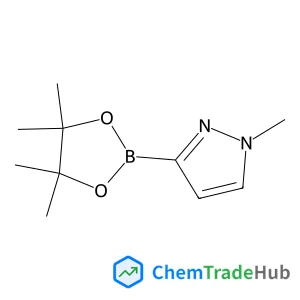
1-Methyl-3-(4,4,5,5-tetramethyl-1,3,2-dioxaborolan-2-yl)-1H-pyrazole
CAS番号:
1020174-04-2
分子式:
C10H17BN2O2
おすすめサプライヤー



免責事項
このページに表示される学術雑誌情報は、参考および研究目的のみを目的としています。当社は雑誌出版社とは提携しておらず、投稿の取り扱いも行っておりません。出版に関するお問い合わせは、各雑誌出版社に直接ご連絡ください。
表示されている情報に誤りがある場合は、support@chemtradehub.com までご連絡ください。迅速に確認し、対応いたします。