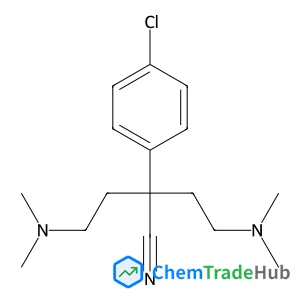
2-(4-Chlorophenyl)-4-(dimethylamino)-2-(2-(dimethylamino)ethyl)butanenitrile
CAS番号:
1246816-57-8
分子式:
C16H24ClN3
Joen J. Hermans, Annelies van Loon, Piet D. Iedema
The formation and crystallization of metal soaps in oil paint layers is an important issue in the conservation of oil paintings. The chemical reactions and physical processes that are involved in releasing metal ions from pigments and fatty acids from the oil binder to form crystalline metal soap deposits have so far remained poorly understood. We have used a combination of differential scanning calorimetry (DSC) and attenuated total reflection Fourier transform infrared spectroscopy (ATR-FTIR) on model mixtures of palmitic acid, lead palmitate or zinc palmitate and linseed oil to study the transition from amorphous material to crystalline fatty acid or metal soap. This transition forms the final stage in the cascade of processes leading to metal soap-related oil paint degradation. Palmitic acid as well as the metal soaps showed nearly ideal solubility behavior. However, it was found that, near room temperature, both lead and zinc palmitate are practically insoluble in both liquid and partially polymerized linseed oil. Interestingly, the rate of metal soap and fatty acid crystallization decreased rapidly with the degree of linseed oil polymerization, possibly leading to systems where metal soaps are kinetically trapped in a semi-crystalline state. To explain the various morphologies of metal soap aggregates observed in oil paint layers, it is proposed that factors affecting the probability of crystal nucleation and the rate of crystal growth play a crucial role, like exposure to heat or cleaning solvents and the presence of microcracks.
Anna L. Jongerius, Pieter C. A. Bruijnincx, Bert M. Weckhuysen
DOI: 10.1039/C3GC41150H
Krista L. Morley, Stephan Grosse, Hannes Leisch
DOI: 10.1039/C3GC40748A
Anthony F. Masters, Thomas Maschmeyer
DOI: 10.1039/C3GC41313F
Yin Ngai Sum, Dingyi Yu, Yugen Zhang
DOI: 10.1039/C3GC41269E
DOI: 10.1039/C3GC41629A
Jianhua Yang, Dongfang Wang, Wendong Liu, Xi Zhang, Fengling Bian, Wei Yu
DOI: 10.1039/C3GC40941D
Yupu Qiao, Allan D. Headley
DOI: 10.1039/C3GC41024B
Gursong Yoo, Youngmin Yoo, Jong-Hee Kwon, Cornelius Darpito, Sanjiv K. Mishra, Kwanyong Pak
DOI: 10.1039/C3GC41695J
Rohitkumar G. Gore, Lauren Myles, Marcel Spulak, Ian Beadham, Teresa M. Garcia, Stephen J. Connon, Nicholas Gathergood
DOI: 10.1039/C3GC40992A
2-ヒドロキシ-5-ニトロベンジンブロモイドは特定の化学反応に適しているため、代替品は限られています。しかし、同様の構造を持つ2-ヒドロキシ-4-ニトロベンジン...
N-(2-ブロモフェニル)-1-チロール-3-オキソ-3-(ピペリジニル)プロペン-2-イル)ベンゼンアミドは有毒で、皮膚や粘膜に刺激を与える可能性があります。...
この化合物は、新規治療薬の開発に注目されています。市場では、その有効性と安全性が評価され、研究分野では、分子生物学と医薬化学の新たな発見が期待されています。
Succinimidyl-alanyl-phenylalanyl-prolyl-phenylalanine 4-nitroanilide は主に医薬品開発やポ...
メチル6-アミノ-5-クロロピリジン-2-カーボイル酸(CAS番号: 1256794-05-4)の使用には、GHS( Globally Harmonized S...
取り扱いには、耐薬品性の容器を使用し、通気性の良い場所で操作することを推奨します。漏れ時は、SDS(安全データシート)を参照して適切な措置を取ること。手洗いと洗...
(S)-3-ベンZYルピペリジン塩酸塩は、CAS番号1258940-00-9で表される化合物です。これは、(S)-3-苯基哌啶的盐酸盐であり、主に医薬品の原料と...
3,5-二甲基金剛胺は、主に医薬品の原料として使用され、また抗うつ薬や抗アルツハイマー薬の開発に利用されます。さらに、化粧品や食品添加物の製造でも重要な役割を果...
ビス(4-メチル-2-ペンチル)フェニルカルボン酸エステル (CAS番号: 1398066-13-1) の代替品には、ビス(2-エチルヘキシル)フェノールカルボ...

Physical Chemistry Chemical Physics (PCCP) is an international journal co-owned by 19 physical chemistry and physics societies from around the world. This journal publishes original, cutting-edge research in physical chemistry, chemical physics and biophysical chemistry. To be suitable for publication in PCCP, articles must include significant innovation and/or insight into physical chemistry; this is the most important criterion that reviewers and Editors will judge against when evaluating submissions. The journal has a broad scope and welcomes contributions spanning experiment, theory, computation and data science. Topical coverage includes spectroscopy, dynamics, kinetics, statistical mechanics, thermodynamics, electrochemistry, catalysis, surface science, quantum mechanics, quantum computing and machine learning. Interdisciplinary research areas such as polymers and soft matter, materials, nanoscience, energy, surfaces/interfaces, and biophysical chemistry are welcomed if they demonstrate significant innovation and/or insight into physical chemistry. Joined experimental/theoretical studies are particularly appreciated when complementary and based on up-to-date approaches.