












![2,6-Di(thiophen-2-yl)dithieno[3,2-b:2',3'-d]thiophene structure](https://static.chemtradehub.com/structs/910/910788-24-8-5b70.webp "2,6-Di(thiophen-2-yl)dithieno[3,2-b:2',3'-d]thiophene structure")
Rational design of hierarchical ZnO superstructures for efficient charge transfer: mechanistic and photovoltaic studies of hollow, mesoporous, cage-like nanostructures with compacted 1D building blocks
文献情報
出版日
2016-01-19
DOI
10.1039/C5CP07687K
インパクトファクター
3.676
著者
Tridip Ranjan Chetia, Mohammad Shaad Ansari, Mohammad Qureshi
原文を見る
要旨
Mesoporous and hollow zinc oxide (ZnO) hierarchical superstructures assembled with compact 1D building blocks that provide an efficient and faster transport pathway for photo-generated charge carriers have been synthesized using a biomass derived polysaccharide “alginic acid”. To understand the interactions between the organic bio-template and inorganic growth units of ZnO in aqueous medium, the effects of additives such as the alginate ion (ALGI) and ammonium hydroxide (NH4OH), along with the controlled reaction conditions, are investigated using Field Emission Scanning Electron Microscopy (FESEM) and powder X-ray diffraction. Dynamic and steady-state photoluminescence measurements are carried out to understand the charge transfer processes in the compact 1D superstructures. Experimental analyses reveal that the alginate ions, under hydrothermal reaction conditions, act as a structure directing agent and assemble 1D ZnO nanorods (NRs) hierarchically while NH4OH assists the formation of ZnO growth units. A plausible mechanism for ZnO cage formation is proposed based on the experimental observations. Morphology dependent photovoltaic properties of ZnO heterostructures, i.e., for ZnO cages, ZnO NRs and ZnO PNPs, have been studied along with electrochemical impedance spectroscopy (EIS). Enhancement of ∼60% and ∼35% in power conversion efficiency (PCE) is observed in ZnO cage based devices as compared to ZnO NR- and ZnO PNP-based devices, respectively.
関連文献
Life cycle assessment of surfactants: the case of an alkyl polyglucoside used as a self emulsifier in cosmetics
Jérôme Guilbot, Sébastien Kerverdo, Alain Milius, Rémi Escola, Fredrik Pomrehn
2013-10-04
Paper
DOI: 10.1039/C3GC41338A
Direct synthesis of hydrogen peroxide in water in a continuous trickle bed reactor optimized to maximize productivity
Pierdomenico Biasi, Juan García-Serna, Alice Bittante, Tapio Salmi
2013-07-01
Paper
DOI: 10.1039/C3GC40811F
Shape-controlled synthesis of Ag@TiO2 cage-bell hybrid structure with enhanced photocatalytic activity and superior lithium storage
Wei Wang, Lixiang Liu, Yunbo He, Cuiping Li, Yapeng Wang
2013-08-14
Paper
DOI: 10.1039/C3GC41280F
Direct oxidation of secondary alcohol to ester by performic acid
Xiao-Hong Li, Xiang-Guang Meng, Ying Liu, Xiao Peng
2013-09-25
Paper
DOI: 10.1039/C3GC41198B
Structural features of ionic liquids: consequences for material preparation and organic reactivity
Anthony F. Masters, Thomas Maschmeyer
2013-08-12
Critical Review
DOI: 10.1039/C3GC41313F
Palladium supported on a magnetic microgel: an efficient and recyclable catalyst for Suzuki and Heck reactions in water
Jianhua Yang, Dongfang Wang, Wendong Liu, Xi Zhang, Fengling Bian, Wei Yu
2013-09-18
Paper
DOI: 10.1039/C3GC40941D
1,2,3-Trimethoxypropane, a glycerol-based solvent with low toxicity: new utilization for the reduction of nitrile, nitro, ester, and acid functional groups with TMDS and a metal catalyst
Marc Sutter, Leyla Pehlivan, Romain Lafon, Wissam Dayoub, Yann Raoul, Estelle Métay, Marc Lemaire
2013-08-14
Communication
DOI: 10.1039/C3GC41082J
Antioxidant canolol production from a renewable feedstock via an engineered decarboxylase
Krista L. Morley, Stephan Grosse, Hannes Leisch
2013-10-03
Paper
DOI: 10.1039/C3GC40748A
Selective autoxidation of benzylamines: application to the synthesis of some nitrogen heterocycles
Thanh Binh Nguyen, Ludmila Ermolenko, Ali Al-Mourabit
2013-08-14
Communication
DOI: 10.1039/C3GC41186A
Palladium nanoparticles supported on mpg-C3N4 as active catalyst for semihydrogenation of phenylacetylene under mild conditions
Dongshun Deng, Yang Yang, Yutong Gong, Yi Li, Xuan Xu, Yong Wang
2013-06-26
Paper
DOI: 10.1039/C3GC40779A
こちらもおすすめ
化合物よくある質問
2-ヒドロキシ-5-ニトロベンジンブロモイドの代替品はありますか?
2-ヒドロキシ-5-ニトロベンジンブロモイドは特定の化学反応に適しているため、代替品は限られています。しかし、同様の構造を持つ2-ヒドロキシ-4-ニトロベンジン...
772-33-82-(Bromomethyl)-4-ni...
化合物よくある質問
N-(2-ブロモフェニル)-1-チロール-3-オキソ-3-(ピペリジニル)プロペン-2-イル)ベンゼンアミドを取り扱う際の実験室安全事項は何ですか?
N-(2-ブロモフェニル)-1-チロール-3-オキソ-3-(ピペリジニル)プロペン-2-イル)ベンゼンアミドは有毒で、皮膚や粘膜に刺激を与える可能性があります。...
1800044-77-2N-[(1Z)-1-(2-Bromoph...
化合物よくある質問
1,3プロパンジオール,2-[2-(2アミノ-6クロロ-9Hピリミジン-9-イル)エチル-1,1,2,2-D4]-2,3-ジアセタートの市場動向や研究トレンドはどうですか?
この化合物は、新規治療薬の開発に注目されています。市場では、その有効性と安全性が評価され、研究分野では、分子生物学と医薬化学の新たな発見が期待されています。
1020718-81-31,3-Propanediol, 2-[...
579-44-2Ethanone, 2-hydroxy-...
化合物よくある質問
Succinimidyl-alanyl-phenylalanyl-prolyl-phenylalanine 4-nitroanilide はどの業界で使用されていますか?
Succinimidyl-alanyl-phenylalanyl-prolyl-phenylalanine 4-nitroanilide は主に医薬品開発やポ...
128802-73-3succinimidyl-alanyl-...
化合物よくある質問
メチル6-アミノ-5-クロロピリジン-2-カーボイル酸について、適用される法規ガイドラインは何ですか?
メチル6-アミノ-5-クロロピリジン-2-カーボイル酸(CAS番号: 1256794-05-4)の使用には、GHS( Globally Harmonized S...
1256794-05-4Methyl 6-amino-5-chl...
化合物よくある質問
エチル4-(シクロ Pentagonyl)アミノ-2-メチル硫化基ピリミジン-5-カルボキシレートを取り扱う際の実験室安全事項は何ですか?
取り扱いには、耐薬品性の容器を使用し、通気性の良い場所で操作することを推奨します。漏れ時は、SDS(安全データシート)を参照して適切な措置を取ること。手洗いと洗...
211245-62-4ethyl 4-(cyclopentyl...
化合物よくある質問
(S)-3-ベンZYルピペリジン塩酸塩とは何ですか?
(S)-3-ベンZYルピペリジン塩酸塩は、CAS番号1258940-00-9で表される化合物です。これは、(S)-3-苯基哌啶的盐酸盐であり、主に医薬品の原料と...
1258940-00-9(S)-3-Phenylpiperidi...
化合物よくある質問
3,5-二甲基金剛胺の主な用途は何ですか?
3,5-二甲基金剛胺は、主に医薬品の原料として使用され、また抗うつ薬や抗アルツハイマー薬の開発に利用されます。さらに、化粧品や食品添加物の製造でも重要な役割を果...
19988-45-52-(2,3-Dihydroxyphen...
化合物よくある質問
ビス(4-メチル-2-ペンチル)フェニルカルボン酸エステルの代替品はありますか?
ビス(4-メチル-2-ペンチル)フェニルカルボン酸エステル (CAS番号: 1398066-13-1) の代替品には、ビス(2-エチルヘキシル)フェノールカルボ...
1398066-13-1Bis(4-methyl-2-penty...
掲載誌
Physical Chemistry Chemical Physics

CiteScore:
5.5
自己引用率:
10.3%
年間論文数:
3036
Physical Chemistry Chemical Physics (PCCP) is an international journal co-owned by 19 physical chemistry and physics societies from around the world. This journal publishes original, cutting-edge research in physical chemistry, chemical physics and biophysical chemistry. To be suitable for publication in PCCP, articles must include significant innovation and/or insight into physical chemistry; this is the most important criterion that reviewers and Editors will judge against when evaluating submissions. The journal has a broad scope and welcomes contributions spanning experiment, theory, computation and data science. Topical coverage includes spectroscopy, dynamics, kinetics, statistical mechanics, thermodynamics, electrochemistry, catalysis, surface science, quantum mechanics, quantum computing and machine learning. Interdisciplinary research areas such as polymers and soft matter, materials, nanoscience, energy, surfaces/interfaces, and biophysical chemistry are welcomed if they demonstrate significant innovation and/or insight into physical chemistry. Joined experimental/theoretical studies are particularly appreciated when complementary and based on up-to-date approaches.
おすすめ化合物
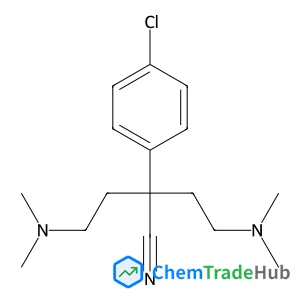
2-(4-Chlorophenyl)-4-(dimethylamino)-2-(2-(dimethylamino)ethyl)butanenitrile
CAS番号:
1246816-57-8
分子式:
C16H24ClN3
おすすめサプライヤー






免責事項
このページに表示される学術雑誌情報は、参考および研究目的のみを目的としています。当社は雑誌出版社とは提携しておらず、投稿の取り扱いも行っておりません。出版に関するお問い合わせは、各雑誌出版社に直接ご連絡ください。
表示されている情報に誤りがある場合は、support@chemtradehub.com までご連絡ください。迅速に確認し、対応いたします。