


Dynamics of GCN4 facilitate DNA interaction: a model-free analysis of an intrinsically disordered region
文献情報
出版日
2015-11-30
DOI
10.1039/C5CP06197K
インパクトファクター
3.676
著者
R. Andrew Byrd, Arthur G. Palmer, III
原文を見る
要旨
Intrinsically disordered proteins (IDPs) and proteins with intrinsically disordered regions (IDRs) are known to play important roles in regulatory and signaling pathways. A critical aspect of these functions is the ability of IDP/IDRs to form highly specific complexes with target molecules. However, elucidation of the contributions of conformational dynamics to function has been limited by challenges associated with structural heterogeneity of IDP/IDRs. Using NMR spin relaxation parameters (15N R1, 15N R2, and {1H}–15N heteronuclear NOE) collected at four static magnetic fields ranging from 14.1 to 21.1 T, we have analyzed the backbone dynamics of the basic leucine-zipper (bZip) domain of the Saccharomyces cerevisiae transcription factor GCN4, whose DNA binding domain is intrinsically disordered in the absence of DNA substrate. We demonstrate that the extended model-free analysis can be applied to proteins with IDRs such as apo GCN4 and that these results significantly extend previous NMR studies of GCN4 dynamics performed using a single static magnetic field of 11.74 T [Bracken, et al., J. Mol. Biol., 1999, 285, 2133–2146] and correlate well with molecular dynamics simulations [Robustelli, et al., J. Chem. Theory Comput., 2013, 9, 5190–5200]. In contrast to the earlier work, data at multiple static fields allows the time scales of internal dynamics of GCN4 to be reliably quantified. Large amplitude dynamic fluctuations in the DNA-binding region have correlation times (τs ≈ 1.4–2.5 ns) consistent with a two-step mechanism in which partially ordered bZip conformations of GCN4 form initial encounter complexes with DNA and then rapidly rearrange to the high affinity state with fully formed basic region recognition helices.
おすすめジャーナル

Journal of Catalysis

Journal of Heterocyclic Chemistry

Journal of Medicinal Chemistry

Planta Medica

Organic Preparations and Procedures International

Helvetica Chimica Acta

Kinetics and Catalysis

Journal of Physics and Chemistry of Solids

Journal of Organometallic Chemistry

European Journal of Wood and Wood Products
関連文献
Novel structurally tuned DAMN receptor for “in situ” diagnosis of bicarbonate in environmental waters
2016-03-02
Communication
DOI: 10.1039/C6AN00218H
Target-controlled in situ formation of G-quadruplex DNAzyme for a sensitive visual assay of telomerase activity
Yaocai Wang, Luzhu Yang, Yanjun Wang, Wei Liu, Baoxin Li, Yan Jin
2019-08-09
Paper
DOI: 10.1039/C9AN01271K
SERS monitoring of the Fenton degradation reaction based on microfluidic droplets and alginate microparticles
Shuai Yue, Wenqi Ye, Zhangrun Xu
2019-08-19
Paper
DOI: 10.1039/C9AN01077G
Spatially resolved endogenous improved metabolite detection in human osteoarthritis cartilage by matrix assisted laser desorption ionization mass spectrometry imaging
M. R. Eveque-Mourroux, P. J. Emans, R. R. M. Zautsen, A. Boonen, R. M. A. Heeren, B. Cillero-Pastor
2019-08-09
Paper
DOI: 10.1039/C9AN00944B
Sequential sandwich immunoassay for simultaneous detection in trace samples using single-channel surface plasmon resonance
Yinqiang Xia, Peiqian Zhang, Hui Yuan, Renliang Huang, Zhimin He
2019-08-21
Paper
DOI: 10.1039/C9AN01183H
A colorimetric probe for the real-time naked eye detection of cyanide and hydroxide ions in tap water: experimental and theoretical studies
Veikko Uahengo, Johannes Naimhwaka, Likius S. Daniel, Ateeq Rahman, Mohamed I. Elzagheid, Ping Cai
2019-09-18
Paper
DOI: 10.1039/C9AN01481K
A near infrared fluorescent probe for the detection and imaging of prolyl aminopeptidase activity in living cells
Xianjun Liu, Quan-Yu Zhang, Fenglin Wang, Jian-Hui Jiang
2019-08-27
Paper
DOI: 10.1039/C9AN01303B
Potentiometric analysis of sialic acid with a flexible carbon cloth based on boronate affinity and molecularly imprinted polymers
Yanli Zhou, Huijie Huangfu, Jie Yang, Hui Dong, Lantao liu, Maotian Xu
2019-09-27
Paper
DOI: 10.1039/C9AN01600G
こちらもおすすめ
化合物よくある質問
2-ブロモ-9,9-ジフェニル-9H-フルオレンの主な用途は何ですか?
2-溴-9,9-二苯基芴は、医薬品、工業材料、有機合成の研究分野で応用されます。特に、レーザー材料や機能性ポリマーの合成に使用されることがあります。また、蛍光色...
474918-32-62-Bromo-9,9-diphenyl...
化合物よくある質問
四氯化铱の市場動向や研究トレンドはどうですか?
四氯化铱の市場は研究開発分野で注目されており、特にナノ技術や金属有機框架(MOFs)の分野での需要が増加傾向にあります。価格は安定しており、中国や韓国での生産が...
207399-11-9Tetrachloroiridium h...
882-06-44-Nitrocinnamic acid
化合物よくある質問
1-(4-溴-3-氟苯基)-2-氯乙酮を含む廃棄物はどのように処理すべきですか?
1-(4-溴-3-氟苯基)-2-氯乙酮 (CAS番号: 1260857-14-4) の廃棄物は専門的な廃棄処理が必要です。まず、廃棄物は密閉された容器に収集し、...
1260857-14-41-(4-Bromo-3-fluorop...
化合物よくある質問
苦参酚Kとは何ですか?
苦参酚Kは、CAS番号101236-49-1を持つ化合物で、主に天然由来の生薬から抽出されます。この化合物は、抗炎症作用や抗癌作用を持つことが報告されています。
101236-49-1Kushenol K
化合物よくある質問
POTASSIUM (1-(TERTBUTOXYCARBONYL)AZETIDIN-3-YL)TRIFLUOROBORATE を含む廃棄物はどのように処理すべきですか?
POTASSIUM (1-(TERTBUTOXYCARBONYL)AZETIDIN-3-YL)TRIFLUOROBORATE を含む廃棄物は、まず安全なエント...
1430219-73-0Potassium (1-(tert-b...
化合物よくある質問
4-庚基-4’-联苯羧酸の市場動向や研究トレンドはどうですか?
4-庚基-4’-聯苯羧酸は、特殊化学品や合成化学の分野で用いられる化学物質ですが、市場動向としては、研究開発の進展とともに需要が増加しています。また、環境配慮型...
58573-94-74'-Heptyl-4-biphenyl...
化合物よくある質問
6-ブロモ-3-メトキシ-1-フェニル-1H-インドゾールを含む廃棄物はどのように処理すべきですか?
6-ブロモ-3-メトキシ-1-フェニル-1H-インドゾールを含む廃棄物は、適切な化学廃棄処理が必要です。通常、廃棄物は密閉容器に収集され、専門の廃棄処理業者に引...
1332527-03-36-Bromo-3-methoxy-1-...
化合物よくある質問
4,4-二甲基-2-吡咯烷酮はどの業界で使用されていますか?
4,4-二甲基-2-吡咯烷酮は医薬、ポリマー、センサー、半導体などの業界で広く使用されています。特に溶媒としての性能が高く評価されています。
66899-02-34,4-dimethylpyrrolid...
51312-42-6Sodium Phosphotungst...
掲載誌
Physical Chemistry Chemical Physics

CiteScore:
5.5
自己引用率:
10.3%
年間論文数:
3036
Physical Chemistry Chemical Physics (PCCP) is an international journal co-owned by 19 physical chemistry and physics societies from around the world. This journal publishes original, cutting-edge research in physical chemistry, chemical physics and biophysical chemistry. To be suitable for publication in PCCP, articles must include significant innovation and/or insight into physical chemistry; this is the most important criterion that reviewers and Editors will judge against when evaluating submissions. The journal has a broad scope and welcomes contributions spanning experiment, theory, computation and data science. Topical coverage includes spectroscopy, dynamics, kinetics, statistical mechanics, thermodynamics, electrochemistry, catalysis, surface science, quantum mechanics, quantum computing and machine learning. Interdisciplinary research areas such as polymers and soft matter, materials, nanoscience, energy, surfaces/interfaces, and biophysical chemistry are welcomed if they demonstrate significant innovation and/or insight into physical chemistry. Joined experimental/theoretical studies are particularly appreciated when complementary and based on up-to-date approaches.
おすすめ化合物
![Pyrazolo[1,5-a]pyridine-3-carbothioamide structure](https://static.chemtradehub.com/structs/885/885275-44-5-aae0.webp "Pyrazolo[1,5-a]pyridine-3-carbothioamide structure")
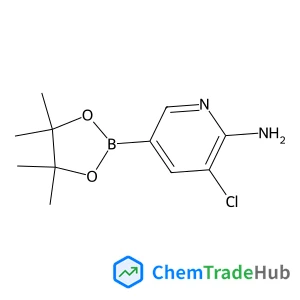
3-Chloro-5-(4,4,5,5-tetramethyl-1,3,2-dioxaborolan-2-yl)-2-pyridinamine
CAS番号:
1032758-99-8
分子式:
C11H16BClN2O2

おすすめサプライヤー





免責事項
このページに表示される学術雑誌情報は、参考および研究目的のみを目的としています。当社は雑誌出版社とは提携しておらず、投稿の取り扱いも行っておりません。出版に関するお問い合わせは、各雑誌出版社に直接ご連絡ください。
表示されている情報に誤りがある場合は、support@chemtradehub.com までご連絡ください。迅速に確認し、対応いたします。