


Unexpected multiple activated steps in the excited state decay of some bis(phenylethynyl)-fluorenes and -anthracenes
文献情報
出版日
2015-11-16
DOI
10.1039/C5CP06025G
インパクトファクター
3.676
著者
G. Cacioppa, B. Carlotti, F. Elisei, P. L. Gentili, A. Marrocchi, A. Spalletti
原文を見る
要旨
The temperature effect on the photophysical parameters of four acetylene-derivatives [bis(phenylethynyl)-anthracenes and -fluorenes with substituents of different electron acceptor efficiencies] has been investigated by absorption and emission spectroscopy, using stationary and pulsed (ns/fs resolution) techniques. The nature of the central nucleus (anthracene or fluorene) and the peripheral electron-withdrawing group (nitro or formyl) strongly affect the deactivation of the excited states of these push–pull molecules. In some cases the study evidenced an interesting role of two activated steps in the deactivation of the excited singlet state, namely an activated inter-system crossing to an upper triplet state of n,π* nature (previously hypothesized on the basis of TD-DFT calculations) and a sort of activated internal conversion, discussed also on the basis of maximum entropy method analysis of the fluorescence decay data. Nicely, an efficient ISC was found for the fluorene-derivatives where small energy gaps between S1 (π,π*) and Tn (n,π*) states had been calculated while no activated ISC was evidenced in the case of anthryl-derivatives where higher S1–Tn energy gaps are expected. A peculiar temperature effect for a fluorene-derivative was pointed out and also explained on the basis of quantum-mechanical calculations at the DFT level taking into account the solvation effects by means of the conductor-like polarizable continuum model CPCM. The presence of dual emission, at first evidenced by a shoulder in the emission spectrum of the fluorene-derivative featuring a peripheral formyl group in dichloromethane at low temperatures, was nicely confirmed by femtosecond up-conversion measurements at room temperature.
おすすめジャーナル

Bioorganic & Medicinal Chemistry Letters

Main Group Chemistry

Acta Metallurgica Sinica-English Letters

Critical Reviews in Solid State and Materials Sciences

Atomization and Sprays

Polycyclic Aromatic Compounds

Topics in Catalysis

Biocatalysis and Biotransformation

Bioorganic & Medicinal Chemistry

Electroanalysis
関連文献
Synthesis and evaluation of pyridine-derived bedaquiline analogues containing modifications at the A-ring subunit
Lisa Barbaro, Gayathri Nagalingam, James A. Triccas, Jonathan B. Baell, Daniel L. Priebbenow
2021-05-07
Research Article
DOI: 10.1039/D1MD00063B
Studies on the affinity of 6-[(n-(cyclo)aminoalkyl)oxy]-4H-chromen-4-ones for sigma 1/2 receptors
Winnie Deuther-Conrad, Daniel Diez-Iriepa, Isabel Iriepa, Francisco López-Muñoz, María Angeles Martínez-Grau, Michael Gütschow, José Marco-Contelles
2021-05-20
Research Article
DOI: 10.1039/D1MD00105A
Tumor pyruvate kinase M2 modulators: a comprehensive account of activators and inhibitors as anticancer agents
Bhagyashri Rathod, Shivam Chak, Sagarkumar Patel, Amit Shard
2021-05-17
Review Article
DOI: 10.1039/D1MD00045D
Mycobacterial drug discovery
Katherine A. Abrahams, Gurdyal S. Besra
2020-11-06
Review Article
DOI: 10.1039/D0MD00261E
Introducing the metacore concept for multi-target ligand design
Dagmar Stumpfe, Alexander Hoch, Jürgen Bajorath
2021-04-15
Research Article
DOI: 10.1039/D1MD00056J
Recent advances in urea- and thiourea-containing compounds: focus on innovative approaches in medicinal chemistry and organic synthesis
Riccardo Ronchetti, Andrea Carotti, Antimo Gioiello, Emidio Camaioni
2021-05-13
Review Article
DOI: 10.1039/D1MD00058F
Structural evolution of toll-like receptor 7/8 agonists from imidazoquinolines to imidazoles
Deepender Kaushik, Arshpreet Kaur
2021-05-14
Review Article
DOI: 10.1039/D1MD00031D
こちらもおすすめ
化合物よくある質問
カルボニル基が付いた5-氰基-1-{[(2-メチル-2-プロpanyl)オキシ]カーボンイル}1H-吲哚-2-イリド-2-ボリン酸はどのように保存すればよいですか?
カルボニル基が付いた5-氰基-1-{[(2-メチル-2-プロpanyl)オキシ]カーボンイル}1H-吲哚-2-イリド-2-ボリン酸は、直射日光を避けて室温(15...
475102-15-9(5-Cyano-1-{[(2-meth...
化合物よくある質問
tert-ブチル2-クロロメチルピリジン-3-基炭酸エステルの市場動向や研究トレンドはどうですか?
この化合物は合成化学分野において、特にピリジン化合物の合成や改良に用いられます。最近の研究では、ピリジン化合物の新規合成法や特性の改良が注目されています。市場動...
1203498-98-9tert-Butyl 2-chloro-...
化合物よくある質問
聚二季戊四醇六丙烯酸酯はどの業界で使用されていますか?
聚二季戊四醇六丙烯酸酯は、医薬品、ポリマー、センサー、半導体などの業界で広く使用されています。特にポリマー業界では硬化剤として、医薬分野では医療機器の製造に使用...
29570-58-93-(Acryloyloxy)-2-({...
化合物よくある質問
1-氯-5-硝基异喹啉の市場動向や研究トレンドはどうですか?
1-氯-5-硝基异喹啉は、薬理学や合成化学の研究分野で注目されています。市場動向としては、その生物学的な活性や合成可能性を評価する研究が増えています。また、代替...
58142-97-51-Chloro-5-nitroisoq...
化合物よくある質問
2-チロール-5-メチルスルフェニル-3-trifルオルメチルベンゼンはどのように合成されますか?
2-チロール-5-メチルスルフェニル-3-trifルオルメチルベンゼンは、トリフルオロメチル化反応と硫化反応を経て合成されます。通常、トリフルオロメチル化剤と硫...
957066-04-51-Chloro-4-(methylsu...
化合物よくある質問
p-トールイルマグネシウムブロミドの物理化学的性質は何ですか?
p-トールイルマグネシウムブロミドのCAS番号は4294-57-9です。この化合物は白色の結晶性粉末で、分子量は204.32です。溶剤中で良好に溶解しますが、水...
4294-57-9p-Tolylmagnesium bro...
化合物よくある質問
1-(5-甲基-2-硫化素基)プロパン-1-酮の市場動向や研究トレンドはどうですか?
1-(5-甲基-2-硫化素基)プロパン-1-酮の市場動向は、化学産業全体の需要に影響を受けますが、最近では pharmaceutical 分野での応用が注目され...
59303-13-81-(5-Methyl-2-thieny...
化合物よくある質問
十一碳烯酰甘氨酸を取り扱う際の実験室安全事項は何ですか?
十一碳烯酰甘氨酸は吸入や皮膚から吸収されることがあり、取り扱う際には防塵マスクと手袋を使用してください。ドラフトチャンバーを用いて漏洩を処理し、適切なSDS(S...
54301-26-7N-10-Undecenoylglyci...
化合物よくある質問
1H,1H-全氟-3,6-二氧杂葵-1-醇を取り扱う際の実験室安全事項は何ですか?
この化合物は吸入や皮膚吸収による毒性があるため、防塵マスク、ゴーグル、防護手袋を使用する必要があります。ドラフトチャンバーでの操作が必要です。漏洩時には即座に換...
152914-73-32,2-Difluoro-2-[1,1,...
化合物よくある質問
3-(4-(フルオロメチルオキシ)フェニル)-1,2,4-オキサジアゾール-5-カルボハイドライドは安全ですか?
安全性は化合物の使用方法によります。直接的な毒性は報告されていませんが、吸入や皮膚接触には注意が必要です。適切な防護服を着用し、換気を図ることを推奨します。
883028-82-83-(4-(Trifluorometho...
掲載誌
Physical Chemistry Chemical Physics

CiteScore:
5.5
自己引用率:
10.3%
年間論文数:
3036
Physical Chemistry Chemical Physics (PCCP) is an international journal co-owned by 19 physical chemistry and physics societies from around the world. This journal publishes original, cutting-edge research in physical chemistry, chemical physics and biophysical chemistry. To be suitable for publication in PCCP, articles must include significant innovation and/or insight into physical chemistry; this is the most important criterion that reviewers and Editors will judge against when evaluating submissions. The journal has a broad scope and welcomes contributions spanning experiment, theory, computation and data science. Topical coverage includes spectroscopy, dynamics, kinetics, statistical mechanics, thermodynamics, electrochemistry, catalysis, surface science, quantum mechanics, quantum computing and machine learning. Interdisciplinary research areas such as polymers and soft matter, materials, nanoscience, energy, surfaces/interfaces, and biophysical chemistry are welcomed if they demonstrate significant innovation and/or insight into physical chemistry. Joined experimental/theoretical studies are particularly appreciated when complementary and based on up-to-date approaches.
おすすめ化合物
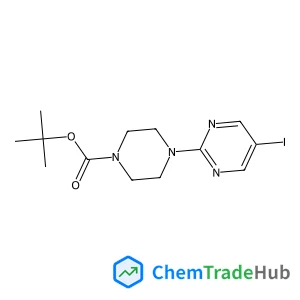
2-Methyl-2-propanyl 4-(5-iodo-2-pyrimidinyl)-1-piperazinecarboxylate
CAS番号:
1027616-32-5
分子式:
C13H19IN4O2
![Benzyl 2-{[(tert-butoxy)carbonyl]amino}acetate structure](https://static.chemtradehub.com/structs/542/54244-69-8-6399.webp "Benzyl 2-{[(tert-butoxy)carbonyl]amino}acetate structure")
おすすめサプライヤー




免責事項
このページに表示される学術雑誌情報は、参考および研究目的のみを目的としています。当社は雑誌出版社とは提携しておらず、投稿の取り扱いも行っておりません。出版に関するお問い合わせは、各雑誌出版社に直接ご連絡ください。
表示されている情報に誤りがある場合は、support@chemtradehub.com までご連絡ください。迅速に確認し、対応いたします。