












Multicomponent kinetic analysis and theoretical studies on the phenolic intermediates in the oxidation of eugenol and isoeugenol catalyzed by laccase
文献情報
出版日
2015-10-07
DOI
10.1039/C5CP03475B
インパクトファクター
3.676
著者
Yan-Bing Qi, Xiao-Lei Wang, Ting Shi, Shuchang Liu, Zhen-Hao Xu, Xiqing Li, Xuling Shi, Ping Xu, Yi-Lei Zhao
原文を見る
要旨
Laccase catalyzes the oxidation of natural phenols and thereby is believed to initialize reactions in lignification and delignification. Numerous phenolic mediators have also been applied in laccase-mediator systems. However, reaction details after the primary O–H rupture of phenols remain obscure. In this work two types of isomeric phenols, EUG (eugenol) and ISO (trans-/cis-isoeugenol), were used as chemical probes to explore the enzymatic reaction pathways, with the combined methods of time-resolved UV-Vis absorption spectra, MCR-ALS, HPLC-MS, and quantum mechanical (QM) calculations. It has been found that the EUG-consuming rate is linear to its concentration, while the ISO not. Besides, an o-methoxy quinone methide intermediate, (E/Z)-4-allylidene-2-methoxycyclohexa-2,5-dienone, was evidenced in the case of EUG with the UV-Vis measurement, mass spectra and TD-DFT calculations; in contrast, an ISO-generating phenoxyl radical, a (E/Z)-2-methoxy-4-(prop-1-en-1-yl) phenoxyl radical, was identified in the case of ISO. Furthermore, QM calculations indicated that the EUG-generating phenoxyl radical (an O-centered radical) can easily transform into an allylic radical (a C-centered radical) by hydrogen atom transfer (HAT) with a calculated activation enthalpy of 5.3 kcal mol−1 and then be fast oxidized to the observed eugenol quinone methide, rather than an O-radical alkene addition with barriers above 12.8 kcal mol−1. In contrast, the ISO-generating phenoxyl radical directly undergoes a radical coupling (RC) process, with a barrier of 4.8 kcal mol−1, while the HAT isomerization between O- and C-centered radicals has a higher reaction barrier of 8.0 kcal mol−1. The electronic conjugation of the benzyl-type radical and the aromatic allylic radical leads to differentiation of the two pathways. These results imply that competitive reaction pathways exist for the nascent reactive intermediates generated in the laccase-catalyzed oxidation of natural phenols, which is important for understanding the lignin polymerization and may shed some light on the development of efficient laccase-mediator systems.
関連文献
Efficient construction of the A/C/D tricyclic skeleton of palhinine A
Shuangshuang Duan, Dan Long, Changgui Zhao, Gaoyuan Zhao, Ziyun Yuan, Xingang Xie, Jianguo Fang
2016-07-18
Research Article
DOI: 10.1039/C6QO00222F
Gold(i) catalyzed [1,3] O → C rearrangement of benzylvinyl ethers
Chandrababu Naidu Kona, Mahesh N. Patil, Chepuri V. Ramana
2016-01-26
Research Article
DOI: 10.1039/C5QO00397K
Synthesis of aromatic β-keto esters via a carbonylative Suzuki–Miyaura coupling reaction of α-iodo esters with arylboronic acids
Shuhei Sumino, Takahito Ui, Ilhyong Ryu
2015-07-14
Research Article
DOI: 10.1039/C5QO00185D
Reverse-hydroformylation: a missing reaction explored
Avanashiappan Nandakumar
2015-08-19
Highlight
DOI: 10.1039/C5QO00229J
Nickel-catalyzed reductive coupling of alkyl halides with other electrophiles: concept and mechanistic considerations
Jun Gu, Xuan Wang, Weichao Xue
2015-08-20
Tutorial Account
DOI: 10.1039/C5QO00224A
In celebration of the 80th birthday of Professor Ei-ichi Negishi
2015-06-23
Editorial
DOI: 10.1039/C5QO90033F
Metalorganocatalysis: cooperating transition-metal catalysis and organocatalysis through a covalent bond
Xiu-Qin Dong, Qingyang Zhao, Caiyou Chen, Xumu Zhang
2015-08-06
Review Article
DOI: 10.1039/C5QO00226E
A thermally stable pH-responsive “supramolecular buckle” based on the encapsulation of 4-(4-aminophenyl)-N-methylpyridinium by cucurbit[8]uril
Tian-You Zhou, Qiao-Yan Qi, Ying Zhang, Xiao-Na Xu, Xin Zhao
2015-07-06
Research Article
DOI: 10.1039/C5QO00168D
Capture of CO2 in air for 4,5-disubstituted furan-2(5H)-ones
Shi-Xia Su, Yan-li Xu, Ying Liang, Heng-shan Wang, Ying-Ming Pan
2016-08-05
Research Article
DOI: 10.1039/C6QO00328A
A novel dynamic pseudo[1]rotaxane based on a mono-biotin-functionalized pillar[5]arene
Xuan Wu, Mengfei Ni, Wei Xia, Xiao-Yu Hu, Leyong Wang
2015-06-19
Research Article
DOI: 10.1039/C5QO00159E
こちらもおすすめ
化合物よくある質問
3-(5-フェニル-2-ファイル)-プロパン酸の市場動向や研究トレンドはどうですか?
この化合物の市場動向は不明ですが、類似化合物の需要は化学繊維、医薬品、農薬分野で安定しています。研究トレンドとしては、該当化合物の生物学的活性の評価や、その他の...
3465-61-03-(5-Phenyl-2-furyl)...
化合物よくある質問
3- Chloro-1H-indazol-5-olはどのように保存すればよいですか?
3- チロロ-1H-吲唑-5-醇は遮光し、直射日光を避けて、温度は室温を推奨し、密閉容器に保存してください。
885519-34-63-Chloro-1H-indazol-...
849924-76-11,2,3,4,5-Cyclopenta...
化合物よくある質問
L-(1-~13~C)メチオニンの市場動向や研究トレンドはどうですか?
L-(1-~13~C)メチオニンは、医薬品やバイオテクノロジー分野での研究が増加しており、その価格は安定しています。新興研究分野では、代謝解析や遺伝子機能解析で...
81202-04-2L-(1-~13~C)Methionin...
化合物よくある質問
1,3-フェニレンビスメチレンビスアクリレートは安全ですか?
1,3-フェニレンビスメチレンビスアクリレートは一般的に安全ですが、直接皮膚に触れる場合は保護用具を使用することを推奨します。高濃度の蒸気が吸入された場合は呼吸...
22757-16-01,3-Phenylenebis(met...
化合物よくある質問
丹参醇Aはどのように保存すればよいですか?
丹参醇Aは、直射日光を避けて室温で保存し、密栓容器に入れることをお勧めします。適切な保存条件は、安定性を保ち、安全性を確保する上で重要です。
189308-08-5Danshenol A
化合物よくある質問
4-メチル-2-(1,1,1-三フロロ-2-メチルプロパニル)ピリドインとは何ですか?
CAS番号1378865-93-0の4-メチル-2-(1,1,1-三フロロ-2-メチルプロパニル)ピリドインは、合成化学分野で用いられる有機化合物の一種です。こ...
1378865-93-04-Methyl-2-(1,1,1-tr...
化合物よくある質問
N-フェニルベンジル-2-クロロ酢氨を取り扱う際の実験室安全事項は何ですか?
N-フェニルベンジル-2-クロロ酢氨は毒性があり、皮膚や粘膜に刺激を与えます。取り扱う際には、保護眼鏡、手袋、ゴーグルを着用することを強く推奨します。ドラフトチ...
2653-14-7N-benzyl-2-chloro-N-...
化合物よくある質問
UCN-02を取り扱う際の実験室安全事項は何ですか?
UCN-02は毒性は低いですが、人体への直接的な接触は避けるべきです。PPE要件はグローブと顔面保護具を着用することです。ドラフトチャンバーを使用して漏洩を処理...
121569-61-7UCN-02
化合物よくある質問
N-[3-[2-(二甲基氨基)乙氧基]-4-甲氧基苯基]-2'-甲基-4'-(5-甲基-1,2,4-恶二唑-3-基)-[1,1'-联苯]-4-甲酰胺を取り扱う際の実験室安全事項は何ですか?
手袋と保護眼鏡を着用し、漏洩時には吸気防止装置を使用してください。室温、乾燥した場所に保管し、直日光から隔離してください。SDS(安全データシート)を参照してく...
170230-39-4N-{3-[2-(Dimethylami...
掲載誌
Physical Chemistry Chemical Physics

CiteScore:
5.5
自己引用率:
10.3%
年間論文数:
3036
Physical Chemistry Chemical Physics (PCCP) is an international journal co-owned by 19 physical chemistry and physics societies from around the world. This journal publishes original, cutting-edge research in physical chemistry, chemical physics and biophysical chemistry. To be suitable for publication in PCCP, articles must include significant innovation and/or insight into physical chemistry; this is the most important criterion that reviewers and Editors will judge against when evaluating submissions. The journal has a broad scope and welcomes contributions spanning experiment, theory, computation and data science. Topical coverage includes spectroscopy, dynamics, kinetics, statistical mechanics, thermodynamics, electrochemistry, catalysis, surface science, quantum mechanics, quantum computing and machine learning. Interdisciplinary research areas such as polymers and soft matter, materials, nanoscience, energy, surfaces/interfaces, and biophysical chemistry are welcomed if they demonstrate significant innovation and/or insight into physical chemistry. Joined experimental/theoretical studies are particularly appreciated when complementary and based on up-to-date approaches.
おすすめ化合物
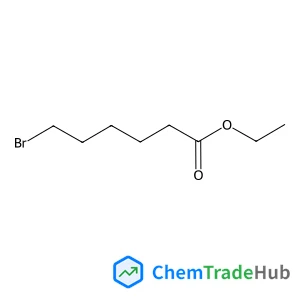
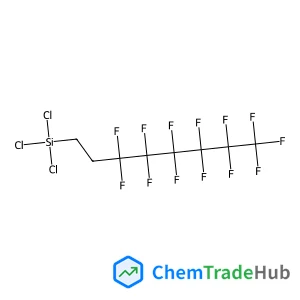
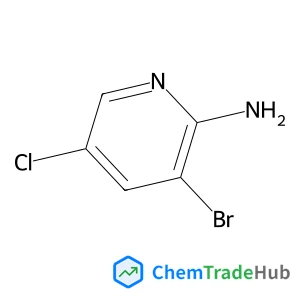
おすすめサプライヤー




免責事項
このページに表示される学術雑誌情報は、参考および研究目的のみを目的としています。当社は雑誌出版社とは提携しておらず、投稿の取り扱いも行っておりません。出版に関するお問い合わせは、各雑誌出版社に直接ご連絡ください。
表示されている情報に誤りがある場合は、support@chemtradehub.com までご連絡ください。迅速に確認し、対応いたします。