


Roaming as the dominant mechanism for molecular products in the photodissociation of large aliphatic aldehydes
文献情報
出版日
2015-08-07
DOI
10.1039/C5CP03408F
インパクトファクター
3.676
著者
Po-Yu Tsai, Hou-Kuan Li, King-Chuen Lin
原文を見る
要旨
Photodissociation of isobutyraldehyde (C3H7CHO) at 248 nm is investigated using time-resolved Fourier-transform infrared emission spectroscopy to demonstrate the growing importance of the roaming pathway with increasing molecular size of aliphatic aldehydes. Each acquired CO rotational distribution from v = 1 to 4 is well characterized by a single Boltzmann rotational temperature from 637 to 750 K, corresponding to an average rotational energy of 5.9 ± 0.6 kJ mol−1. The roaming signature that shows a small fraction of CO rotational energy disposal accompanied by a vibrationally hot C3H8 co-fragment is supported by theoretical prediction. The energy difference between the tight transition state (TS) and the roaming saddle point (SP) is found to be −27, 4, 15, 22, and 30 kJ mol−1 for formaldehyde, acetaldehyde, propionaldehyde, isobutyraldehyde, and 2,2-dimethyl propanal, respectively. The roaming SP is stabilized by a larger alkyl moiety. It is suggested that the roaming photodissociation rate of aldehydes increasingly exceeds those via the tight TS, resulting in the dominance of the CO + alkane products, as the size of aldehydes becomes larger. Along with formaldehyde, acetaldehyde, and propionaldehyde, in this work isobutyraldehyde is further demonstrated that this aldehyde family with special functional group is the first case in the organic compound to follow predominantly a roaming dissociation pathway, as the molecular size becomes larger.
おすすめジャーナル

Herald of the Russian Academy of Sciences

Journal of the Indian Institute of Science

Journal of Asian Natural Products Research

Atomization and Sprays

Critical Reviews in Solid State and Materials Sciences

Polycyclic Aromatic Compounds

Main Group Chemistry

Chinese Journal of Chemistry

Bioorganic & Medicinal Chemistry Letters

Journal of Chemical Sciences
関連文献
The reaction force constant as an indicator of synchronicity/nonsynchronicity in [4+2] cycloaddition processes
Diana Yepes, Oscar Donoso-Tauda, Patricia Pérez, Pablo Jaque
2013-01-18
Paper
DOI: 10.1039/C3CP44197K
Ab initio simulations of scanning-tunneling-microscope images with embedding techniques and application to C58-dimers on Au(111)
Alexei Bagrets
2013-02-14
Paper
DOI: 10.1039/C3CP44286A
Reducing the spin–spin interaction of stable carbon radicals
Sharon Ruthstein
2013-03-14
Communication
DOI: 10.1039/C3CP50533B
Modeling CO2reduction on Pt(111)
Chuan Shi, Christopher P. O'Grady, Andrew A. Peterson, Heine A. Hansen
2013-03-19
Paper
DOI: 10.1039/C3CP50645B
Changed reactivity of the 1-bromo-4-nitrobenzene radical anion in a room temperature ionic liquid
Sven Ernst, Kristopher R. Ward, Sarah E. Norman, Christopher Hardacre, Richard G. Compton
2013-03-15
Paper
DOI: 10.1039/C3CP51004B
Investigation on the electronic structure of BN nanosheets synthesized via carbon-substitution reaction: the arrangement of B, N, C and O atoms
Lijia Liu, Tsun-Kong Sham, Weiqiang Han
2013-03-18
Paper
DOI: 10.1039/C3CP50498K
Photoelectrical properties and the electronic structure of Tl1−xIn1−xSnxSe2 (x = 0, 0.1, 0.2, 0.25) single crystalline alloys
G. E. Davydyuk, H. Kamarudin, G. L. Myronchuk, S. P. Danylchuk, A. O. Fedorchuk, L. V. Piskach, M. Yu. Mozolyuk, O. V. Parasyuk
2013-03-12
Paper
DOI: 10.1039/C3CP50836F
こちらもおすすめ
化合物よくある質問
2-ブロモ-9,9-ジフェニル-9H-フルオレンの主な用途は何ですか?
2-溴-9,9-二苯基芴は、医薬品、工業材料、有機合成の研究分野で応用されます。特に、レーザー材料や機能性ポリマーの合成に使用されることがあります。また、蛍光色...
474918-32-62-Bromo-9,9-diphenyl...
化合物よくある質問
四氯化铱の市場動向や研究トレンドはどうですか?
四氯化铱の市場は研究開発分野で注目されており、特にナノ技術や金属有機框架(MOFs)の分野での需要が増加傾向にあります。価格は安定しており、中国や韓国での生産が...
207399-11-9Tetrachloroiridium h...
882-06-44-Nitrocinnamic acid
化合物よくある質問
1-(4-溴-3-氟苯基)-2-氯乙酮を含む廃棄物はどのように処理すべきですか?
1-(4-溴-3-氟苯基)-2-氯乙酮 (CAS番号: 1260857-14-4) の廃棄物は専門的な廃棄処理が必要です。まず、廃棄物は密閉された容器に収集し、...
1260857-14-41-(4-Bromo-3-fluorop...
化合物よくある質問
苦参酚Kとは何ですか?
苦参酚Kは、CAS番号101236-49-1を持つ化合物で、主に天然由来の生薬から抽出されます。この化合物は、抗炎症作用や抗癌作用を持つことが報告されています。
101236-49-1Kushenol K
化合物よくある質問
POTASSIUM (1-(TERTBUTOXYCARBONYL)AZETIDIN-3-YL)TRIFLUOROBORATE を含む廃棄物はどのように処理すべきですか?
POTASSIUM (1-(TERTBUTOXYCARBONYL)AZETIDIN-3-YL)TRIFLUOROBORATE を含む廃棄物は、まず安全なエント...
1430219-73-0Potassium (1-(tert-b...
化合物よくある質問
4-庚基-4’-联苯羧酸の市場動向や研究トレンドはどうですか?
4-庚基-4’-聯苯羧酸は、特殊化学品や合成化学の分野で用いられる化学物質ですが、市場動向としては、研究開発の進展とともに需要が増加しています。また、環境配慮型...
58573-94-74'-Heptyl-4-biphenyl...
化合物よくある質問
6-ブロモ-3-メトキシ-1-フェニル-1H-インドゾールを含む廃棄物はどのように処理すべきですか?
6-ブロモ-3-メトキシ-1-フェニル-1H-インドゾールを含む廃棄物は、適切な化学廃棄処理が必要です。通常、廃棄物は密閉容器に収集され、専門の廃棄処理業者に引...
1332527-03-36-Bromo-3-methoxy-1-...
化合物よくある質問
4,4-二甲基-2-吡咯烷酮はどの業界で使用されていますか?
4,4-二甲基-2-吡咯烷酮は医薬、ポリマー、センサー、半導体などの業界で広く使用されています。特に溶媒としての性能が高く評価されています。
66899-02-34,4-dimethylpyrrolid...
51312-42-6Sodium Phosphotungst...
掲載誌
Physical Chemistry Chemical Physics

CiteScore:
5.5
自己引用率:
10.3%
年間論文数:
3036
Physical Chemistry Chemical Physics (PCCP) is an international journal co-owned by 19 physical chemistry and physics societies from around the world. This journal publishes original, cutting-edge research in physical chemistry, chemical physics and biophysical chemistry. To be suitable for publication in PCCP, articles must include significant innovation and/or insight into physical chemistry; this is the most important criterion that reviewers and Editors will judge against when evaluating submissions. The journal has a broad scope and welcomes contributions spanning experiment, theory, computation and data science. Topical coverage includes spectroscopy, dynamics, kinetics, statistical mechanics, thermodynamics, electrochemistry, catalysis, surface science, quantum mechanics, quantum computing and machine learning. Interdisciplinary research areas such as polymers and soft matter, materials, nanoscience, energy, surfaces/interfaces, and biophysical chemistry are welcomed if they demonstrate significant innovation and/or insight into physical chemistry. Joined experimental/theoretical studies are particularly appreciated when complementary and based on up-to-date approaches.
おすすめ化合物
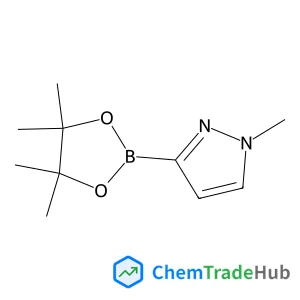
1-Methyl-3-(4,4,5,5-tetramethyl-1,3,2-dioxaborolan-2-yl)-1H-pyrazole
CAS番号:
1020174-04-2
分子式:
C10H17BN2O2
![N-[(Benzyloxy)carbonyl]serine structure](https://static.chemtradehub.com/structs/276/2768-56-1-77f7.webp "N-[(Benzyloxy)carbonyl]serine structure")
おすすめサプライヤー






免責事項
このページに表示される学術雑誌情報は、参考および研究目的のみを目的としています。当社は雑誌出版社とは提携しておらず、投稿の取り扱いも行っておりません。出版に関するお問い合わせは、各雑誌出版社に直接ご連絡ください。
表示されている情報に誤りがある場合は、support@chemtradehub.com までご連絡ください。迅速に確認し、対応いたします。