


The reaction force constant as an indicator of synchronicity/nonsynchronicity in [4+2] cycloaddition processes
文献情報
出版日
2013-01-18
DOI
10.1039/C3CP44197K
インパクトファクター
3.676
著者
Diana Yepes, Oscar Donoso-Tauda, Patricia Pérez, Pablo Jaque
原文を見る
要旨
A variety of experimental and computational analyses support the concept that a chemical reaction has a transition region, in which the system changes from distorted states of the reactants to distorted states of the products. The boundaries of this region along the intrinsic reaction coordinate ξ, which includes the traditional transition state, are defined unambiguously by the minimum and maximum of the reaction force F(ξ), which is the negative gradient of the potential energy V(ξ). The transition region is characterized by the reaction force constant κ(ξ), the second derivative of V(ξ), being negative throughout. It has recently been demonstrated that the profile of κ(ξ) in the transition region is a sensitive indicator of the degree of synchronicity of a concerted reaction: a single κ(ξ) minimum is associated with full or nearly full synchronicity, while a κ(ξ) maximum (negative) between two minima is a sign of considerable nonsynchronicity, i.e. a two-stage concerted process. We have now applied reaction force analysis to the Diels–Alder cycloadditions of the various cyanoethylenes to cyclopentadiene. We examine the relative energy requirements of the structurally- and electronically-intensive phases of the activation processes. We demonstrate that the variation of κ(ξ) in the transition region is again indicative of the level of synchronicity. The fully synchronous cycloadditions are those in which the cyanoethylenes are symmetrically substituted. Unsymmetrical substitution leads to minor nonsynchronicity for monocyanoethylene but much more – i.e. two stages – for 1,1-dicyano- and 1,1,2-tricyanoethylene. We also show that the κ(ξ) tend to become less negative as the activation energies decrease.
おすすめジャーナル

European Journal of Wood and Wood Products

Proceedings of the National Academy of Sciences of the United States of America

Journal of Heterocyclic Chemistry

Journal of Catalysis

Organic Preparations and Procedures International

Israel Journal of Chemistry

Journal of Medicinal Chemistry

Journal of Physics and Chemistry of Solids

Science Progress

Molecular Pharmacology
関連文献
A self-optimised approach to synthesising DEHiBA for advanced nuclear reprocessing, exploiting the power of machine-learning
Thomas Shaw, Adam D. Clayton, Ricardo Labes, Thomas M. Dixon, Sarah Boyall, Oliver J. Kershaw, Richard A. Bourne, Bruce C. Hanson
2023-11-03
Paper
DOI: 10.1039/D3RE00357D
Strands vs. crosslinks: topology-dependent degradation and regelation of polyacrylate networks synthesised by RAFT polymerisation
Frances Dawson, Touseef Kazmi, Peter J. Roth, Maciej Kopeć
2023-11-06
Paper
DOI: 10.1039/D3PY01008B
A dual action coumarin-camptothecin polymer for light responsive drug release and photodynamic therapy
Paige A. Shaw
2023-12-05
Communication
DOI: 10.1039/D3PY01137B
Mesoporous CeO2-supported ultrafine PdCu nanoparticle catalyst for selective hydrogenation of alkynols
Yi Zheng, Jianfeng Li, Hongzhang Cao, Yanhui Xu, Weisheng Liu
2023-10-12
Paper
DOI: 10.1039/D3RE00480E
Lipoic acid-based vitrimer-like elastomer
Xiaohong Lan, Laura Boetje, Théophile Pelras, Chongnan Ye, Fitrilia Silvianti, Katja Loos
2023-10-20
Paper
DOI: 10.1039/D3PY00883E
Batch and continuous flow mechanochemical synthesis of organic compounds including APIs
2023-09-05
Review Article
DOI: 10.1039/D2RE00521B
An effective approach for the preparation of epoxy vitrimers by in situ formation of dynamic and permanent linkages in a one-pot curing reaction
Du-Yuan Hung, Jia-Jun Lee, Ying-Ling Liu
2023-10-17
Paper
DOI: 10.1039/D3PY00957B
Synthesis of magnetic UiO-66-NH2@EDTA-GO and mechanism study of simultaneous adsorption of Pb(ii) and organic dyes from water
Mingli Cao, Wei Yang
2023-10-05
Paper
DOI: 10.1039/D3RE00399J
A combined computational and experimental study of metathesis and nucleophile-mediated exchange mechanisms in boronic ester-containing vitrimers
Jacopo Teotonico, Laura Ballester-Bayarri, Marta Ximenis
2023-12-18
Paper
DOI: 10.1039/D3PY01047C
Monomer-controlled self-switchable polymerization: a metal-free strategy for synthesizing multiblock copolymers from epoxides, O-phthalaldehyde, and CO2
Haotian Zhang, Chenyang Hu
2023-10-12
Paper
DOI: 10.1039/D3PY01035J
こちらもおすすめ
化合物よくある質問
3-イチチルビフェニルはどのように合成されますか?
3-イチチルビフェニルは、ビフェニルとイチプロピオニトリルを回収率約90%で反応させて合成されます。触媒は通常、亜リチウムホウ素を用います。
5668-93-93-Ethylbiphenyl
化合物よくある質問
8-溴-5-三氟甲基喹啉はどのように合成されますか?
8-溴-5-三氟甲基喹啉は、5-トリフルオロメチル-2-メチル-1,3-ベンゼンジオールをブロモエタノールと反応させて生成します。この反応は塩基性条件下で行われ...
917251-92-48-Bromo-5-(trifluoro...
化合物よくある質問
ジメチル4-(4,4,5,5-テトラメチル-1,3,2-ドioxaborolan-2-基)-2,6-ピリジンジカルボイル酸フェニルアミニドの代替品はありますか?
ジメチル4-(4,4,5,5-テトラメチル-1,3,2-ドioxaborolan-2-基)-2,6-ピリジンジカルボイル酸フェニルアミニドの代替品としては、4-...
741709-66-0Dimethyl 4-(4,4,5,5-...
化合物よくある質問
N-(3,5-ヘキサクロロ-4-ピリドインイル)-8-メチオキシ-5-キノリンカーボン酸の市場動向や研究トレンドはどのようなものでしょうか?
N-(3,5-ヘキサクロロ-4-ピリドインイル)-8-メチオキシ-5-キノリンカーボン酸の市場動向は、主に産業用途での需要により影響を受けます。研究トレンドとし...
199871-63-1N-(3,5-Dichloro-4-py...
化合物よくある質問
イソステアロイルグリセリルは安全ですか?
イソステアロイルグリセリルは一般的に安全性が高いとされていますが、過度な使用や個人差により皮�owsん炎などの反応が起こる可能性があります。使用前に医師に相談す...
222723-55-92-[(5Z,8Z,11Z,14Z)-5...
化合物よくある質問
1-(二苯甲基)-3,3-二氟-氮杂环丁烷の市場動向や研究トレンドはどうですか?
1-(二苯甲基)-3,3-二氟-氮杂环丁烷の市場動向は、医薬品や合成化学の研究分野で注目を集めています。新興研究は、該当化合物の合成改良と生体内での作用メカニズ...
288315-02-61-Benzhydryl-3,3-dif...
化合物よくある質問
3-チオフェンスチオールの物理化学的性質は何ですか?
3-チオフェンスチオールのCAS番号は7774-73-4です。結晶性の白色粉末で、分子量は122.17です。この化合物は水に微溶解し、エタノールやジクロロメタン...
7774-73-43-Thiophenethiol
化合物よくある質問
2-Methyl-2-propanyl (2S)-2-(aminomethyl)-1-piperidinecarboxylateは安全ですか?
2-Methyl-2-propanyl (2S)-2-(aminomethyl)-1-piperidinecarboxylateは一定の安全性基準を満たしていま...
475105-35-22-Methyl-2-propanyl ...
化合物よくある質問
CAS番号1316822-90-8の化合物は安全ですか?
CAS番号1316822-90-8の化合物は安全性に関しては評価が不足していますが、一般的には生物学的に活性な物質であり、取り扱いには適切な安全防護措置が必要で...
1316822-90-8Gal beta(1-3)[Neu5Ac...
化合物よくある質問
Tert-butyl 2-(2-羟基乙基)哌嗪-1-羧酸はどのように保存すればよいですか?
Tert-butyl 2-(2-羟基乙基)哌嗪-1-羧酸は、冷暗所で保存し、直射日光から遠ざけてください。容器は密閉し、高湿度や高温を避けて保管してください。
517866-79-4Tert-butyl 2-(2-hydr...
掲載誌
Physical Chemistry Chemical Physics

CiteScore:
5.5
自己引用率:
10.3%
年間論文数:
3036
Physical Chemistry Chemical Physics (PCCP) is an international journal co-owned by 19 physical chemistry and physics societies from around the world. This journal publishes original, cutting-edge research in physical chemistry, chemical physics and biophysical chemistry. To be suitable for publication in PCCP, articles must include significant innovation and/or insight into physical chemistry; this is the most important criterion that reviewers and Editors will judge against when evaluating submissions. The journal has a broad scope and welcomes contributions spanning experiment, theory, computation and data science. Topical coverage includes spectroscopy, dynamics, kinetics, statistical mechanics, thermodynamics, electrochemistry, catalysis, surface science, quantum mechanics, quantum computing and machine learning. Interdisciplinary research areas such as polymers and soft matter, materials, nanoscience, energy, surfaces/interfaces, and biophysical chemistry are welcomed if they demonstrate significant innovation and/or insight into physical chemistry. Joined experimental/theoretical studies are particularly appreciated when complementary and based on up-to-date approaches.
おすすめ化合物
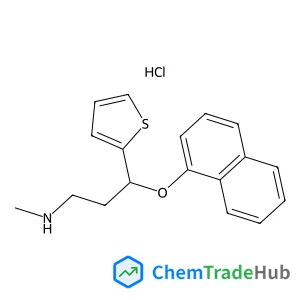
N-Methyl-3-(1-naphthyloxy)-3-(2-thienyl)-1-propanamine hydrochloride (1:1)
CAS番号:
1188266-11-6
分子式:
C18H20ClNOS
おすすめサプライヤー




免責事項
このページに表示される学術雑誌情報は、参考および研究目的のみを目的としています。当社は雑誌出版社とは提携しておらず、投稿の取り扱いも行っておりません。出版に関するお問い合わせは、各雑誌出版社に直接ご連絡ください。
表示されている情報に誤りがある場合は、support@chemtradehub.com までご連絡ください。迅速に確認し、対応いたします。