












The effect of carbon–polyaniline hybrid coating on high-temperature electrochemical performance of perovskite-type oxide LaFeO3 for MH–Ni batteries
文献情報
出版日
2015-06-09
DOI
10.1039/C5CP02395E
インパクトファクター
3.676
著者
原文を見る
要旨
An efficient carbon–polyaniline (PANI)-coated method was applied for perovskite-type oxide LaFeO3 to enhance its high-temperature electrochemical performance. Transmission electron microscopy (TEM) results reveal that LaFeO3 particles are evenly coated with carbon and PANI hybrid layers after carbon–PANI treatment. The carbon layers prevent the nanosized LaFeO3 particles from aggregation and allow the electrolyte to penetrate in every direction inside the particles. The PANI layers also enhance the electrocatalytic activity, facilitating hydrogen protons transferring from the electrolyte to the electrode interface. The cooperation of carbon and PANI hybrid layers results in a significant enhancement of the electrochemical performance at high temperatures. At an elevated temperature (60 °C), the maximum discharge capacity of the LaFeO3 electrodes remarkably increases from 231 mA h g−1 to 402 mA h g−1 and the high rate dischargeability at a discharge current density of 1500 mA g−1 (HRD1500) increases from 22.7% to 44.3%. Moreover, the hybrid layers mitigate the corrosion of LaFeO3 electrodes by reducing the loss of active materials in the alkaline electrolyte, leading to increase in the capacity retention rate from 67.1% to 77.6% after 100 cycles (S100).
関連文献
Effect of solvent and additives on the open-circuit voltage of ZnO-based dye-sensitized solar cells: a combined theoretical and experimental study
Tangui Le Bahers, Frédéric Labat, Thierry Pauporté, Ilaria Ciofini
2010-10-15
Paper
DOI: 10.1039/C004358C
Label-free RNA aptamer-based capacitive biosensor for the detection of C-reactive protein
Anjum Qureshi, Yasar Gurbuz, Saravan Kallempudi, Javed H. Niazi
2010-07-20
Paper
DOI: 10.1039/C004133E
Sensitive and selective electrochemical sensing of l-cysteine based on a caterpillar-like manganese dioxide–carbon nanocomposite
Chunhui Xiao, Jinhua Chen, Bo Liu, Xiaochen Chu, Liang Wu, Shouzhuo Yao
2010-11-23
Paper
DOI: 10.1039/C0CP00980F
Basic reactivity of CaO: investigating active sites under operating conditions
2010-10-14
Paper
DOI: 10.1039/C0CP00855A
A comparative MD study of the local structure of polymer semiconductors P3HT and PBTTT
Khanh Do, Roland Faller, Adam J. Moulé
2010-09-23
Paper
DOI: 10.1039/C0CP00785D
Information carriers and (reading them through) information theory in quantum chemistry
Paul Geerlings, Alex Borgoo
2010-11-26
Perspective
DOI: 10.1039/C0CP01046D
‘Nanoreactors’ for photocatalytic H2 evolution in oil–water biphase systems
Jiehua Liu, Xiangfeng Wei, Yaolun Yu, Xin Wang, Wei-Qiao Deng, Xue-Wei Liu
2010-09-23
Communication
DOI: 10.1039/C0CP01396J
Selective adsorption and chiral amplification of amino acids in vermiculite clay-implications for the origin of biochirality
Daniel Fitz, T. Jakschitz, Bernd M. Rode
2010-10-28
Paper
DOI: 10.1039/C0CP01388A
Ab initio molecular dynamics simulations investigating proton transfer in perfluorosulfonic acid functionalized carbon nanotubes
Bradley F. Habenicht, Stephen J. Paddison, Mark E. Tuckerman
2010-06-16
Communication
DOI: 10.1039/C0CP00130A
A facile chemical approach for preparing a SERS active silver substrate
Cheng Yang, Yu-Tao Xie, Matthew M. F. Yuen, Xiaomin Xiong, C. P. Wong
2010-09-30
Communication
DOI: 10.1039/C0CP00414F
こちらもおすすめ
化合物よくある質問
2-メトキシ-4-(メチルスルフィニル)アミンの主な用途は何ですか?
2-メトキシ-4-(メチルスルフィニル)アミンは、主に医薬品および農薬の製造に使用されます。また、合成化学の一部として研究用材料としても利用されます。
41608-73-52-Methoxy-4-(methyls...
118684-13-24-(Bromomethyl)-3-me...
化合物よくある質問
4,6-二氯-N-甲基ピラミジンアミンの代替品はありますか?
代替品としては、4,6-二クロロピラミジンアミンや他のピラミジン系化合物が考えられます。ただし、目的と用途によって最適な代替品は異なります。
10397-15-64,6-Dichloro-N-methy...
化合物よくある質問
6-氯-4-甲基-1H-吲哚を含む廃棄物はどのように処理すべきですか?
6-氯-4-甲基-1H-吲哚の廃棄物は、適切な容器に収集し、密閉して保管します。温度は常温、湿度は低く、直射日光を避けて保管することを推奨します。廃棄処理は専門...
885520-84-36-chloro-4-methyl-1H...
化合物よくある質問
2-フローユロ-4-(トリフルオロメチル)ベンゾイドについて「に適用される法規ガイドラインは何ですか」
2-フローユロ-4-(トリフルオロメチル)ベンゾイドのCAS番号は207974-08-1です。この化合物はGHS分類で毒性物質と有害な反応物質として分類されます...
207974-08-1[2-Fluoro-4-(trifluo...
化合物よくある質問
4-ニトロフェニルN-[(ベンゼルオキシルカーボンイル]グリシングリシングリシン酸はどのように保存すればよいですか?
4-ニトロフェニルN-[(ベンゼルオキシルカーボンイル]グリシングリシングリシン酸は、室温で暗所に保管し、乾燥した環境で保存することを推奨します。容器は密閉性の...
19811-64-44-Nitrophenyl N-[(be...
化合物よくある質問
イソデスロラタドリンの代替品はありますか?
イソデスロラタドリンの代替品としては、デスロラタドリンや他の抗ヒスタミン薬が挙げられます。具体的には、デスロラタドリン、ラセカミド、フェルタドリンなどが、症状や...
183198-49-4Iso Desloratadine
化合物よくある質問
5-甲氧基-1,2,3,4-四氢异喹啉盐酸盐はどのように合成されますか?
5-甲氧基-1,2,3,4-四氢异喹啉盐酸盐の一般的な合成方法は、メタノール中で5-メトキシ-1,2,3,4-四ヒュドロイソキシンを塩酸で塩化します。この反応で...
103030-69-95-Methoxy-1,2,3,4-te...
化合物よくある質問
4-アミノ-5-メトキシ-2-トルエンサルホニック酸についての法規ガイドラインは何ですか?
CAS番号6471-78-9の4-アミノ-5-メトキシ-2-トルエンサルホニック酸は、GHS分類では corrosive(腐食性)と識別されます。EUのREAC...
6471-78-94-Amino-5-Methoxy-2-...
化合物よくある質問
甲基孕酮を取り扱う際の実験室安全事項は何ですか?
甲基孕酮の取り扱いは、PPE(個人保護具)の使用が必要な重要な安全事項を伴います。防塵マスク、ゴーグル、手袋を着用することが推奨されます。ドラフトチャンバーを使...
204063-33-22-[(Diphenylmethyl)a...
掲載誌
Physical Chemistry Chemical Physics

CiteScore:
5.5
自己引用率:
10.3%
年間論文数:
3036
Physical Chemistry Chemical Physics (PCCP) is an international journal co-owned by 19 physical chemistry and physics societies from around the world. This journal publishes original, cutting-edge research in physical chemistry, chemical physics and biophysical chemistry. To be suitable for publication in PCCP, articles must include significant innovation and/or insight into physical chemistry; this is the most important criterion that reviewers and Editors will judge against when evaluating submissions. The journal has a broad scope and welcomes contributions spanning experiment, theory, computation and data science. Topical coverage includes spectroscopy, dynamics, kinetics, statistical mechanics, thermodynamics, electrochemistry, catalysis, surface science, quantum mechanics, quantum computing and machine learning. Interdisciplinary research areas such as polymers and soft matter, materials, nanoscience, energy, surfaces/interfaces, and biophysical chemistry are welcomed if they demonstrate significant innovation and/or insight into physical chemistry. Joined experimental/theoretical studies are particularly appreciated when complementary and based on up-to-date approaches.
おすすめ化合物
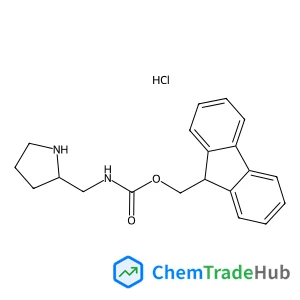
(S)-(9H-Fluoren-9-yl)methyl (pyrrolidin-2-ylmethyl)carbamate hydrochloride
CAS番号:
1217813-15-4
分子式:
C20H23ClN2O2
![2-(7,7-Difluorobicyclo[4.1.0]hept-1-yl)ethanamine structure](https://static.chemtradehub.com/structs/209/2098065-08-6-ff24.webp "2-(7,7-Difluorobicyclo[4.1.0]hept-1-yl)ethanamine structure")
おすすめサプライヤー





免責事項
このページに表示される学術雑誌情報は、参考および研究目的のみを目的としています。当社は雑誌出版社とは提携しておらず、投稿の取り扱いも行っておりません。出版に関するお問い合わせは、各雑誌出版社に直接ご連絡ください。
表示されている情報に誤りがある場合は、support@chemtradehub.com までご連絡ください。迅速に確認し、対応いたします。