


Basic reactivity of CaO: investigating active sites under operating conditions
文献情報
出版日
2010-10-14
DOI
10.1039/C0CP00855A
インパクトファクター
3.676
著者
原文を見る
要旨
A set of CaO samples was prepared from thermal decomposition of several precursors, leading to very different surface properties. During storage, CaO samples rehydrated quickly but reversibly. Before characterization, the samples were pre-treated at 1023 K under nitrogen flow to obtain CaO as the active phase. Although this pre-treatment led to almost the same specific surface areas for all samples, their basic reactivity levels toward 2-methylbut-3-yn-2-ol conversion were different from one preparation to another. In contrast with the properties of MgO pre-treated at the same temperature, the basic reactivity of CaO correlates neither with the concentration of surface defects (exposing ions in low coordination) determined by photoluminescence nor with the deprotonation ability toward methanol. In order to identify the active sites on CaO pre-treated under nitrogen in the temperature range 673 K–1023 K, OH groups were quantified with 1H NMR: the higher the surface density of OH groups, the higher the basic reactivity. Even after pre-treatment at 1023 K, after which only a few hydroxyls remain, the basic reactivity is governed by the remaining hydroxylation of the surface. The higher reactivity of OH groups of CaO compared to those of Ca(OH)2 and MgO is discussed.
おすすめジャーナル

Faraday Discussions

Molecular Diversity

Environmental Toxicology and Pharmacology

European Journal of Organic Chemistry

Angewandte Chemie International Edition

Journal of Medical Biochemistry

Photochemical & Photobiological Sciences

Nature Reviews Drug Discovery

Contact Lens & Anterior Eye

Advanced Engineering Materials
関連文献
Hydrogen adsorption trends on two metal-doped Ni2P surfaces for optimal catalyst design
Lauri Partanen, Simon Alberti, Kari Laasonen
2021-04-28
Paper
DOI: 10.1039/D1CP00684C
La induced Si3 trimer bilayer on the Si(111) surface
Jing Xu
2021-04-20
Paper
DOI: 10.1039/D1CP01351C
Destruction and reconstruction of UO22+ using gas-phase reactions
Michael J. Van Stipdonk, Evan H. Perez, Luke J. Metzler, Amanda R. Bubas, Theodore Corcovilos, Arpad Somogyi
2021-05-07
Paper
DOI: 10.1039/D1CP01520F
From absolute potentials to a generalized computational standard hydrogen electrode for aqueous and non-aqueous solvents
Michael Busch, Elisabet Ahlberg, Kari Laasonen
2021-05-04
Paper
DOI: 10.1039/D1CP00499A
An ultra-sensitive gas sensor based on a two-dimensional manganese porphyrin monolayer
Ze-Wen Hao, Mi-Mi Dong, Rui-Qin Zhang, Chuan-Kui Wang, Xiao-Xiao Fu
2021-04-22
Paper
DOI: 10.1039/D1CP00747E
Ordered mesoporous metal oxides for electrochemical applications: correlation between structure, electrical properties and device performance
Erdogan Celik, Yanjiao Ma, Torsten Brezesinski
2021-03-31
Perspective
DOI: 10.1039/D1CP00834J
The O K−2V spectrum of CO: the influence of the second core-hole
S. Carniato, R. Püttner, J. B. Martins, D. Céolin, R. Feifel
2021-04-22
Paper
DOI: 10.1039/D1CP00607J
The role of the potential field on occurrence and flow of octane in quartz nanopores
Kaiyun Zhan, Wenjing Fang, Zhiming Pan, Guilei Teng, Haixia Zheng, Li Zhao, Bing Liu
2021-04-27
Paper
DOI: 10.1039/D1CP00891A
CO2 activation and dissociation on In2O3(110) supported PdnPt(4−n) (n = 0–4) catalysts: a density functional theory study
Xiaowen Wang, Jiaying Pan, Haiqiao Wei, Wenjia Li, Jun Zhao, Zhen Hu
2021-05-04
Paper
DOI: 10.1039/D1CP01015H
Modelling the non-local thermodynamic equilibrium spectra of silylene (SiH2)
Victoria H. J. Clark, Sergei N. Yurchenko
2021-04-29
Paper
DOI: 10.1039/D1CP00839K
こちらもおすすめ
化合物よくある質問
2-メトキシ-4-(メチルスルフィニル)アミンの主な用途は何ですか?
2-メトキシ-4-(メチルスルフィニル)アミンは、主に医薬品および農薬の製造に使用されます。また、合成化学の一部として研究用材料としても利用されます。
41608-73-52-Methoxy-4-(methyls...
118684-13-24-(Bromomethyl)-3-me...
化合物よくある質問
4,6-二氯-N-甲基ピラミジンアミンの代替品はありますか?
代替品としては、4,6-二クロロピラミジンアミンや他のピラミジン系化合物が考えられます。ただし、目的と用途によって最適な代替品は異なります。
10397-15-64,6-Dichloro-N-methy...
化合物よくある質問
6-氯-4-甲基-1H-吲哚を含む廃棄物はどのように処理すべきですか?
6-氯-4-甲基-1H-吲哚の廃棄物は、適切な容器に収集し、密閉して保管します。温度は常温、湿度は低く、直射日光を避けて保管することを推奨します。廃棄処理は専門...
885520-84-36-chloro-4-methyl-1H...
化合物よくある質問
2-フローユロ-4-(トリフルオロメチル)ベンゾイドについて「に適用される法規ガイドラインは何ですか」
2-フローユロ-4-(トリフルオロメチル)ベンゾイドのCAS番号は207974-08-1です。この化合物はGHS分類で毒性物質と有害な反応物質として分類されます...
207974-08-1[2-Fluoro-4-(trifluo...
化合物よくある質問
4-ニトロフェニルN-[(ベンゼルオキシルカーボンイル]グリシングリシングリシン酸はどのように保存すればよいですか?
4-ニトロフェニルN-[(ベンゼルオキシルカーボンイル]グリシングリシングリシン酸は、室温で暗所に保管し、乾燥した環境で保存することを推奨します。容器は密閉性の...
19811-64-44-Nitrophenyl N-[(be...
化合物よくある質問
イソデスロラタドリンの代替品はありますか?
イソデスロラタドリンの代替品としては、デスロラタドリンや他の抗ヒスタミン薬が挙げられます。具体的には、デスロラタドリン、ラセカミド、フェルタドリンなどが、症状や...
183198-49-4Iso Desloratadine
化合物よくある質問
5-甲氧基-1,2,3,4-四氢异喹啉盐酸盐はどのように合成されますか?
5-甲氧基-1,2,3,4-四氢异喹啉盐酸盐の一般的な合成方法は、メタノール中で5-メトキシ-1,2,3,4-四ヒュドロイソキシンを塩酸で塩化します。この反応で...
103030-69-95-Methoxy-1,2,3,4-te...
化合物よくある質問
4-アミノ-5-メトキシ-2-トルエンサルホニック酸についての法規ガイドラインは何ですか?
CAS番号6471-78-9の4-アミノ-5-メトキシ-2-トルエンサルホニック酸は、GHS分類では corrosive(腐食性)と識別されます。EUのREAC...
6471-78-94-Amino-5-Methoxy-2-...
化合物よくある質問
甲基孕酮を取り扱う際の実験室安全事項は何ですか?
甲基孕酮の取り扱いは、PPE(個人保護具)の使用が必要な重要な安全事項を伴います。防塵マスク、ゴーグル、手袋を着用することが推奨されます。ドラフトチャンバーを使...
204063-33-22-[(Diphenylmethyl)a...
掲載誌
Physical Chemistry Chemical Physics

CiteScore:
5.5
自己引用率:
10.3%
年間論文数:
3036
Physical Chemistry Chemical Physics (PCCP) is an international journal co-owned by 19 physical chemistry and physics societies from around the world. This journal publishes original, cutting-edge research in physical chemistry, chemical physics and biophysical chemistry. To be suitable for publication in PCCP, articles must include significant innovation and/or insight into physical chemistry; this is the most important criterion that reviewers and Editors will judge against when evaluating submissions. The journal has a broad scope and welcomes contributions spanning experiment, theory, computation and data science. Topical coverage includes spectroscopy, dynamics, kinetics, statistical mechanics, thermodynamics, electrochemistry, catalysis, surface science, quantum mechanics, quantum computing and machine learning. Interdisciplinary research areas such as polymers and soft matter, materials, nanoscience, energy, surfaces/interfaces, and biophysical chemistry are welcomed if they demonstrate significant innovation and/or insight into physical chemistry. Joined experimental/theoretical studies are particularly appreciated when complementary and based on up-to-date approaches.
おすすめ化合物
![4-[(2-{2-[2-(2-Aminoethoxy)ethoxy]ethoxy}ethyl)amino]-2-(2,6-dioxo-3-piperidinyl)-1H-isoindole-1,3(2H)-dione structure](https://static.chemtradehub.com/structs/209/2093416-31-8-3162.webp "4-[(2-{2-[2-(2-Aminoethoxy)ethoxy]ethoxy}ethyl)amino]-2-(2,6-dioxo-3-piperidinyl)-1H-isoindole-1,3(2H)-dione structure")
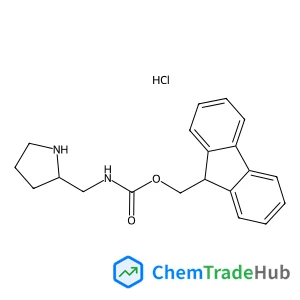
(S)-(9H-Fluoren-9-yl)methyl (pyrrolidin-2-ylmethyl)carbamate hydrochloride
CAS番号:
1217813-15-4
分子式:
C20H23ClN2O2
おすすめサプライヤー





免責事項
このページに表示される学術雑誌情報は、参考および研究目的のみを目的としています。当社は雑誌出版社とは提携しておらず、投稿の取り扱いも行っておりません。出版に関するお問い合わせは、各雑誌出版社に直接ご連絡ください。
表示されている情報に誤りがある場合は、support@chemtradehub.com までご連絡ください。迅速に確認し、対応いたします。