


Chelerythrine–lysozyme interaction: spectroscopic studies, thermodynamics and molecular modeling exploration
文献情報
出版日
2015-05-12
DOI
10.1039/C5CP00424A
インパクトファクター
3.676
著者
Chandrima Jash, Pritha Basu, Pavan V. Payghan, Nanda Ghoshal, Gopinatha Suresh Kumar
原文を見る
要旨
The binding of the iminium and alkanolamine forms of chelerythrine to lysozyme (Lyz) was investigated by spectroscopy and docking studies. The thermodynamics of the binding was studied by calorimetry. Spectroscopic evidence suggested that Trp-62 and Trp-63 in the β-domain of the protein are closer to the binding site; moreover, the binding site was at a distance of 2.27 and 2.00 nm from the iminium and alkanolamine forms, respectively, according to the Forster theory of non-radiation energy transfer. The equilibrium binding constants for the iminium and alkanolamine forms at 298 K were evaluated to be 1.29 × 10⁵ and 7.79 × 10⁵ M−1, respectively. The binding resulted in an alteration of the secondary structure of the protein with a distinct reduction of the helical organization. The binding of iminium was endothermic, involving electrostatic and hydrophobic interactions, while that of alkanolamine form was exothermic and dominated by hydrogen bonding interactions. Docking studies provided the atomistic details pertaining to the binding of both forms of chelerythrine and supported the higher binding in favour of the alkanolamine over the iminium. Furthermore, molecular dynamics study provided accurate insights regarding the binding of both chelerythrine forms in accordance with the experimental results obtained. Chelerythrine binding pocket involves the catalytic region and aggregation prone K-peptide region, which are sandwiched between one another. Overall, these results suggest that both the forms of the alkaloid bind to the protein but the neutral form has higher affinity than the cationic form.
おすすめジャーナル

Journal of the American Chemical Society

Canadian Metallurgical Quarterly

Journal of the Chinese Chemical Society

Corrosion Science

Anti-Corrosion Methods and Materials

Chemistry of Heterocyclic Compounds

Cement and Concrete Research

Chemical Reviews

Chemical & Pharmaceutical Bulletin

Australian Journal of Chemistry
関連文献
Atomic-level design of metalloenzyme-like active pockets in metal–organic frameworks for bioinspired catalysis
Weiqing Xu, Yu Wu, Wenling Gu, Dan Du, Yuehe Lin, Chengzhou Zhu
2023-11-29
Review Article
DOI: 10.1039/D3CS00767G
Revolutionizing the structural design and determination of covalent–organic frameworks: principles, methods, and techniques
Yikuan Liu, Xiaona Liu, An Su, Chengtao Gong, Shenwei Chen, Liwei Xia, Chengwei Zhang, Xiaohuan Tao, Yue Li, Yonghe Li, Tulai Sun, Mengru Bu, Wei Shao, Jia Zhao, Xiaonian Li, Yongwu Peng, Yihan Zhu
2023-12-15
Review Article
DOI: 10.1039/D3CS00287J
Recent advances in the design of afterglow materials: mechanisms, structural regulation strategies and applications
Geoffrey I. N. Waterhouse, Siyu Lu
2023-10-26
Review Article
DOI: 10.1039/D2CS00993E
Strengths of covalent bonds in LnO2 determined from O K-edge XANES spectra using a Hubbard model
Wayne W. Lukens, Jr, Stefan G. Minasian, Corwin H. Booth
2023-11-03
Edge Article
DOI: 10.1039/D3SC03304J
Heterogenization of molecular catalysts within porous solids: the case of Ni-catalyzed ethylene oligomerization from zeolites to metal–organic frameworks
Rémy Rajapaksha, Partha Samanta, Elsje Alessandra Quadrelli, Jérôme Canivet
2023-10-30
Review Article
DOI: 10.1039/D3CS00188A
Nucleic acid degradation as barrier to gene delivery: a guide to understand and overcome nuclease activity
2023-12-11
Review Article
DOI: 10.1039/D3CS00194F
A chiral pentanidium and pyridinyl-sulphonamide ion pair as an enantioselective organocatalyst for Steglich rearrangement
Ziqi Yang, Chaoran Xu, Xianxian Zhou, Choon Wee Kee, Choon-Hong Tan
2023-11-09
Edge Article
DOI: 10.1039/D3SC04397E
Template-assisted synthesis of isomeric copper(i) clusters with tunable structures showing photophysical and electrochemical properties
Jun-Jie Fang, Zheng Liu, Yang-Lin Shen, Yun-Peng Xie, Xing Lu
2023-10-13
Edge Article
DOI: 10.1039/D3SC04682F
こちらもおすすめ
化合物よくある質問
カルボニル基が付いた5-氰基-1-{[(2-メチル-2-プロpanyl)オキシ]カーボンイル}1H-吲哚-2-イリド-2-ボリン酸はどのように保存すればよいですか?
カルボニル基が付いた5-氰基-1-{[(2-メチル-2-プロpanyl)オキシ]カーボンイル}1H-吲哚-2-イリド-2-ボリン酸は、直射日光を避けて室温(15...
475102-15-9(5-Cyano-1-{[(2-meth...
化合物よくある質問
tert-ブチル2-クロロメチルピリジン-3-基炭酸エステルの市場動向や研究トレンドはどうですか?
この化合物は合成化学分野において、特にピリジン化合物の合成や改良に用いられます。最近の研究では、ピリジン化合物の新規合成法や特性の改良が注目されています。市場動...
1203498-98-9tert-Butyl 2-chloro-...
化合物よくある質問
聚二季戊四醇六丙烯酸酯はどの業界で使用されていますか?
聚二季戊四醇六丙烯酸酯は、医薬品、ポリマー、センサー、半導体などの業界で広く使用されています。特にポリマー業界では硬化剤として、医薬分野では医療機器の製造に使用...
29570-58-93-(Acryloyloxy)-2-({...
化合物よくある質問
1-氯-5-硝基异喹啉の市場動向や研究トレンドはどうですか?
1-氯-5-硝基异喹啉は、薬理学や合成化学の研究分野で注目されています。市場動向としては、その生物学的な活性や合成可能性を評価する研究が増えています。また、代替...
58142-97-51-Chloro-5-nitroisoq...
化合物よくある質問
2-チロール-5-メチルスルフェニル-3-trifルオルメチルベンゼンはどのように合成されますか?
2-チロール-5-メチルスルフェニル-3-trifルオルメチルベンゼンは、トリフルオロメチル化反応と硫化反応を経て合成されます。通常、トリフルオロメチル化剤と硫...
957066-04-51-Chloro-4-(methylsu...
化合物よくある質問
p-トールイルマグネシウムブロミドの物理化学的性質は何ですか?
p-トールイルマグネシウムブロミドのCAS番号は4294-57-9です。この化合物は白色の結晶性粉末で、分子量は204.32です。溶剤中で良好に溶解しますが、水...
4294-57-9p-Tolylmagnesium bro...
化合物よくある質問
1-(5-甲基-2-硫化素基)プロパン-1-酮の市場動向や研究トレンドはどうですか?
1-(5-甲基-2-硫化素基)プロパン-1-酮の市場動向は、化学産業全体の需要に影響を受けますが、最近では pharmaceutical 分野での応用が注目され...
59303-13-81-(5-Methyl-2-thieny...
化合物よくある質問
十一碳烯酰甘氨酸を取り扱う際の実験室安全事項は何ですか?
十一碳烯酰甘氨酸は吸入や皮膚から吸収されることがあり、取り扱う際には防塵マスクと手袋を使用してください。ドラフトチャンバーを用いて漏洩を処理し、適切なSDS(S...
54301-26-7N-10-Undecenoylglyci...
化合物よくある質問
1H,1H-全氟-3,6-二氧杂葵-1-醇を取り扱う際の実験室安全事項は何ですか?
この化合物は吸入や皮膚吸収による毒性があるため、防塵マスク、ゴーグル、防護手袋を使用する必要があります。ドラフトチャンバーでの操作が必要です。漏洩時には即座に換...
152914-73-32,2-Difluoro-2-[1,1,...
化合物よくある質問
3-(4-(フルオロメチルオキシ)フェニル)-1,2,4-オキサジアゾール-5-カルボハイドライドは安全ですか?
安全性は化合物の使用方法によります。直接的な毒性は報告されていませんが、吸入や皮膚接触には注意が必要です。適切な防護服を着用し、換気を図ることを推奨します。
883028-82-83-(4-(Trifluorometho...
掲載誌
Physical Chemistry Chemical Physics

CiteScore:
5.5
自己引用率:
10.3%
年間論文数:
3036
Physical Chemistry Chemical Physics (PCCP) is an international journal co-owned by 19 physical chemistry and physics societies from around the world. This journal publishes original, cutting-edge research in physical chemistry, chemical physics and biophysical chemistry. To be suitable for publication in PCCP, articles must include significant innovation and/or insight into physical chemistry; this is the most important criterion that reviewers and Editors will judge against when evaluating submissions. The journal has a broad scope and welcomes contributions spanning experiment, theory, computation and data science. Topical coverage includes spectroscopy, dynamics, kinetics, statistical mechanics, thermodynamics, electrochemistry, catalysis, surface science, quantum mechanics, quantum computing and machine learning. Interdisciplinary research areas such as polymers and soft matter, materials, nanoscience, energy, surfaces/interfaces, and biophysical chemistry are welcomed if they demonstrate significant innovation and/or insight into physical chemistry. Joined experimental/theoretical studies are particularly appreciated when complementary and based on up-to-date approaches.
おすすめ化合物
![1,10-bis(3,5-dimethylphenyl)-12-hydroxy-4,5,6,7-tetrahydroiindeno[7,1-de:1',7'-fg][1,3,2]dioxaphosphocine 12-oxide structure](https://static.chemtradehub.com/structs/141/1412439-82-7-b9a9.webp "1,10-bis(3,5-dimethylphenyl)-12-hydroxy-4,5,6,7-tetrahydroiindeno[7,1-de:1',7'-fg][1,3,2]dioxaphosphocine 12-oxide structure")
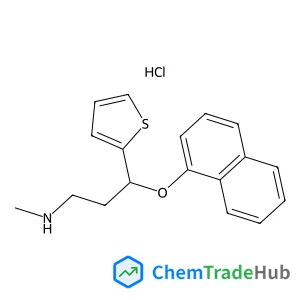
N-Methyl-3-(1-naphthyloxy)-3-(2-thienyl)-1-propanamine hydrochloride (1:1)
CAS番号:
1188266-11-6
分子式:
C18H20ClNOS
![1-[6-(1H-Imidazol-1-yl)-3-pyridinyl]methanamine structure](https://static.chemtradehub.com/structs/914/914637-08-4-8825.webp "1-[6-(1H-Imidazol-1-yl)-3-pyridinyl]methanamine structure")
おすすめサプライヤー





免責事項
このページに表示される学術雑誌情報は、参考および研究目的のみを目的としています。当社は雑誌出版社とは提携しておらず、投稿の取り扱いも行っておりません。出版に関するお問い合わせは、各雑誌出版社に直接ご連絡ください。
表示されている情報に誤りがある場合は、support@chemtradehub.com までご連絡ください。迅速に確認し、対応いたします。