


Recent progress in theoretical and computational investigations of Li-ion battery materials and electrolytes
文献情報
出版日
2015-01-14
DOI
10.1039/C4CP05552G
インパクトファクター
3.676
著者
原文を見る
要旨
There is an increasing worldwide demand for high energy density batteries. In recent years, rechargeable Li-ion batteries have become important power sources, and their performance gains are driving the adoption of electrical vehicles (EV) as viable alternatives to combustion engines. The exploration of new Li-ion battery materials is an important focus of materials scientists and computational physicists and chemists throughout the world. The practical applications of Li-ion batteries and emerging alternatives may not be limited to portable electronic devices and circumventing hurdles that include range anxiety and safety among others, to their widespread adoption in EV applications in the future requires new electrode materials and a fuller understanding of how the materials and the electrolyte chemistries behave. Since this field is advancing rapidly and attracting an increasing number of researchers, it is crucial to summarise the current progress and the key scientific challenges related to Li-ion batteries from theoretical point of view. Computational prediction of ideal compounds is the focus of several large consortia, and a leading methodology in designing materials and electrolytes optimized for function, including those for Li-ion batteries. In this Perspective, we review the key aspects of Li-ion batteries from theoretical perspectives: the working principles of Li-ion batteries, the cathodes, anodes, and electrolyte solutions that are the current state of the art, and future research directions for advanced Li-ion batteries based on computational materials and electrolyte design.
おすすめジャーナル

Herald of the Russian Academy of Sciences

Main Group Chemistry

Heteroatom Chemistry

Biocatalysis and Biotransformation

Critical Reviews in Solid State and Materials Sciences

Journal of Chemical Sciences

Bioorganic & Medicinal Chemistry

Chinese Journal of Chemistry

Cellulose

Journal of Asian Natural Products Research
関連文献
Stereodivergent synthesis of 5-aminopipecolic acids and application in the preparation of a cyclic RGD peptidomimetic as a nanomolar αVβ3 integrin ligand
Lorenzo Sernissi, Luciano Ricci, Dina Scarpi, Francesca Bianchini, Daniela Arosio, Alessandro Contini, Ernesto G. Occhiato
2018-04-11
Paper
DOI: 10.1039/C8OB00534F
Recent advances in organocatalytic asymmetric multicomponent cascade reactions for enantioselective synthesis of spirooxindoles
Yongchao Wang, Angel A. Cobo, Annaliese K. Franz
2021-05-07
Review Article
DOI: 10.1039/D1QO00220A
Rh(iii)-Catalyzed regioselective mono- and di-iodination of azobenzenes using alkyl iodide
Jixing Li, Wenxia Cong, Jinlong Zhang, Huameng Yang, Gaoxi Jiang
2018-04-17
Paper
DOI: 10.1039/C8OB00318A
Recent advances in multi-component reactions and their mechanistic insights: a triennium review
Stephy Elza John, Shivani Gulati, Nagula Shankaraiah
2021-05-13
Review Article
DOI: 10.1039/D0QO01480J
The synthesis of mono-alkyl phosphates and their derivatives: an overview of their nature, preparation and use, including synthesis under plausible prebiotic conditions
2018-03-20
Review Article
DOI: 10.1039/C8OB00469B
Construction of the tetracyclic core of (±)-cycloclavine and 4-amino Uhle's ketone
Jin-Quan Chen, Yang Mi, Zi-Fa Shi, Xiao-Ping Cao
2018-05-09
Paper
DOI: 10.1039/C7OB03067C
A reversible and highly selective two-photon fluorescent “on–off–on” probe for biological Cu2+ detection
Hui Wang, Bin Fang, Le Zhou, Di Li, Lin Kong, Kajsa Uvdal, Zhangjun Hu
2018-03-05
Paper
DOI: 10.1039/C8OB00257F
Thioacids – synthons for amide bond formation and ligation reactions: assembly of peptides and peptidomimetics
Narendra N., Vishwanatha M. Thimmalapura, Basavaprabhu Hosamani, Girish Prabhu, L. Roopesh Kumar, Vommina V. Sureshbabu
2018-04-13
Review Article
DOI: 10.1039/C8OB00512E
Metal-free oxidative cyclization of trifluoroacetimidohydrazides with methylhetarenes: a facile access to 3-hetaryl-5-trifluoromethyl-1,2,4-triazoles
Jiajun Zhang, Tian-Hui Xu, Zhengkai Chen
2021-06-11
Research Article
DOI: 10.1039/D1QO00790D
こちらもおすすめ
化合物よくある質問
2-メトキシ-4-(メチルスルフィニル)アミンの主な用途は何ですか?
2-メトキシ-4-(メチルスルフィニル)アミンは、主に医薬品および農薬の製造に使用されます。また、合成化学の一部として研究用材料としても利用されます。
41608-73-52-Methoxy-4-(methyls...
118684-13-24-(Bromomethyl)-3-me...
化合物よくある質問
4,6-二氯-N-甲基ピラミジンアミンの代替品はありますか?
代替品としては、4,6-二クロロピラミジンアミンや他のピラミジン系化合物が考えられます。ただし、目的と用途によって最適な代替品は異なります。
10397-15-64,6-Dichloro-N-methy...
化合物よくある質問
6-氯-4-甲基-1H-吲哚を含む廃棄物はどのように処理すべきですか?
6-氯-4-甲基-1H-吲哚の廃棄物は、適切な容器に収集し、密閉して保管します。温度は常温、湿度は低く、直射日光を避けて保管することを推奨します。廃棄処理は専門...
885520-84-36-chloro-4-methyl-1H...
化合物よくある質問
2-フローユロ-4-(トリフルオロメチル)ベンゾイドについて「に適用される法規ガイドラインは何ですか」
2-フローユロ-4-(トリフルオロメチル)ベンゾイドのCAS番号は207974-08-1です。この化合物はGHS分類で毒性物質と有害な反応物質として分類されます...
207974-08-1[2-Fluoro-4-(trifluo...
化合物よくある質問
4-ニトロフェニルN-[(ベンゼルオキシルカーボンイル]グリシングリシングリシン酸はどのように保存すればよいですか?
4-ニトロフェニルN-[(ベンゼルオキシルカーボンイル]グリシングリシングリシン酸は、室温で暗所に保管し、乾燥した環境で保存することを推奨します。容器は密閉性の...
19811-64-44-Nitrophenyl N-[(be...
化合物よくある質問
イソデスロラタドリンの代替品はありますか?
イソデスロラタドリンの代替品としては、デスロラタドリンや他の抗ヒスタミン薬が挙げられます。具体的には、デスロラタドリン、ラセカミド、フェルタドリンなどが、症状や...
183198-49-4Iso Desloratadine
化合物よくある質問
5-甲氧基-1,2,3,4-四氢异喹啉盐酸盐はどのように合成されますか?
5-甲氧基-1,2,3,4-四氢异喹啉盐酸盐の一般的な合成方法は、メタノール中で5-メトキシ-1,2,3,4-四ヒュドロイソキシンを塩酸で塩化します。この反応で...
103030-69-95-Methoxy-1,2,3,4-te...
化合物よくある質問
4-アミノ-5-メトキシ-2-トルエンサルホニック酸についての法規ガイドラインは何ですか?
CAS番号6471-78-9の4-アミノ-5-メトキシ-2-トルエンサルホニック酸は、GHS分類では corrosive(腐食性)と識別されます。EUのREAC...
6471-78-94-Amino-5-Methoxy-2-...
化合物よくある質問
甲基孕酮を取り扱う際の実験室安全事項は何ですか?
甲基孕酮の取り扱いは、PPE(個人保護具)の使用が必要な重要な安全事項を伴います。防塵マスク、ゴーグル、手袋を着用することが推奨されます。ドラフトチャンバーを使...
204063-33-22-[(Diphenylmethyl)a...
掲載誌
Physical Chemistry Chemical Physics

CiteScore:
5.5
自己引用率:
10.3%
年間論文数:
3036
Physical Chemistry Chemical Physics (PCCP) is an international journal co-owned by 19 physical chemistry and physics societies from around the world. This journal publishes original, cutting-edge research in physical chemistry, chemical physics and biophysical chemistry. To be suitable for publication in PCCP, articles must include significant innovation and/or insight into physical chemistry; this is the most important criterion that reviewers and Editors will judge against when evaluating submissions. The journal has a broad scope and welcomes contributions spanning experiment, theory, computation and data science. Topical coverage includes spectroscopy, dynamics, kinetics, statistical mechanics, thermodynamics, electrochemistry, catalysis, surface science, quantum mechanics, quantum computing and machine learning. Interdisciplinary research areas such as polymers and soft matter, materials, nanoscience, energy, surfaces/interfaces, and biophysical chemistry are welcomed if they demonstrate significant innovation and/or insight into physical chemistry. Joined experimental/theoretical studies are particularly appreciated when complementary and based on up-to-date approaches.
おすすめ化合物
![5-Acetyl-2,3-dihydrobenzo[b]furan structure](https://static.chemtradehub.com/structs/908/90843-31-5-eea4.webp "5-Acetyl-2,3-dihydrobenzo[b]furan structure")

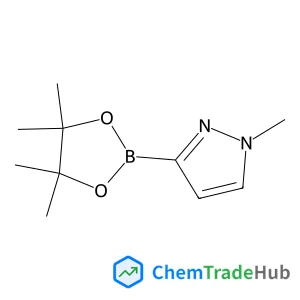
1-Methyl-3-(4,4,5,5-tetramethyl-1,3,2-dioxaborolan-2-yl)-1H-pyrazole
CAS番号:
1020174-04-2
分子式:
C10H17BN2O2
おすすめサプライヤー





免責事項
このページに表示される学術雑誌情報は、参考および研究目的のみを目的としています。当社は雑誌出版社とは提携しておらず、投稿の取り扱いも行っておりません。出版に関するお問い合わせは、各雑誌出版社に直接ご連絡ください。
表示されている情報に誤りがある場合は、support@chemtradehub.com までご連絡ください。迅速に確認し、対応いたします。