












Is hexagonal boron nitride always good as a substrate for carbon nanotube-based devices?
文献情報
出版日
2015-01-07
DOI
10.1039/C4CP05478D
インパクトファクター
3.676
著者
Seoung-Hun Kang, Gunn Kim, Young-Kyun Kwon
原文を見る
要旨
Hexagonal boron nitride sheets have been noted especially for their enhanced properties as substrates for sp2 carbon-based nanodevices. To evaluate whether such enhanced properties would be retained under various realistic conditions, we investigate the structural and electronic properties of semiconducting carbon nanotubes on perfect and defective hexagonal boron nitride sheets under an external electric field as well as with a metal impurity, using density functional theory. We verify that the use of a perfect hexagonal boron nitride sheet as a substrate indeed improves the device performances of carbon nanotubes, compared with the use of conventional substrates such as SiO2. We further show that even the hexagonal boron nitride with some defects can show better performance as a substrate. Our calculations, on the other hand, also suggest that some defective boron nitride layers with a monovacancy and a nickel impurity could bring about poor device behavior since the imperfections impair electrical conductivity due to residual scattering under an applied electric field.
関連文献
Harnessing the PD-L1 interface peptide for positron emission tomography imaging of the PD-1 immune checkpoint
Kuan Hu, Lin Xie, Masayuki Hanyu, Yiding Zhang, Lingyun Li, Xiaohui Ma, Kotaro Nagatsu, Hisashi Suzuki, Weizhi Wang, Ming-Rong Zhang
2020-08-27
Paper
DOI: 10.1039/D0CB00070A
A primer on harnessing non-enzymatic post-translational modifications for drug design
Marcus J. C. Long, Phillippe Ly, Yimon Aye
2021-10-26
Opinion
DOI: 10.1039/D1MD00157D
Finding and characterizing a catalytic antibody light chain, H34, capable of degrading the PD-1 molecule
Emi Hifumi, Hiroaki Taguchi, Tamami Nonaka, Takunori Harada, Taizo Uda
2020-12-10
Paper
DOI: 10.1039/D0CB00155D
A live-cell assay for the detection of pre-microRNA–protein interactions
Sydney L. Rosenblum, Daniel A. Lorenz
2020-12-08
Paper
DOI: 10.1039/D0CB00055H
Investigation of the biological functions of heparan sulfate using a chemoenzymatic synthetic approach
Zhangjie Wang, Katelyn Arnold, Vijay Manohar Dhurandhare, Yongmei Xu, Jian Liu
2021-02-22
Review Article
DOI: 10.1039/D0CB00199F
Ru(ii)/BODIPY core co-encapsulated ratiometric nanotools for intracellular O2 sensing in live cancer cells
Karmel Sofia Gkika, Anna Kargaard, Ciaran Dolan, Tia E. Keyes
2021-07-28
Paper
DOI: 10.1039/D1CB00102G
Deciphering the substrate recognition mechanisms of the heparan sulfate 3-O-sulfotransferase-3
Rylee Wander, Andrea M. Kaminski, Yongmei Xu, Vijayakanth Pagadala, Juno M. Krahn, Truong Quang Pham, Jian Liu, Lars C. Pedersen
2021-05-28
Paper
DOI: 10.1039/D1CB00079A
Identifying cysteine residues susceptible to oxidation by photoactivatable atomic oxygen precursors using a proteome-wide analysis
Ankita Isor, Benjamin V. Chartier, Masahiro Abo, Emily R. Currens, Eranthie Weerapana, Ryan D. McCulla
2021-01-19
Paper
DOI: 10.1039/D0CB00200C
こちらもおすすめ
化合物よくある質問
2-メトキシ-4-(メチルスルフィニル)アミンの主な用途は何ですか?
2-メトキシ-4-(メチルスルフィニル)アミンは、主に医薬品および農薬の製造に使用されます。また、合成化学の一部として研究用材料としても利用されます。
41608-73-52-Methoxy-4-(methyls...
118684-13-24-(Bromomethyl)-3-me...
化合物よくある質問
4,6-二氯-N-甲基ピラミジンアミンの代替品はありますか?
代替品としては、4,6-二クロロピラミジンアミンや他のピラミジン系化合物が考えられます。ただし、目的と用途によって最適な代替品は異なります。
10397-15-64,6-Dichloro-N-methy...
化合物よくある質問
6-氯-4-甲基-1H-吲哚を含む廃棄物はどのように処理すべきですか?
6-氯-4-甲基-1H-吲哚の廃棄物は、適切な容器に収集し、密閉して保管します。温度は常温、湿度は低く、直射日光を避けて保管することを推奨します。廃棄処理は専門...
885520-84-36-chloro-4-methyl-1H...
化合物よくある質問
2-フローユロ-4-(トリフルオロメチル)ベンゾイドについて「に適用される法規ガイドラインは何ですか」
2-フローユロ-4-(トリフルオロメチル)ベンゾイドのCAS番号は207974-08-1です。この化合物はGHS分類で毒性物質と有害な反応物質として分類されます...
207974-08-1[2-Fluoro-4-(trifluo...
化合物よくある質問
4-ニトロフェニルN-[(ベンゼルオキシルカーボンイル]グリシングリシングリシン酸はどのように保存すればよいですか?
4-ニトロフェニルN-[(ベンゼルオキシルカーボンイル]グリシングリシングリシン酸は、室温で暗所に保管し、乾燥した環境で保存することを推奨します。容器は密閉性の...
19811-64-44-Nitrophenyl N-[(be...
化合物よくある質問
イソデスロラタドリンの代替品はありますか?
イソデスロラタドリンの代替品としては、デスロラタドリンや他の抗ヒスタミン薬が挙げられます。具体的には、デスロラタドリン、ラセカミド、フェルタドリンなどが、症状や...
183198-49-4Iso Desloratadine
化合物よくある質問
5-甲氧基-1,2,3,4-四氢异喹啉盐酸盐はどのように合成されますか?
5-甲氧基-1,2,3,4-四氢异喹啉盐酸盐の一般的な合成方法は、メタノール中で5-メトキシ-1,2,3,4-四ヒュドロイソキシンを塩酸で塩化します。この反応で...
103030-69-95-Methoxy-1,2,3,4-te...
化合物よくある質問
4-アミノ-5-メトキシ-2-トルエンサルホニック酸についての法規ガイドラインは何ですか?
CAS番号6471-78-9の4-アミノ-5-メトキシ-2-トルエンサルホニック酸は、GHS分類では corrosive(腐食性)と識別されます。EUのREAC...
6471-78-94-Amino-5-Methoxy-2-...
化合物よくある質問
甲基孕酮を取り扱う際の実験室安全事項は何ですか?
甲基孕酮の取り扱いは、PPE(個人保護具)の使用が必要な重要な安全事項を伴います。防塵マスク、ゴーグル、手袋を着用することが推奨されます。ドラフトチャンバーを使...
204063-33-22-[(Diphenylmethyl)a...
掲載誌
Physical Chemistry Chemical Physics

CiteScore:
5.5
自己引用率:
10.3%
年間論文数:
3036
Physical Chemistry Chemical Physics (PCCP) is an international journal co-owned by 19 physical chemistry and physics societies from around the world. This journal publishes original, cutting-edge research in physical chemistry, chemical physics and biophysical chemistry. To be suitable for publication in PCCP, articles must include significant innovation and/or insight into physical chemistry; this is the most important criterion that reviewers and Editors will judge against when evaluating submissions. The journal has a broad scope and welcomes contributions spanning experiment, theory, computation and data science. Topical coverage includes spectroscopy, dynamics, kinetics, statistical mechanics, thermodynamics, electrochemistry, catalysis, surface science, quantum mechanics, quantum computing and machine learning. Interdisciplinary research areas such as polymers and soft matter, materials, nanoscience, energy, surfaces/interfaces, and biophysical chemistry are welcomed if they demonstrate significant innovation and/or insight into physical chemistry. Joined experimental/theoretical studies are particularly appreciated when complementary and based on up-to-date approaches.
おすすめ化合物
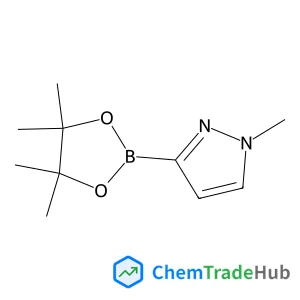
1-Methyl-3-(4,4,5,5-tetramethyl-1,3,2-dioxaborolan-2-yl)-1H-pyrazole
CAS番号:
1020174-04-2
分子式:
C10H17BN2O2
![[4-(Heptyloxy)phenyl]boronic acid structure](https://static.chemtradehub.com/structs/136/136370-19-9-ad33.webp "[4-(Heptyloxy)phenyl]boronic acid structure")
おすすめサプライヤー






免責事項
このページに表示される学術雑誌情報は、参考および研究目的のみを目的としています。当社は雑誌出版社とは提携しておらず、投稿の取り扱いも行っておりません。出版に関するお問い合わせは、各雑誌出版社に直接ご連絡ください。
表示されている情報に誤りがある場合は、support@chemtradehub.com までご連絡ください。迅速に確認し、対応いたします。