












Efficient organic–inorganic hybrid perovskite solar cells processed in air
文献情報
出版日
2014-09-24
DOI
10.1039/C4CP03726J
インパクトファクター
3.676
著者
Madhu Seetharaman S, Puvvala Nagarjuna, P. Naresh Kumar, Surya Prakash Singh, Melepurath Deepa, Manoj A. G. Namboothiry
原文を見る
要旨
Organic–inorganic hybrid perovskite solar cells with fluorine doped tin oxide/titanium dioxide/CH3NH3PbI3−xClx/poly(3-hexylthiophene)/silver were made in air with more than 50% humidity. The best devices showed an open circuit voltage of 640 mV, a short circuit current density of 18.85 mA cm−2, a fill factor of 0.407 and a power conversion efficiency of 5.67%. The devices showed external quantum efficiency varying from 60 to 80% over a wavelength region of 350 nm to 750 nm of the solar spectrum. The morphology of the perovskite was investigated using scanning electron microscopy and it was found to be porous in nature. This study provides insights into air-stability of perovskite solar cells.
関連文献
Model free analysis of experimental residual dipolar couplings in small organic compounds
Felix A. Roth, Volker Schmidts, Jan Rettig, Christina M. Thiele
2021-11-30
Paper
DOI: 10.1039/D1CP02324A
Integrating trace amounts of Pd nanoparticles into Mo3N2 nanobelts for an improved hydrogen evolution reaction
Hanghia Shen, Tiju Thomas, Minghui Yang
2021-11-11
Paper
DOI: 10.1039/D1CP03898B
The lowest-energy structure of the gold cluster Au10: planar vs. nonplanar?
Pham Vu Nhat, Nguyen Thanh Si, Nguyen Thi Nhat Hang, Minh Tho Nguyen
2021-11-30
Communication
DOI: 10.1039/D1CP04440K
Dramatic differences in the conformational equilibria of chalcogen-bridged compounds: the case of diallyl ether versus diallyl sulfide
Tamanna Poonia, Weslley G. D. P. Silva, Jennifer van Wijngaarden
2021-12-03
Paper
DOI: 10.1039/D1CP04591A
Mechanistic understanding of the increased photoactivity of TiO2 nanosheets upon tantalum doping
Sri Hartuti, Sandhya Babel
2021-12-17
Paper
DOI: 10.1039/D1CP03907E
Integration of global ring currents using the Ampère–Maxwell law
Raphael J. F. Berger, Rinat T. Nasibullin, Dage Sundholm
2021-12-10
Communication
DOI: 10.1039/D1CP05061C
Improving the analysis of biological ensembles through extended similarity measures
Liwei Chang
2021-11-29
Paper
DOI: 10.1039/D1CP04019G
Effect of Nafion content and hydration level on the electrochemical area of a Pt nanocatalyst in the triple-phase boundary
2021-11-19
Paper
DOI: 10.1039/D1CP03731E
Thermoelectric performance of ZrNX (X = Cl, Br and I) monolayers
Nina Ge, Xinzhong Wang
2021-11-29
Paper
DOI: 10.1039/D1CP01928G
Flow effects on the surface properties of surfactant foam films
Zhicheng Ye, Jie Yang, Haiping Su, Yazhuo Shang
2021-11-15
Paper
DOI: 10.1039/D1CP03279H
こちらもおすすめ
化合物よくある質問
2-ヒドロキシ-5-ニトロベンジンブロモイドの代替品はありますか?
2-ヒドロキシ-5-ニトロベンジンブロモイドは特定の化学反応に適しているため、代替品は限られています。しかし、同様の構造を持つ2-ヒドロキシ-4-ニトロベンジン...
772-33-82-(Bromomethyl)-4-ni...
化合物よくある質問
N-(2-ブロモフェニル)-1-チロール-3-オキソ-3-(ピペリジニル)プロペン-2-イル)ベンゼンアミドを取り扱う際の実験室安全事項は何ですか?
N-(2-ブロモフェニル)-1-チロール-3-オキソ-3-(ピペリジニル)プロペン-2-イル)ベンゼンアミドは有毒で、皮膚や粘膜に刺激を与える可能性があります。...
1800044-77-2N-[(1Z)-1-(2-Bromoph...
化合物よくある質問
1,3プロパンジオール,2-[2-(2アミノ-6クロロ-9Hピリミジン-9-イル)エチル-1,1,2,2-D4]-2,3-ジアセタートの市場動向や研究トレンドはどうですか?
この化合物は、新規治療薬の開発に注目されています。市場では、その有効性と安全性が評価され、研究分野では、分子生物学と医薬化学の新たな発見が期待されています。
1020718-81-31,3-Propanediol, 2-[...
579-44-2Ethanone, 2-hydroxy-...
化合物よくある質問
Succinimidyl-alanyl-phenylalanyl-prolyl-phenylalanine 4-nitroanilide はどの業界で使用されていますか?
Succinimidyl-alanyl-phenylalanyl-prolyl-phenylalanine 4-nitroanilide は主に医薬品開発やポ...
128802-73-3succinimidyl-alanyl-...
化合物よくある質問
メチル6-アミノ-5-クロロピリジン-2-カーボイル酸について、適用される法規ガイドラインは何ですか?
メチル6-アミノ-5-クロロピリジン-2-カーボイル酸(CAS番号: 1256794-05-4)の使用には、GHS( Globally Harmonized S...
1256794-05-4Methyl 6-amino-5-chl...
化合物よくある質問
エチル4-(シクロ Pentagonyl)アミノ-2-メチル硫化基ピリミジン-5-カルボキシレートを取り扱う際の実験室安全事項は何ですか?
取り扱いには、耐薬品性の容器を使用し、通気性の良い場所で操作することを推奨します。漏れ時は、SDS(安全データシート)を参照して適切な措置を取ること。手洗いと洗...
211245-62-4ethyl 4-(cyclopentyl...
化合物よくある質問
(S)-3-ベンZYルピペリジン塩酸塩とは何ですか?
(S)-3-ベンZYルピペリジン塩酸塩は、CAS番号1258940-00-9で表される化合物です。これは、(S)-3-苯基哌啶的盐酸盐であり、主に医薬品の原料と...
1258940-00-9(S)-3-Phenylpiperidi...
化合物よくある質問
3,5-二甲基金剛胺の主な用途は何ですか?
3,5-二甲基金剛胺は、主に医薬品の原料として使用され、また抗うつ薬や抗アルツハイマー薬の開発に利用されます。さらに、化粧品や食品添加物の製造でも重要な役割を果...
19988-45-52-(2,3-Dihydroxyphen...
化合物よくある質問
ビス(4-メチル-2-ペンチル)フェニルカルボン酸エステルの代替品はありますか?
ビス(4-メチル-2-ペンチル)フェニルカルボン酸エステル (CAS番号: 1398066-13-1) の代替品には、ビス(2-エチルヘキシル)フェノールカルボ...
1398066-13-1Bis(4-methyl-2-penty...
掲載誌
Physical Chemistry Chemical Physics

CiteScore:
5.5
自己引用率:
10.3%
年間論文数:
3036
Physical Chemistry Chemical Physics (PCCP) is an international journal co-owned by 19 physical chemistry and physics societies from around the world. This journal publishes original, cutting-edge research in physical chemistry, chemical physics and biophysical chemistry. To be suitable for publication in PCCP, articles must include significant innovation and/or insight into physical chemistry; this is the most important criterion that reviewers and Editors will judge against when evaluating submissions. The journal has a broad scope and welcomes contributions spanning experiment, theory, computation and data science. Topical coverage includes spectroscopy, dynamics, kinetics, statistical mechanics, thermodynamics, electrochemistry, catalysis, surface science, quantum mechanics, quantum computing and machine learning. Interdisciplinary research areas such as polymers and soft matter, materials, nanoscience, energy, surfaces/interfaces, and biophysical chemistry are welcomed if they demonstrate significant innovation and/or insight into physical chemistry. Joined experimental/theoretical studies are particularly appreciated when complementary and based on up-to-date approaches.
おすすめ化合物
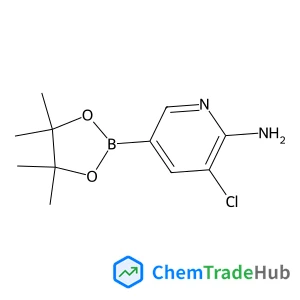
3-Chloro-5-(4,4,5,5-tetramethyl-1,3,2-dioxaborolan-2-yl)-2-pyridinamine
CAS番号:
1032758-99-8
分子式:
C11H16BClN2O2
![1-[3-(4-Morpholinylsulfonyl)phenyl]methanamine structure](https://static.chemtradehub.com/structs/933/933989-32-3-51af.webp "1-[3-(4-Morpholinylsulfonyl)phenyl]methanamine structure")

おすすめサプライヤー




免責事項
このページに表示される学術雑誌情報は、参考および研究目的のみを目的としています。当社は雑誌出版社とは提携しておらず、投稿の取り扱いも行っておりません。出版に関するお問い合わせは、各雑誌出版社に直接ご連絡ください。
表示されている情報に誤りがある場合は、support@chemtradehub.com までご連絡ください。迅速に確認し、対応いたします。