













N,N-Diethyl-4-(4,4,5,5-tetramethyl-1,3,2-dioxaborolan-2-yl)benzamide
CAS番号:
325142-99-2
分子式:
C17H26BNO3
Tamanna Poonia, Weslley G. D. P. Silva, Jennifer van Wijngaarden
The conformational landscapes of diallyl ether (DAE) and diallyl sulfide (DAS) were investigated for the first time using rotational spectroscopy from 6–20 GHz supported by quantum mechanical calculations. A significant difference in the conformational distribution of these chalcogen-bridged compounds is predicted by theory at the B3LYP-D3(BJ)/aug-cc-pVTZ level as DAS has only one low energy conformer while DAE has up to 12 energy minima within 5 kJ mol−1. This was confirmed by rotational spectroscopy as only transitions corresponding to the global minimum of DAS were observed while the spectrum of DAE was much richer and composed of features from the nine lowest energy conformers. To understand the effects that govern the conformational preferences of DAE and DAS, natural bond orbital and non-covalent interaction analyses were done. These show that unique orbital interactions stabilize several conformers of the ether making its conformational landscape more competitive than that of the sulfide. This is consistent with a bonding model involving decreased hybridization of the bridging atom as one moves down the periodic table which is confirmed by the experimental ground state structures of the lowest energy forms of DAE and DAS, derived using spectra of the 13C and 34S substituted species in natural abundance.
Xiaodong Wu, Yangyang Han, Xinxing Zhang, Canhui Lu
DOI: 10.1039/C7CP02293J
Padmabati Mondal, Markus Meuwly
DOI: 10.1039/C7CP01892D
Lantao Wu, Jianshe Wang, Yi Shen, Le Liu, Jingyu Xi
DOI: 10.1039/C7CP02581E
Shujun Li, Zhiqi Li, Chunyu Liu, Xinyuan Zhang, Zhihui Zhang, Wenbin Guo, Liang Shen, Shengping Ruan, Liu Zhang
DOI: 10.1039/C7CP01326D
Nerea Epelde-Elezcano, Ruth Prieto-Montero, Virginia Martínez-Martínez, María J. Ortiz, Alejandro Prieto-Castañeda, Eduardo Peña-Cabrera, José L. Belmonte-Vázquez, Iñigo López-Arbeloa, Ross Brown, Sylvie Lacombe
DOI: 10.1039/C7CP01333G
Boyao Wen, Chengzhen Sun, Bofeng Bai
DOI: 10.1039/C7CP01826F
Jorge Nochebuena, Cristina Cuautli, Joel Ireta
DOI: 10.1039/C7CP01695F
F. Bianchini, H. Fjellvåg, P. Vajeeston
DOI: 10.1039/C7CP01395G
Andrea Basagni, Agnese Marcelli, Andrea Alessi, Stefano Zanardi, Roberto Fusco, Mario Salvalaggio, Laura Bussotti
DOI: 10.1039/C6CP08721C
2-ヒドロキシ-5-ニトロベンジンブロモイドは特定の化学反応に適しているため、代替品は限られています。しかし、同様の構造を持つ2-ヒドロキシ-4-ニトロベンジン...
N-(2-ブロモフェニル)-1-チロール-3-オキソ-3-(ピペリジニル)プロペン-2-イル)ベンゼンアミドは有毒で、皮膚や粘膜に刺激を与える可能性があります。...
この化合物は、新規治療薬の開発に注目されています。市場では、その有効性と安全性が評価され、研究分野では、分子生物学と医薬化学の新たな発見が期待されています。
Succinimidyl-alanyl-phenylalanyl-prolyl-phenylalanine 4-nitroanilide は主に医薬品開発やポ...
メチル6-アミノ-5-クロロピリジン-2-カーボイル酸(CAS番号: 1256794-05-4)の使用には、GHS( Globally Harmonized S...
取り扱いには、耐薬品性の容器を使用し、通気性の良い場所で操作することを推奨します。漏れ時は、SDS(安全データシート)を参照して適切な措置を取ること。手洗いと洗...
(S)-3-ベンZYルピペリジン塩酸塩は、CAS番号1258940-00-9で表される化合物です。これは、(S)-3-苯基哌啶的盐酸盐であり、主に医薬品の原料と...
3,5-二甲基金剛胺は、主に医薬品の原料として使用され、また抗うつ薬や抗アルツハイマー薬の開発に利用されます。さらに、化粧品や食品添加物の製造でも重要な役割を果...
ビス(4-メチル-2-ペンチル)フェニルカルボン酸エステル (CAS番号: 1398066-13-1) の代替品には、ビス(2-エチルヘキシル)フェノールカルボ...

Physical Chemistry Chemical Physics (PCCP) is an international journal co-owned by 19 physical chemistry and physics societies from around the world. This journal publishes original, cutting-edge research in physical chemistry, chemical physics and biophysical chemistry. To be suitable for publication in PCCP, articles must include significant innovation and/or insight into physical chemistry; this is the most important criterion that reviewers and Editors will judge against when evaluating submissions. The journal has a broad scope and welcomes contributions spanning experiment, theory, computation and data science. Topical coverage includes spectroscopy, dynamics, kinetics, statistical mechanics, thermodynamics, electrochemistry, catalysis, surface science, quantum mechanics, quantum computing and machine learning. Interdisciplinary research areas such as polymers and soft matter, materials, nanoscience, energy, surfaces/interfaces, and biophysical chemistry are welcomed if they demonstrate significant innovation and/or insight into physical chemistry. Joined experimental/theoretical studies are particularly appreciated when complementary and based on up-to-date approaches.

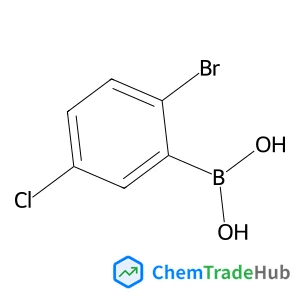
![6-Benzyl-4,5,6,7-tetrahydro-1H-pyrazolo[3,4-c]pyridin-3(2H)-one structure](https://static.chemtradehub.com/structs/909/909187-64-0-f54f.webp "6-Benzyl-4,5,6,7-tetrahydro-1H-pyrazolo[3,4-c]pyridin-3(2H)-one structure")
![5-Methyl-4,5,6,7-tetrahydropyrazolo[1,5-a]pyrazin-2-amine structure](https://static.chemtradehub.com/structs/122/1227210-33-4-8d64.webp "5-Methyl-4,5,6,7-tetrahydropyrazolo[1,5-a]pyrazin-2-amine structure")




