












Optical activity in the scattering of structured light
文献情報
出版日
2014-10-07
DOI
10.1039/C4CP03505D
インパクトファクター
3.676
著者
Robert P. Cameron, Stephen M. Barnett
原文を見る
要旨
We observe that optical activity in light scattering can be probed using types of illuminating light other than single plane (or quasi plane) waves and that this introduces new possibilities for the study of molecules and atoms. We demonstrate this explicitly for natural Rayleigh optical activity which, we suggest, could be exploited as a new form of spectroscopy for chiral molecules through the use of illuminating light comprised of two plane waves that are counter propagating.
関連文献
Effects of incorporation of Ag into a kesterite Cu2ZnSnS4 thin film on its photoelectrochemical properties for water reduction
Riku Okamoto, Mikas Remeika, Imane Abdellaoui, Muhammad M. Islam, Takashi Harada, Ryu Abe, Takeaki Sakurai
2021-11-30
Paper
DOI: 10.1039/D1CP04075H
Thermoelectric performance of ZrNX (X = Cl, Br and I) monolayers
Nina Ge, Xinzhong Wang
2021-11-29
Paper
DOI: 10.1039/D1CP01928G
Real-time observation of photoionization-induced water migration dynamics in 4-methylformanilide–water by picosecond time-resolved infrared spectroscopy and ab initio molecular dynamics simulations
Tairiku Kamiya, Matthias Wohlgemuth, Kuntal Chatterjee, Roland Mitrić
2021-10-01
Paper
DOI: 10.1039/D1CP03327A
Elucidating the promotion of Na2CO3 in CO2 capture by Li4SiO4
Zhen Wang, Qian Xu, Kun Peng, Zirui Wang, Xingli Zou, Hongwei Cheng, Xionggang Lu
2021-11-16
Paper
DOI: 10.1039/D1CP04507E
Femtochemistry of bimolecular reactions from weakly bound complexes: computational study of the H + H′OD → H′OH + D or HOD + H′ exchange reactions
Alexandre Voute, Fabien Gatti, Klaus B. Møller, Niels E. Henriksen
2021-11-18
Paper
DOI: 10.1039/D1CP04391A
Time-resolved relaxation and cage opening in diamondoids following XUV ultrafast ionization
Alexie Boyer, Marius Hervé, Audrey Scognamiglio, Vincent Loriot, Franck Lépine
2021-11-29
Paper
DOI: 10.1039/D1CP03502A
Graphene quantum dots obstruct the membrane axis of Alzheimer's amyloid beta
Huayuan Tang, Aleksandr Kakinen, Nicholas Andrikopoulos, Yunxiang Sun, Feng Ding
2021-11-23
Paper
DOI: 10.1039/D1CP04246G
Adsorption of lysozyme into a charged confining pore
Ralf Metzler, Sidney J. de Carvalho
2021-11-05
Paper
DOI: 10.1039/D1CP03185F
Dramatic differences in the conformational equilibria of chalcogen-bridged compounds: the case of diallyl ether versus diallyl sulfide
Tamanna Poonia, Weslley G. D. P. Silva, Jennifer van Wijngaarden
2021-12-03
Paper
DOI: 10.1039/D1CP04591A
Assessing doping strategies for monolayer MoS2 towards non-enzymatic detection of cortisol: a first-principles study
Gabriele Boschetto, Aida Todri-Sanial
2021-12-14
Paper
DOI: 10.1039/D1CP04116A
こちらもおすすめ
化合物よくある質問
2-ヒドロキシ-5-ニトロベンジンブロモイドの代替品はありますか?
2-ヒドロキシ-5-ニトロベンジンブロモイドは特定の化学反応に適しているため、代替品は限られています。しかし、同様の構造を持つ2-ヒドロキシ-4-ニトロベンジン...
772-33-82-(Bromomethyl)-4-ni...
化合物よくある質問
N-(2-ブロモフェニル)-1-チロール-3-オキソ-3-(ピペリジニル)プロペン-2-イル)ベンゼンアミドを取り扱う際の実験室安全事項は何ですか?
N-(2-ブロモフェニル)-1-チロール-3-オキソ-3-(ピペリジニル)プロペン-2-イル)ベンゼンアミドは有毒で、皮膚や粘膜に刺激を与える可能性があります。...
1800044-77-2N-[(1Z)-1-(2-Bromoph...
化合物よくある質問
1,3プロパンジオール,2-[2-(2アミノ-6クロロ-9Hピリミジン-9-イル)エチル-1,1,2,2-D4]-2,3-ジアセタートの市場動向や研究トレンドはどうですか?
この化合物は、新規治療薬の開発に注目されています。市場では、その有効性と安全性が評価され、研究分野では、分子生物学と医薬化学の新たな発見が期待されています。
1020718-81-31,3-Propanediol, 2-[...
579-44-2Ethanone, 2-hydroxy-...
化合物よくある質問
Succinimidyl-alanyl-phenylalanyl-prolyl-phenylalanine 4-nitroanilide はどの業界で使用されていますか?
Succinimidyl-alanyl-phenylalanyl-prolyl-phenylalanine 4-nitroanilide は主に医薬品開発やポ...
128802-73-3succinimidyl-alanyl-...
化合物よくある質問
メチル6-アミノ-5-クロロピリジン-2-カーボイル酸について、適用される法規ガイドラインは何ですか?
メチル6-アミノ-5-クロロピリジン-2-カーボイル酸(CAS番号: 1256794-05-4)の使用には、GHS( Globally Harmonized S...
1256794-05-4Methyl 6-amino-5-chl...
化合物よくある質問
エチル4-(シクロ Pentagonyl)アミノ-2-メチル硫化基ピリミジン-5-カルボキシレートを取り扱う際の実験室安全事項は何ですか?
取り扱いには、耐薬品性の容器を使用し、通気性の良い場所で操作することを推奨します。漏れ時は、SDS(安全データシート)を参照して適切な措置を取ること。手洗いと洗...
211245-62-4ethyl 4-(cyclopentyl...
化合物よくある質問
(S)-3-ベンZYルピペリジン塩酸塩とは何ですか?
(S)-3-ベンZYルピペリジン塩酸塩は、CAS番号1258940-00-9で表される化合物です。これは、(S)-3-苯基哌啶的盐酸盐であり、主に医薬品の原料と...
1258940-00-9(S)-3-Phenylpiperidi...
化合物よくある質問
3,5-二甲基金剛胺の主な用途は何ですか?
3,5-二甲基金剛胺は、主に医薬品の原料として使用され、また抗うつ薬や抗アルツハイマー薬の開発に利用されます。さらに、化粧品や食品添加物の製造でも重要な役割を果...
19988-45-52-(2,3-Dihydroxyphen...
化合物よくある質問
ビス(4-メチル-2-ペンチル)フェニルカルボン酸エステルの代替品はありますか?
ビス(4-メチル-2-ペンチル)フェニルカルボン酸エステル (CAS番号: 1398066-13-1) の代替品には、ビス(2-エチルヘキシル)フェノールカルボ...
1398066-13-1Bis(4-methyl-2-penty...
掲載誌
Physical Chemistry Chemical Physics

CiteScore:
5.5
自己引用率:
10.3%
年間論文数:
3036
Physical Chemistry Chemical Physics (PCCP) is an international journal co-owned by 19 physical chemistry and physics societies from around the world. This journal publishes original, cutting-edge research in physical chemistry, chemical physics and biophysical chemistry. To be suitable for publication in PCCP, articles must include significant innovation and/or insight into physical chemistry; this is the most important criterion that reviewers and Editors will judge against when evaluating submissions. The journal has a broad scope and welcomes contributions spanning experiment, theory, computation and data science. Topical coverage includes spectroscopy, dynamics, kinetics, statistical mechanics, thermodynamics, electrochemistry, catalysis, surface science, quantum mechanics, quantum computing and machine learning. Interdisciplinary research areas such as polymers and soft matter, materials, nanoscience, energy, surfaces/interfaces, and biophysical chemistry are welcomed if they demonstrate significant innovation and/or insight into physical chemistry. Joined experimental/theoretical studies are particularly appreciated when complementary and based on up-to-date approaches.
おすすめ化合物
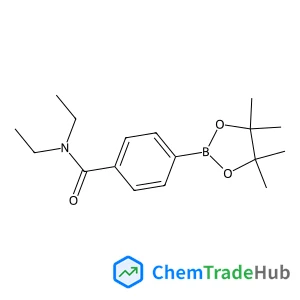
N,N-Diethyl-4-(4,4,5,5-tetramethyl-1,3,2-dioxaborolan-2-yl)benzamide
CAS番号:
325142-99-2
分子式:
C17H26BNO3
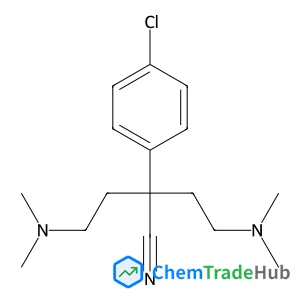
2-(4-Chlorophenyl)-4-(dimethylamino)-2-(2-(dimethylamino)ethyl)butanenitrile
CAS番号:
1246816-57-8
分子式:
C16H24ClN3
おすすめサプライヤー






免責事項
このページに表示される学術雑誌情報は、参考および研究目的のみを目的としています。当社は雑誌出版社とは提携しておらず、投稿の取り扱いも行っておりません。出版に関するお問い合わせは、各雑誌出版社に直接ご連絡ください。
表示されている情報に誤りがある場合は、support@chemtradehub.com までご連絡ください。迅速に確認し、対応いたします。