












![6,6-Dimethylbicyclo[3.1.1]hept-2-ene-2-carbaldehyde structure](https://static.chemtradehub.com/structs/564/564-94-3-e746.webp "6,6-Dimethylbicyclo[3.1.1]hept-2-ene-2-carbaldehyde structure")
An atom in molecules study of infrared intensity enhancements in fundamental donor stretching bands in hydrogen bond formation
文献情報
出版日
2014-09-26
DOI
10.1039/C4CP03489A
インパクトファクター
3.676
著者
Luiz A. Terrabuio, Wagner E. Richter, Arnaldo F. Silva, Roy E. Bruns, Roberto L. A. Haiduke
原文を見る
要旨
Vibrational modes ascribed to the stretching of X–H bonds from donor monomers (HXdonor) in complexes presenting hydrogen bonds (HF⋯HF, HCl⋯HCl, HCN⋯HCN, HNC⋯HNC, HCN⋯HF, HF⋯HCl and H2O⋯HF) exhibit large (4 to 7 times) infrared intensity increments during complexation according to CCSD/cc-pVQZ-mod calculations. These intensity increases are explained by the charge–charge flux–dipole flux (CCFDF) model based on multipoles from the Quantum Theory of Atoms in Molecules (QTAIM) as resulting from a reinforcing interaction between two contributions to the dipole moment derivatives with respect to the vibrational displacements: charge and charge flux. As such, variations that occur in their intensity cross terms in hydrogen bond formation correlate nicely with the intensity enhancements. These stretching modes of HXdonor bonds can be approximately modeled by sole displacement of the positively charged hydrogens towards the acceptor terminal atom with concomitant electronic charge transfers in the opposite direction that are larger than those occurring for the H atom displacements of their isolated donor molecules. This analysis indicates that the charge–charge flux interaction reinforcement on H-bond complexation is associated with variations of atomic charge fluxes in both parent molecules and small electronic charge transfers between them. The QTAIM/CCFDF model also indicates that atomic dipole flux contributions do not play a significant role in these intensity enhancements.
関連文献
DNA-fueled molecular machine for label-free and non-enzymatic ultrasensitive detection of telomerase activity
Chaoying Liu, Fang Pu, Jinsong Ren, Xiaogang Qu
2016-07-05
Communication
DOI: 10.1039/C6AN00997B
A ratiometric fluorescence nanosensor for highly selective and sensitive detection of selenite
Linfeng Chen, Xike Tian, Yuan Zhao, Yong Li, Chao Yang, Zhaoxin Zhou
2016-05-19
Paper
DOI: 10.1039/C6AN00740F
A multi-responsive turn-on flurogenic probe to sense Zn2+, Cd2+ and Pb2+: left-right-center emission signal swing
Soham Samanta, Barun Kumar Datta, Madhurima Boral, Abhijit Nandan, Gopal Das
2016-05-10
Paper
DOI: 10.1039/C6AN00657D
Graphene oxide–peptide nanoassembly as a general approach for monitoring the activity of histone deacetylases
Ping Liang, Qing Li, Zhan Wu, Jian-Hui Jiang, Ru-Qin Yu
2016-05-12
Communication
DOI: 10.1039/C6AN00902F
Live-cell quantification and comparison of mammalian oocyte cytosolic lipid content between species, during development, and in relation to body composition using nonlinear vibrational microscopy
Joshua Jasensky, Andrew P. Boughton, Alexander Khmaladze, Jun Ding, Chi Zhang, Jason E. Swain, George W. Smith
2016-06-01
Paper
DOI: 10.1039/C6AN00629A
Optical biosensors: an exhaustive and comprehensive review
Chen Chen, Junsheng Wang
2020-01-06
Critical Review
DOI: 10.1039/C9AN01998G
Detection of UVA/UVC-induced damage of p53 fragment by rolling circle amplification with AIEgens
Xiaowen Ou, Benmei Wei, Zhenyu Zhang, Mengshi Zhang, Yuan Zhuang, Pengcheng Gao, Xiaoding Lou, Fan Xia, Ben Zhong Tang
2016-05-09
Paper
DOI: 10.1039/C6AN00831C
Interface engineering of microelectrodes toward ultrasensitive monitoring of β-amyloid peptides in cerebrospinal fluid in Alzheimer's disease
Shushu Ding, Yunxia Xu, Qi Liu, Hui Gu, Anwei Zhu, Guoyue Shi
2020-01-13
Paper
DOI: 10.1039/C9AN02285F
Effective isolation of exosomes with polyethylene glycol from cell culture supernatant for in-depth proteome profiling
Zhigang Sui, Yichu Shan, Lihua Zhang, Yukui Zhang
2016-05-04
Paper
DOI: 10.1039/C6AN00892E
A twin enrichment method based on dispersive liquid–liquid microextraction and field-amplified sample injection for the simultaneous determination of sulfonamides
Shixuan Yang, Zhihua Song, Jinhua Li, Qiaocui Shi, Huiyan You, Huitao Liu, Min Lv, Lingxin Chen
2020-01-13
Paper
DOI: 10.1039/C9AN02127B
こちらもおすすめ
化合物よくある質問
2,3-スチオエポキシマドルを取り扱う際の実験室安全事項は何ですか?
取り扱いにはPPE(プロテクティブ・パーソナル・エイド)が必要で、防ぐ手袋と保護眼鏡を着用してください。ドラフトチャンバーの使用を推奨します。漏洩した場合は、適...
4267-80-52,3-Thioepoxy Madol
53981-25-22-Amino-6-fluorophen...
化合物よくある質問
BOC-S-3-アミニ-4-(4-メチオキシベンチル)-ブタン酸の代替品はありますか?
この化合物の代替品としては、BOC保護基を有さないアミノ酸やその他の保護基化合物が考えられます。また、メチオキシ基を有しない他の芳香族アミノ酸も代替品として挙げ...
126800-59-7(3S)-4-(4-Methoxyphe...
化合物よくある質問
Methyl 2-(chloromethyl)-3-nitrobenzoate(1218910-61-2)の代替品はありますか?
Methyl 2-(chloromethyl)-3-nitrobenzoate(1218910-61-2)の代替品としては、化学組成を変えることで効果を達成する...
1218910-61-2Methyl 2-(chlorometh...
化合物よくある質問
(2R)-2-アミノ-N-ベンジル-3-ヒドロキシプロパナミドを含む廃棄物はどのように処理すべきですか?
(2R)-2-アミノ-N-ベンジル-3-ヒドロキシプロパナミドを含む廃棄物は、適切な廃棄物管理ガイドラインに基づき処理する必要があります。まず、廃棄物を適切に収...
175481-39-7(2R)-2-amino-N-benzy...
化合物よくある質問
6,7-二氢-咪唑並[1,2-a]ピリドイン-8(5h)-酮はどのように合成されますか?
6,7-二氢-咪唑並[1,2-a]ピリドイン-8(5h)-酮は、2-ブロモフェニルアセトインとリン酸ハロゲン化物を反応させることで合成できます。この反応は高温で...
457949-09-66,7-Dihydroimidazo[1...
化合物よくある質問
エチル(3R)-3-ピロリジニル酢酸水和塩とは何ですか?
エチル(3R)-3-ピロリジニル酢酸水和塩は、CAS番号1332459-32-1の化合物で、(R)-乙基2-(ピロリジン-3-基)酢酸塩水和塩と呼ばれます。この...
1332459-32-1Ethyl (3R)-3-pyrroli...
化合物よくある質問
(2S)-{[(2-メチルエチルオキシ]カルボニル}アミノ)[2-(トリアフルオロメチルフェニル]エチカシック酸の物理化学的性質は何ですか?
(2S)-{[(2-メチルエチルオキシ]カルボニル}アミノ)[2-(トリアフルオロメチルフェニル]エチカシック酸のCAS番号は1203454-45-8です。この...
1203454-45-8(2S)-({[(2-Methyl-2-...
化合物よくある質問
2-ブロモ-1-(2-メチル-2-プロパニル)-4-ニトロベンゼンはどのように保存すればよいですか?
2-ブロモ-1-(2-メチル-2-プロパニル)-4-ニトロベンゼンは、直射日光を避けて暗所で、室温(約15℃〜25℃)、乾燥した場所に保存する必要があります。ま...
6310-17-42-Bromo-1-(2-methyl-...
化合物よくある質問
1-[(4-硝基フェニル)スルホニル]-1H-1,2,4-三唑の市場動向や研究トレンドはどうですか?
市場動向としては、1-[(4-硝基フェニル)スルホニル]-1H-1,2,4-三唑は主に農業用除草剤や合成化学製品の原料として利用されています。研究トレンドとして...
57777-84-11-[(4-Nitrophenyl)su...
掲載誌
Physical Chemistry Chemical Physics

CiteScore:
5.5
自己引用率:
10.3%
年間論文数:
3036
Physical Chemistry Chemical Physics (PCCP) is an international journal co-owned by 19 physical chemistry and physics societies from around the world. This journal publishes original, cutting-edge research in physical chemistry, chemical physics and biophysical chemistry. To be suitable for publication in PCCP, articles must include significant innovation and/or insight into physical chemistry; this is the most important criterion that reviewers and Editors will judge against when evaluating submissions. The journal has a broad scope and welcomes contributions spanning experiment, theory, computation and data science. Topical coverage includes spectroscopy, dynamics, kinetics, statistical mechanics, thermodynamics, electrochemistry, catalysis, surface science, quantum mechanics, quantum computing and machine learning. Interdisciplinary research areas such as polymers and soft matter, materials, nanoscience, energy, surfaces/interfaces, and biophysical chemistry are welcomed if they demonstrate significant innovation and/or insight into physical chemistry. Joined experimental/theoretical studies are particularly appreciated when complementary and based on up-to-date approaches.
おすすめ化合物
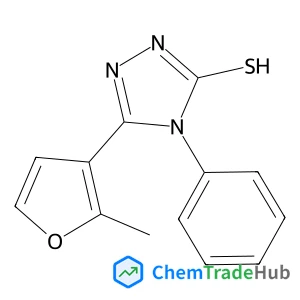
5-(2-Methyl-3-furyl)-4-phenyl-2,4-dihydro-3H-1,2,4-triazole-3-thione
CAS番号:
346464-59-3
分子式:
C13H11N3OS
![N-[2-(2-Pyridinyl)ethyl]-1-propanamine structure](https://static.chemtradehub.com/structs/554/55496-57-6-22b4.webp "N-[2-(2-Pyridinyl)ethyl]-1-propanamine structure")
![Ethyl 4-[8-chloro(5,5,6,6,7-~2~H_5_)-5,6-dihydro-11H-benzo[5,6]cyclohepta[1,2-b]pyridin-11-ylidene]-1-piperidinecarboxylate structure](https://static.chemtradehub.com/structs/102/1020719-57-6-37e2.webp "Ethyl 4-[8-chloro(5,5,6,6,7-~2~H_5_)-5,6-dihydro-11H-benzo[5,6]cyclohepta[1,2-b]pyridin-11-ylidene]-1-piperidinecarboxylate structure")

おすすめサプライヤー






免責事項
このページに表示される学術雑誌情報は、参考および研究目的のみを目的としています。当社は雑誌出版社とは提携しておらず、投稿の取り扱いも行っておりません。出版に関するお問い合わせは、各雑誌出版社に直接ご連絡ください。
表示されている情報に誤りがある場合は、support@chemtradehub.com までご連絡ください。迅速に確認し、対応いたします。