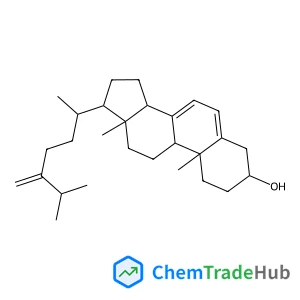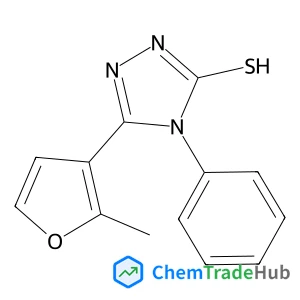
5-(2-Methyl-3-furyl)-4-phenyl-2,4-dihydro-3H-1,2,4-triazole-3-thione
CAS番号:
346464-59-3
分子式:
C13H11N3OS
Sujith Kalluri, Vanessa K. Peterson, Shi Xue Dou, Zaiping Guo
The development of cathode materials with high capacity and cycle stability is essential to emerging electric-vehicle technologies, however, of serious environmental concern is that materials with these properties developed so far contain the toxic and expensive Co. We report here the Li-rich, Co-free Li1+xMO2 (M = Li, Ni, Mn, Fe) composite cathode material, prepared via a template-free, one-step wet-chemical method followed by conventional annealing in an oxygen atmosphere. The cathode has an unprecedented level of cation mixing, where the electrochemically-active component contains four elements at the transition-metal (3a) site and 20% Ni at the active Li site (3b). We find Ni2+/Ni3+/Ni4+ to be the active redox-center of the cathode with lithiation/delithiation occurring via a solid-solution reaction where the lattice responds approximately linearly with cycling, differing to that observed for iso-structural commercial cathodes with a lower level of cation mixing. The composite cathode has ∼75% active material and delivers an initial discharge-capacity of ∼103 mA h g−1 with a reasonable capacity retention of ∼84.4% after 100 cycles. Notably, the electrochemically-active component possesses a capacity of ∼139 mA h g−1, approaching that of the commercialized LiCoO2 and Li(Ni1/3Mn1/3Co1/3)O2 materials. Importantly, our operando neutron powder-diffraction results suggest excellent structural stability of this active component, which exhibits ∼80% less change in its stacking-axis than for LiCoO2 with approximately the same capacity, a characteristic that may be exploited to enhance significantly the capacity retention of this and similar materials.
Yue Zhao, Yaxin Wang, Yongjun Zhang, Yang Liu, Xiao Xia Han, Bing Zhao, Jinghai Yang
DOI: 10.1039/C6AN00945J
Sally A. N. Gowers, Isabelle C. Samper, De-Shaine R. K. Murray, Georgia K. Smith, Sarah Jeyaprakash, Michelle L. Rogers, Michael Karlsson, Markus Harboe Olsen, Kirsten Møller, Martyn G. Boutelle
DOI: 10.1039/C9AN01950B
DOI: 10.1039/C9AN02185J
Haidong Li, Patrick Garrigue, Laurent Bouffier, Stéphane Arbault, Alexander Kuhn, Neso Sojic
DOI: 10.1039/C6AN00652C
Chen Chen, Junsheng Wang
DOI: 10.1039/C9AN01998G
Wenyu Gao, Zongxu Shen, Hao Wu, Yuehui Ma, Weijun Guan, Songmei Wu, Yu Yu, Kejian Ding
DOI: 10.1039/C6AN00778C
L. Klukova, J. Filip, S. Belicky, A. Vikartovska, J. Tkac
DOI: 10.1039/C6AN00793G
B. Jill Venton, Qun Cao
DOI: 10.1039/C9AN01586H
取り扱いにはPPE(プロテクティブ・パーソナル・エイド)が必要で、防ぐ手袋と保護眼鏡を着用してください。ドラフトチャンバーの使用を推奨します。漏洩した場合は、適...
この化合物の代替品としては、BOC保護基を有さないアミノ酸やその他の保護基化合物が考えられます。また、メチオキシ基を有しない他の芳香族アミノ酸も代替品として挙げ...
Methyl 2-(chloromethyl)-3-nitrobenzoate(1218910-61-2)の代替品としては、化学組成を変えることで効果を達成する...
(2R)-2-アミノ-N-ベンジル-3-ヒドロキシプロパナミドを含む廃棄物は、適切な廃棄物管理ガイドラインに基づき処理する必要があります。まず、廃棄物を適切に収...
6,7-二氢-咪唑並[1,2-a]ピリドイン-8(5h)-酮は、2-ブロモフェニルアセトインとリン酸ハロゲン化物を反応させることで合成できます。この反応は高温で...
エチル(3R)-3-ピロリジニル酢酸水和塩は、CAS番号1332459-32-1の化合物で、(R)-乙基2-(ピロリジン-3-基)酢酸塩水和塩と呼ばれます。この...
(2S)-{[(2-メチルエチルオキシ]カルボニル}アミノ)[2-(トリアフルオロメチルフェニル]エチカシック酸のCAS番号は1203454-45-8です。この...
2-ブロモ-1-(2-メチル-2-プロパニル)-4-ニトロベンゼンは、直射日光を避けて暗所で、室温(約15℃〜25℃)、乾燥した場所に保存する必要があります。ま...
市場動向としては、1-[(4-硝基フェニル)スルホニル]-1H-1,2,4-三唑は主に農業用除草剤や合成化学製品の原料として利用されています。研究トレンドとして...

Physical Chemistry Chemical Physics (PCCP) is an international journal co-owned by 19 physical chemistry and physics societies from around the world. This journal publishes original, cutting-edge research in physical chemistry, chemical physics and biophysical chemistry. To be suitable for publication in PCCP, articles must include significant innovation and/or insight into physical chemistry; this is the most important criterion that reviewers and Editors will judge against when evaluating submissions. The journal has a broad scope and welcomes contributions spanning experiment, theory, computation and data science. Topical coverage includes spectroscopy, dynamics, kinetics, statistical mechanics, thermodynamics, electrochemistry, catalysis, surface science, quantum mechanics, quantum computing and machine learning. Interdisciplinary research areas such as polymers and soft matter, materials, nanoscience, energy, surfaces/interfaces, and biophysical chemistry are welcomed if they demonstrate significant innovation and/or insight into physical chemistry. Joined experimental/theoretical studies are particularly appreciated when complementary and based on up-to-date approaches.
![5,10-Dihydroindeno[2,1-a]indene structure](https://static.chemtradehub.com/structs/654/6543-29-9-71ca.webp "5,10-Dihydroindeno[2,1-a]indene structure")