


Nanoparticle dispersion in polymer nanocomposites by spin-diffusion-averaged paramagnetic enhanced NMR relaxometry: scaling relations and applications
文献情報
出版日
2014-06-27
DOI
10.1039/C4CP02562H
インパクトファクター
3.676
著者
Bo Xu, Johannes Leisen, Haskell W. Beckham
原文を見る
要旨
Scaling relationships are identified between NMR longitudinal relaxation times and clay dispersion quality in polymer–paramagnetic clay nanocomposites. Derived from a previously published analytical relationship developed from a lamella-based model, the scaling relationships are based on the enhancement of NMR relaxation rates with increasing exfoliation and dispersion homogeneity. The paramagnetic contribution to the NMR relaxation rate is inversely proportional to the square of the clay interparticle spacing, and directly proportional to the square of the clay weight fraction. These scaling relationships allow the prediction of relative exfoliation of clay particles for a given series of polymer–clay nanocomposites. With independent knowledge of clay exfoliation in a single sample (e.g., from transmission electron microscopy), NMR relaxometry data may be converted into absolute measures of exfoliation. These scaling relations are confirmed with samples of fully exfoliated poly(vinyl alcohol)–montmorillonite nanocomposites, and then used to reveal exfoliation and dispersion quality in a series of nylon-6–montmorillonite nanocomposites. This characterization route is advantageous because NMR relaxometry can more rapidly provide clay dispersion information that is averaged over larger sample volumes than transmission electron microscopy.
おすすめジャーナル

Herald of the Russian Academy of Sciences

Journal of Asian Natural Products Research

Medicinal Chemistry Research

Critical Reviews in Solid State and Materials Sciences

Topics in Catalysis

Biocatalysis and Biotransformation

Heteroatom Chemistry

NDT & E International

Chinese Journal of Chemistry

Acta Metallurgica Sinica-English Letters
関連文献
Correction: Lacto-N-tetraose synthesis by wild-type and glycosynthase variants of the β-N-hexosaminidase from Bifidobacterium bifidum
Katharina Schmölzer, Melanie Weingarten, Kai Baldenius
2019-06-04
Correction
DOI: 10.1039/C9OB90088H
The Lossen rearrangement from free hydroxamic acids
Mikaël Thomas, Jérôme Alsarraf, Nahla Araji, Isabelle Tranoy-Opalinski, Brigitte Renoux, Sébastien Papot
2019-05-08
Review Article
DOI: 10.1039/C9OB00789J
Dehydroamino acids: chemical multi-tools for late-stage diversification
Jonathan W. Bogart, Albert A. Bowers
2019-02-27
Review Article
DOI: 10.1039/C8OB03155J
An unprecedented intramolecular to intermolecular mechanistic switch in 1,1-diaminoazines leading to differential product formation during the I2-induced tandem oxidative transformation
Deepika Kathuria, Pankaj Gupta, Sumit S. Chourasiya, Subash C. Sahoo, Uwe Beifuss, Asit K. Chakraborti, Prasad V. Bharatam
2019-04-01
Paper
DOI: 10.1039/C9OB00610A
(Hetero)arylboration of alkynes: a strategy for the synthesis of α,α-bis(hetero)arylketones
Yuan Huang, Allison M. Bergmann, M. Kevin Brown
2019-06-05
Communication
DOI: 10.1039/C9OB00961B
A highly selective H/D exchange reaction of 1,4-dihydropyridines
Kaiqian Wang, Xiao Peng, Ping Wang, Feng Liang
2019-03-25
Paper
DOI: 10.1039/C9OB00575G
A biomimetic approach towards phorone sesterterpenoids
Harry J. Shirley, Christopher D. Bray
2019-07-10
Communication
DOI: 10.1039/C9OB00745H
The cubane paradigm in bioactive molecule discovery: further scope, limitations and the cyclooctatetraene complement‡
Sevan D. Houston, Tyler Fahrenhorst-Jones, Hui Xing, Benjamin A. Chalmers, Melissa L. Sykes, Jeanette E. Stok, Clementina Farfan Soto, Jed M. Burns, Paul V. Bernhardt, James J. De Voss, Glen M. Boyle, Maree T. Smith, John Tsanaktsidis, G. Paul Savage, Vicky M. Avery, Craig M. Williams
2019-06-26
Paper
DOI: 10.1039/C9OB01238A
Divergent synthesis of 5′,7′-difluorinated dihydroxanthene-hemicyanine fused near-infrared fluorophores
Shasha Zheng, Gu Lingyue, Michelle Jui Hsien Ong, Denis Jacquemin, Jean-Alexandre Richard, Rajavel Srinivasan
2019-04-10
Paper
DOI: 10.1039/C9OB00568D
こちらもおすすめ
化合物よくある質問
カルボニル基が付いた5-氰基-1-{[(2-メチル-2-プロpanyl)オキシ]カーボンイル}1H-吲哚-2-イリド-2-ボリン酸はどのように保存すればよいですか?
カルボニル基が付いた5-氰基-1-{[(2-メチル-2-プロpanyl)オキシ]カーボンイル}1H-吲哚-2-イリド-2-ボリン酸は、直射日光を避けて室温(15...
475102-15-9(5-Cyano-1-{[(2-meth...
化合物よくある質問
tert-ブチル2-クロロメチルピリジン-3-基炭酸エステルの市場動向や研究トレンドはどうですか?
この化合物は合成化学分野において、特にピリジン化合物の合成や改良に用いられます。最近の研究では、ピリジン化合物の新規合成法や特性の改良が注目されています。市場動...
1203498-98-9tert-Butyl 2-chloro-...
化合物よくある質問
聚二季戊四醇六丙烯酸酯はどの業界で使用されていますか?
聚二季戊四醇六丙烯酸酯は、医薬品、ポリマー、センサー、半導体などの業界で広く使用されています。特にポリマー業界では硬化剤として、医薬分野では医療機器の製造に使用...
29570-58-93-(Acryloyloxy)-2-({...
化合物よくある質問
1-氯-5-硝基异喹啉の市場動向や研究トレンドはどうですか?
1-氯-5-硝基异喹啉は、薬理学や合成化学の研究分野で注目されています。市場動向としては、その生物学的な活性や合成可能性を評価する研究が増えています。また、代替...
58142-97-51-Chloro-5-nitroisoq...
化合物よくある質問
2-チロール-5-メチルスルフェニル-3-trifルオルメチルベンゼンはどのように合成されますか?
2-チロール-5-メチルスルフェニル-3-trifルオルメチルベンゼンは、トリフルオロメチル化反応と硫化反応を経て合成されます。通常、トリフルオロメチル化剤と硫...
957066-04-51-Chloro-4-(methylsu...
化合物よくある質問
p-トールイルマグネシウムブロミドの物理化学的性質は何ですか?
p-トールイルマグネシウムブロミドのCAS番号は4294-57-9です。この化合物は白色の結晶性粉末で、分子量は204.32です。溶剤中で良好に溶解しますが、水...
4294-57-9p-Tolylmagnesium bro...
化合物よくある質問
1-(5-甲基-2-硫化素基)プロパン-1-酮の市場動向や研究トレンドはどうですか?
1-(5-甲基-2-硫化素基)プロパン-1-酮の市場動向は、化学産業全体の需要に影響を受けますが、最近では pharmaceutical 分野での応用が注目され...
59303-13-81-(5-Methyl-2-thieny...
化合物よくある質問
十一碳烯酰甘氨酸を取り扱う際の実験室安全事項は何ですか?
十一碳烯酰甘氨酸は吸入や皮膚から吸収されることがあり、取り扱う際には防塵マスクと手袋を使用してください。ドラフトチャンバーを用いて漏洩を処理し、適切なSDS(S...
54301-26-7N-10-Undecenoylglyci...
化合物よくある質問
1H,1H-全氟-3,6-二氧杂葵-1-醇を取り扱う際の実験室安全事項は何ですか?
この化合物は吸入や皮膚吸収による毒性があるため、防塵マスク、ゴーグル、防護手袋を使用する必要があります。ドラフトチャンバーでの操作が必要です。漏洩時には即座に換...
152914-73-32,2-Difluoro-2-[1,1,...
化合物よくある質問
3-(4-(フルオロメチルオキシ)フェニル)-1,2,4-オキサジアゾール-5-カルボハイドライドは安全ですか?
安全性は化合物の使用方法によります。直接的な毒性は報告されていませんが、吸入や皮膚接触には注意が必要です。適切な防護服を着用し、換気を図ることを推奨します。
883028-82-83-(4-(Trifluorometho...
掲載誌
Physical Chemistry Chemical Physics

CiteScore:
5.5
自己引用率:
10.3%
年間論文数:
3036
Physical Chemistry Chemical Physics (PCCP) is an international journal co-owned by 19 physical chemistry and physics societies from around the world. This journal publishes original, cutting-edge research in physical chemistry, chemical physics and biophysical chemistry. To be suitable for publication in PCCP, articles must include significant innovation and/or insight into physical chemistry; this is the most important criterion that reviewers and Editors will judge against when evaluating submissions. The journal has a broad scope and welcomes contributions spanning experiment, theory, computation and data science. Topical coverage includes spectroscopy, dynamics, kinetics, statistical mechanics, thermodynamics, electrochemistry, catalysis, surface science, quantum mechanics, quantum computing and machine learning. Interdisciplinary research areas such as polymers and soft matter, materials, nanoscience, energy, surfaces/interfaces, and biophysical chemistry are welcomed if they demonstrate significant innovation and/or insight into physical chemistry. Joined experimental/theoretical studies are particularly appreciated when complementary and based on up-to-date approaches.
おすすめ化合物
![N-[(6-Bromo-3-pyridinyl)methyl]ethanamine structure](https://static.chemtradehub.com/structs/120/120740-05-8-ca55.webp "N-[(6-Bromo-3-pyridinyl)methyl]ethanamine structure")
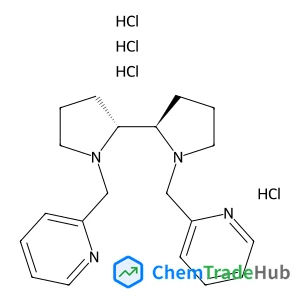
(2R,2'R)-1,1'-Bis(2-pyridinylmethyl)-2,2'-bipyrrolidine tetrahydrochloride
CAS番号:
1228077-88-0
分子式:
C20H30Cl4N4
おすすめサプライヤー






免責事項
このページに表示される学術雑誌情報は、参考および研究目的のみを目的としています。当社は雑誌出版社とは提携しておらず、投稿の取り扱いも行っておりません。出版に関するお問い合わせは、各雑誌出版社に直接ご連絡ください。
表示されている情報に誤りがある場合は、support@chemtradehub.com までご連絡ください。迅速に確認し、対応いたします。