


![6-[2-(Trifluoromethoxy)phenyl]-2-pyridinecarboxylic acid structure](https://static.chemtradehub.com/structs/887/887983-48-4-f6ac.webp "6-[2-(Trifluoromethoxy)phenyl]-2-pyridinecarboxylic acid structure")
Bandgap opening/closing of graphene antidot lattices with zigzag-edged hexagonal holes
文献情報
出版日
2014-08-05
DOI
10.1039/C4CP02090A
インパクトファクター
3.676
著者
Shenglin Peng, Zhixiong Yang, Yu Chen, Hui Zou, Xiang Xiong
原文を見る
要旨
How to predict the bandgap size of graphene antidot lattices (GALs) is a key problem in the field of graphene-based nanoelectronics. Here, we have obtained the universal rules on bandgap opening/closing of GALs with zigzag-edged hexagonal holes (ZH-GALs), as well as the means to control the bandgap size. In the simple case that the electronic property depends on the choice of the supercell, the quantitative relationship between Eg and the density/diameter of antidots is fitted. Turning to complex structures, we reveal that the bandgap opening in ZH-GALs results mainly from the intervalley scattering. In this interpretation, according to their relative position, the antidots can be divided into three categories. A relatively large bandgap appears in ZH-GALs, only when the numbers of the three categories are unequal. This could be explained based on a mechanism similar to diffraction. A formula according to the explanation is provided to estimate the bandgap, which can be used to predict the electronic properties of GALs and guide the design of semiconductor and photoelectronic devices based on GALs.
おすすめジャーナル

Main Group Chemistry

Journal of the Indian Institute of Science

Heteroatom Chemistry

Chinese Journal of Chemistry

Journal of Asian Natural Products Research

Medicinal Chemistry Research

Journal of Chemical Sciences

Herald of the Russian Academy of Sciences

Biocatalysis and Biotransformation

Acta Metallurgica Sinica-English Letters
関連文献
Surface-enhanced resonance Raman scattering of hemoproteins and those in complicated biological systems
Yasutaka Kitahama, Yukihiro Ozaki
2016-07-06
Critical Review
DOI: 10.1039/C6AN01009A
Time-dependent SERS spectra monitoring the dynamic adsorption behavior of bipyridine isomerides combined with bianalyte method
2016-04-27
Paper
DOI: 10.1039/C6AN00771F
Improvement in ionization efficiency of direct analysis in real time-mass spectrometry (DART-MS) by corona discharge
Kanako Sekimoto, Motoshi Sakakura, Takatomo Kawamukai, Hiroshi Hike, Teruhisa Shiota, Fumihiko Usui, Yasuhiko Bando, Mitsuo Takayama
2016-06-27
Paper
DOI: 10.1039/C6AN00779A
On-line determination by small angle X-ray scattering of the shape of hen egg white lysozyme immediately following elution from a hydrophobic interaction chromatography column
Chadin Kulsing, Andras Z. Komaromy, Reinhard I. Boysen, Milton T. W. Hearn
2016-08-08
Paper
DOI: 10.1039/C6AN00851H
Dyneon THV, a fluorinated thermoplastic as a novel material for microchip capillary electrophoresis
Nacéra Aboud, Davide Ferraro, Myriam Taverna, Stéphanie Descroix, Claire Smadja, N. Thuy Tran
2016-07-25
Paper
DOI: 10.1039/C6AN00821F
High throughput LSPR and SERS analysis of aminoglycoside antibiotics
Kristy S. McKeating, Maxime Couture, Marie-Pier Dinel, Sylvie Garneau-Tsodikova, Jean-Francois Masson
2016-07-05
Paper
DOI: 10.1039/C6AN00540C
Electrochemical detection of PCR amplicons of Escherichia coli genome based on DNA nanostructural probes and polyHRP enzyme
Yanli Wen, Li Xu, Lanying Li, Suzhen Ren, Chengming Cao, Nengqin Jia, Ali Aldalbahi, Shiping Song, Jiye Shi, Jiaoyun Xia, Gang Liu, Xiaolei Zuo
2016-07-18
Paper
DOI: 10.1039/C6AN01435F
こちらもおすすめ
化合物よくある質問
2-氟-4-イオドベンzo酸エチルエステルを取り扱う際の実験室安全事項は何ですか?
2-氟-4-イオドベンzo酸エチルエステルは有機溶媒を用いた反応であり、ドラフトチャンバーでの操作が必要です。漏洩時にはSDS参照の安全措置を講じ、PPE(防護...
205750-82-9Benzoic acid, 2-fluo...
化合物よくある質問
血根碱の主な用途は何ですか?
血根碱は主に医薬分野で利用され、抗炎症や抗がん剤としての潜在的な効果が研究されています。また、化学研究や薬物開発において、新しい薬剤設計の参考となる化合物として...
2447-54-313-Methyl[1,3]benzod...
化合物よくある質問
Methyl 3-methoxythiophene-2-carboxylateの主な用途は何ですか?
Methyl 3-メトキシスチフェン-2-カルボン酸メチルエステルは、薬品合成、染料製造、以及合成中間体としての用途が広がっています。
62353-75-7Methyl 3-methoxythio...
化合物よくある質問
丹磺酰-L-亮氨酸はどのように保存すればよいですか?
丹磺酰-L-亮氨酸は乾燥した場所で、直射日光から保護し、低温(室温以下)で保存してください。密閉容器に入れて保管することをおすすめします。
1100-22-7N-{[5-(Dimethylamino...
化合物よくある質問
5-(苄氧基)ピラミジン-4-アミンの代替品はありますか?
5-(苄氧基)ピラミジン-4-アミンの代替品として、6-メトキシピラミジンや5-フェニルピラミジンなどが挙げられます。これらの化合物は、5-(苄氧基)ピラミジン...
92289-50-45-benzyloxypyrimidin...
化合物よくある質問
8-ヒドロキシノルデコペントアセートの物理化学的性質は何ですか?
8-ヒドロキシノルデコペントアセートはCAS番号84807-87-4の化合物で、分子量は750.02 uです。これは油溶性で、水に溶けにくい特徴があります。反応...
84807-87-4(5Z,8Z,11Z,13E,15S)-...
化合物よくある質問
tert-ブチル(エス)-1-ヒドロキシペンタ-4-エン-2-イルカルバamateの主な用途は何ですか?
tert-ブチル(エス)-1-ヒドロキシペンタ-4-エン-2-イルカルバamateは主に医薬品の合成材料や分析化学の試薬として使用されます。
116613-81-12-Methyl-2-propanyl ...
化合物よくある質問
ブコール-L-2-フローヨルブリンについて適切な法規ガイドラインは何ですか?
ブコール-L-2-フローヨルブリン(CAS番号: 1196107-73-9)は、GHS(グローバルハザードアサessmentシステム)に基づく危害分類と表示が求...
1196107-73-92-Bromo-13,13-dimeth...
化合物よくある質問
6-ブロモ-N-環丙基-2-ピリジニニメタンの市場動向や研究トレンドはどうですか
6-ブロモ-N-環丙基-2-ピリジニニメタンは、薬理学研究や合成化学に使用される化合物であり、特に抗ウイルス薬や抗がん薬の開発に注目されています。市場では、薬物...
959237-20-86-Bromo-N-cyclopropy...
化合物よくある質問
RS-AMPÀはどのように保存すればよいですか?
RS-AMPÀは、遮光容器に保存し、室温(15〜25℃)で保管することが推奨されます。高湿や熱は物質を劣化させるため、湿度は50%以下に保つことが重要です。また...
74341-63-2(RS)-AMPA
掲載誌
Physical Chemistry Chemical Physics

CiteScore:
5.5
自己引用率:
10.3%
年間論文数:
3036
Physical Chemistry Chemical Physics (PCCP) is an international journal co-owned by 19 physical chemistry and physics societies from around the world. This journal publishes original, cutting-edge research in physical chemistry, chemical physics and biophysical chemistry. To be suitable for publication in PCCP, articles must include significant innovation and/or insight into physical chemistry; this is the most important criterion that reviewers and Editors will judge against when evaluating submissions. The journal has a broad scope and welcomes contributions spanning experiment, theory, computation and data science. Topical coverage includes spectroscopy, dynamics, kinetics, statistical mechanics, thermodynamics, electrochemistry, catalysis, surface science, quantum mechanics, quantum computing and machine learning. Interdisciplinary research areas such as polymers and soft matter, materials, nanoscience, energy, surfaces/interfaces, and biophysical chemistry are welcomed if they demonstrate significant innovation and/or insight into physical chemistry. Joined experimental/theoretical studies are particularly appreciated when complementary and based on up-to-date approaches.
おすすめ化合物
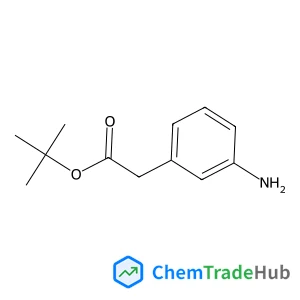
![Ethyl 2-[(3-bromo-4-pyridinyl)sulfanyl]-2-methylpropanoate structure](https://static.chemtradehub.com/structs/135/1352794-86-5-a8aa.webp "Ethyl 2-[(3-bromo-4-pyridinyl)sulfanyl]-2-methylpropanoate structure")
![4-[(2-Oxo-1,2,3,4-tetrahydroquinolin-7-yl)oxy]butanoic acid structure](https://static.chemtradehub.com/structs/588/58899-27-7-1f86.webp "4-[(2-Oxo-1,2,3,4-tetrahydroquinolin-7-yl)oxy]butanoic acid structure")
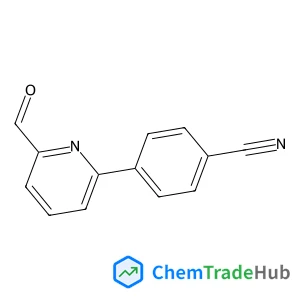
おすすめサプライヤー





免責事項
このページに表示される学術雑誌情報は、参考および研究目的のみを目的としています。当社は雑誌出版社とは提携しておらず、投稿の取り扱いも行っておりません。出版に関するお問い合わせは、各雑誌出版社に直接ご連絡ください。
表示されている情報に誤りがある場合は、support@chemtradehub.com までご連絡ください。迅速に確認し、対応いたします。