













The theoretical account of the ligand field bonding regime and magnetic anisotropy in the DySc2N@C80 single ion magnet endohedral fullerene
文献情報
出版日
2014-04-07
DOI
10.1039/C4CP00953C
インパクトファクター
3.676
著者
Fanica Cimpoesu, Nita Dragoe, Harry Ramanantoanina, Werner Urland, Claude Daul
原文を見る
要旨
Considering the DySc2N@C80 system as a prototype for Single Ion Magnets (SIMs) based on endohedral fullerenes, we present methodological advances and state-of-the art computations analysing the electronic structure and its relationship with the magnetic properties due to the Dy(III) ion. The results of the quantum chemical calculations are quantitatively decrypted in the framework of ligand field (LF) theory, extracting the full parametric sets and interpreting in heuristic key the outcome. An important result is the characterization of the magnetic anisotropy in the ground and excited states, drawing the polar maps of the state-specific magnetization functions that offer a clear visual image of the easy axes and account for the pattern of response to perturbations by the magnetic field applied from different space directions. The state-specific magnetization functions are derivatives with respect to the magnetic field, taken for a given eigenvalue of the computed spectrum. The methodology is based on the exploitation of the data from the black box of the ab initio spin–orbit (SO) calculations. The ground state is characterized by the Jz = ±15/2 quantum numbers with easy axis along the Dy–N bond. The implemented dependence on the magnetic field allowed the first-principles simulation of the magnetic properties. The computational approach to the properties of endohedral fullerenes is an important goal, helping to complement the scarcity of the experimental data on such systems, determined by the limited amount of samples.
関連文献
Can glycine betaine denature proteins?
Arusha Acharyya, Dayoung Shin, Thomas Troxler, Feng Gai
2020-03-30
Paper
DOI: 10.1039/D0CP00397B
Role of hemibonding in the structure and ultraviolet spectroscopy of the aqueous hydroxyl radical
Bhaskar Rana, John M. Herbert
2020-11-12
Paper
DOI: 10.1039/D0CP05216G
Solar-driven plasmonic heterostructure Ti/TiO2−x with gradient doping for sustainable plasmon-enhanced catalysis
Chaoqun Cheng, Muhammad Nadeem Akram, Ola Nilsen, Nini Pryds, Kaiying Wang
2020-03-16
Paper
DOI: 10.1039/D0CP00672F
Identifying reaction pathways in phase space via asymptotic trajectories
Yutaka Nagahata, R. M. Benito, Rigoberto Hernandez
2020-03-25
Paper
DOI: 10.1039/C9CP06610A
Negative magnetization, complex magnetic ordering and applications of Cr-doped Co2TiO4
Q. S. Fu, X. H. Chen, C. Chakrabarti, C. L. Li, J. Zheng, P. J. Wang, H. X. Yin, Y. Qiu, B. Meng, S. L. Yuan
2020-02-28
Paper
DOI: 10.1039/C9CP06444C
Impact of t-butyl substitution in a rubrene emitter for solid state NIR-to-visible photon upconversion
Edvinas Radiunas, Manvydas Dapkevičius, Steponas Raišys, Saulius Juršėnas, Augustina Jozeliūnaitė, Tomas Javorskis, Ugnė Šinkevičiūtė, Edvinas Orentas, Karolis Kazlauskas
2020-03-05
Paper
DOI: 10.1039/D0CP00144A
Sulfate modified g-C3N4 with enhanced photocatalytic activity towards hydrogen evolution: the role of sulfate in photocatalysis
Qianwen Chen, Yun Zhao, Lei Zeng, Chunzhen Yang, Feng Huang
2020-04-06
Paper
DOI: 10.1039/C9CP07002H
Tunable electronic properties of the novel g-ZnO/1T-TiS2 vdW heterostructure by electric field and strain: crossovers in bandgap and band alignment types
2020-03-20
Paper
DOI: 10.1039/D0CP00524J
Aqueous solvation of the chloride ion revisited with density functional theory: impact of correlation and exchange approximations
Mark DelloStritto, Jianhang Xu, Xifan Wu, Michael L. Klein
2020-02-04
Paper
DOI: 10.1039/C9CP06821J
こちらもおすすめ
化合物よくある質問
2-ヒドロキシ-5-ニトロベンジンブロモイドの代替品はありますか?
2-ヒドロキシ-5-ニトロベンジンブロモイドは特定の化学反応に適しているため、代替品は限られています。しかし、同様の構造を持つ2-ヒドロキシ-4-ニトロベンジン...
772-33-82-(Bromomethyl)-4-ni...
化合物よくある質問
N-(2-ブロモフェニル)-1-チロール-3-オキソ-3-(ピペリジニル)プロペン-2-イル)ベンゼンアミドを取り扱う際の実験室安全事項は何ですか?
N-(2-ブロモフェニル)-1-チロール-3-オキソ-3-(ピペリジニル)プロペン-2-イル)ベンゼンアミドは有毒で、皮膚や粘膜に刺激を与える可能性があります。...
1800044-77-2N-[(1Z)-1-(2-Bromoph...
化合物よくある質問
1,3プロパンジオール,2-[2-(2アミノ-6クロロ-9Hピリミジン-9-イル)エチル-1,1,2,2-D4]-2,3-ジアセタートの市場動向や研究トレンドはどうですか?
この化合物は、新規治療薬の開発に注目されています。市場では、その有効性と安全性が評価され、研究分野では、分子生物学と医薬化学の新たな発見が期待されています。
1020718-81-31,3-Propanediol, 2-[...
579-44-2Ethanone, 2-hydroxy-...
化合物よくある質問
Succinimidyl-alanyl-phenylalanyl-prolyl-phenylalanine 4-nitroanilide はどの業界で使用されていますか?
Succinimidyl-alanyl-phenylalanyl-prolyl-phenylalanine 4-nitroanilide は主に医薬品開発やポ...
128802-73-3succinimidyl-alanyl-...
化合物よくある質問
メチル6-アミノ-5-クロロピリジン-2-カーボイル酸について、適用される法規ガイドラインは何ですか?
メチル6-アミノ-5-クロロピリジン-2-カーボイル酸(CAS番号: 1256794-05-4)の使用には、GHS( Globally Harmonized S...
1256794-05-4Methyl 6-amino-5-chl...
化合物よくある質問
エチル4-(シクロ Pentagonyl)アミノ-2-メチル硫化基ピリミジン-5-カルボキシレートを取り扱う際の実験室安全事項は何ですか?
取り扱いには、耐薬品性の容器を使用し、通気性の良い場所で操作することを推奨します。漏れ時は、SDS(安全データシート)を参照して適切な措置を取ること。手洗いと洗...
211245-62-4ethyl 4-(cyclopentyl...
化合物よくある質問
(S)-3-ベンZYルピペリジン塩酸塩とは何ですか?
(S)-3-ベンZYルピペリジン塩酸塩は、CAS番号1258940-00-9で表される化合物です。これは、(S)-3-苯基哌啶的盐酸盐であり、主に医薬品の原料と...
1258940-00-9(S)-3-Phenylpiperidi...
化合物よくある質問
3,5-二甲基金剛胺の主な用途は何ですか?
3,5-二甲基金剛胺は、主に医薬品の原料として使用され、また抗うつ薬や抗アルツハイマー薬の開発に利用されます。さらに、化粧品や食品添加物の製造でも重要な役割を果...
19988-45-52-(2,3-Dihydroxyphen...
化合物よくある質問
ビス(4-メチル-2-ペンチル)フェニルカルボン酸エステルの代替品はありますか?
ビス(4-メチル-2-ペンチル)フェニルカルボン酸エステル (CAS番号: 1398066-13-1) の代替品には、ビス(2-エチルヘキシル)フェノールカルボ...
1398066-13-1Bis(4-methyl-2-penty...
掲載誌
Physical Chemistry Chemical Physics

CiteScore:
5.5
自己引用率:
10.3%
年間論文数:
3036
Physical Chemistry Chemical Physics (PCCP) is an international journal co-owned by 19 physical chemistry and physics societies from around the world. This journal publishes original, cutting-edge research in physical chemistry, chemical physics and biophysical chemistry. To be suitable for publication in PCCP, articles must include significant innovation and/or insight into physical chemistry; this is the most important criterion that reviewers and Editors will judge against when evaluating submissions. The journal has a broad scope and welcomes contributions spanning experiment, theory, computation and data science. Topical coverage includes spectroscopy, dynamics, kinetics, statistical mechanics, thermodynamics, electrochemistry, catalysis, surface science, quantum mechanics, quantum computing and machine learning. Interdisciplinary research areas such as polymers and soft matter, materials, nanoscience, energy, surfaces/interfaces, and biophysical chemistry are welcomed if they demonstrate significant innovation and/or insight into physical chemistry. Joined experimental/theoretical studies are particularly appreciated when complementary and based on up-to-date approaches.
おすすめ化合物
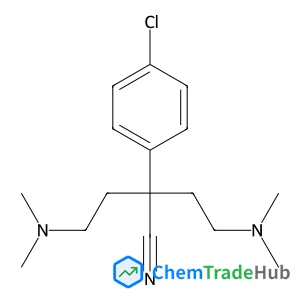
2-(4-Chlorophenyl)-4-(dimethylamino)-2-(2-(dimethylamino)ethyl)butanenitrile
CAS番号:
1246816-57-8
分子式:
C16H24ClN3
![1-[3-(4-Morpholinylsulfonyl)phenyl]methanamine structure](https://static.chemtradehub.com/structs/933/933989-32-3-51af.webp "1-[3-(4-Morpholinylsulfonyl)phenyl]methanamine structure")
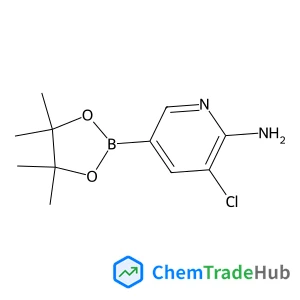
3-Chloro-5-(4,4,5,5-tetramethyl-1,3,2-dioxaborolan-2-yl)-2-pyridinamine
CAS番号:
1032758-99-8
分子式:
C11H16BClN2O2
おすすめサプライヤー




免責事項
このページに表示される学術雑誌情報は、参考および研究目的のみを目的としています。当社は雑誌出版社とは提携しておらず、投稿の取り扱いも行っておりません。出版に関するお問い合わせは、各雑誌出版社に直接ご連絡ください。
表示されている情報に誤りがある場合は、support@chemtradehub.com までご連絡ください。迅速に確認し、対応いたします。