












Cluster-based comparison of the peptide mass fingerprint obtained by MALDI-TOF mass spectrometry. A case study: long-term stability of rituximab
文献情報
出版日
2014-12-24
DOI
10.1039/C4AN01806K
インパクトファクター
4.616
著者
Pablo J. Villacorta, Antonio Salmerón-García, David A. Pelta, José Cabeza, Antonio Lario, Natalia Navas
原文を見る
要旨
We evaluated the use of the peptide mass fingerprint (PMF) obtained by matrix assisted laser desorption and ionization (MALDI) time-of-flight mass spectrometry (TOF-MS) to track changes in the structure of a protein. The first problem we had to overcome was the inherent complexity of the PMF, which makes it difficult to compare. We dealt with this problem by developing a cluster-based comparison algorithm which takes into account the proportional error made by the mass spectrometer. This procedure involves grouping together similar masses in an intelligent manner, so that we can determine which data correspond to the same peptide (any slight differences can be explained as experimental errors), and which of them are too different and thus more likely to represent different peptides. The proposed algorithm was applied to track changes in a commercially available monoclonal antibody (mAb), namely rituximab (RTX), prepared under the usual hospital conditions and stored refrigerated (4 °C) and frozen (−20 °C) for a long term study. PMFs were obtained periodically over three months. For each checked time, five replicates of the PMFs were obtained in order to evaluate the similarities between them by means of the occurrences of the particular peptides (m/z). After applying the algorithm to the PMF, different approaches were used to analyse the results. Surprisingly, all of them suggested that there were no differences between the two storage conditions tested, i.e. the RTX samples were almost equally well preserved when stored refrigerated at 4 °C or frozen at −20 °C. The cluster-based methodology is new in protein mass spectrometry and could be useful as an easy test for major changes in proteins and biopharmaceutics for diverse applications in industry and other fields, and could provide additional stability data in relation to the practical use of anticancer drugs.
おすすめジャーナル
関連文献
Total synthesis of buergerinin F via effective construction of the asymmetric quaternary carbons using an enantioselective aldol reaction
Isamu Shiina, Yo-ichi Kawakita, Ryoutarou Ibuka, Kazutoshi Yokoyama, Yu-suke Yamai
2005-07-14
Communication
DOI: 10.1039/B507401K
Simple iron-aminecatalysts for the cross-coupling of aryl Grignards with alkyl halides bearing β-hydrogens
Robin B. Bedford, Duncan W. Bruce, Robert M. Frost, Michael Hird
2005-07-22
Communication
DOI: 10.1039/B507133J
The synthesis of enantiomerically pure 4-substituted [2.2]paracyclophane derivatives by sulfoxide–metal exchange
Peter B. Hitchcock, Gareth J. Rowlands, Rakesh Parmar
2005-07-25
Communication
DOI: 10.1039/B507394D
The synthesis of tris(perfluoroalkyl)phosphines
Makeba B. Murphy-Jolly, Lesley C. Lewis, Andrew J. M. Caffyn
2005-08-08
Communication
DOI: 10.1039/B507752D
Enantioselective allylation of ketones catalyzed by chiral In(iii)-PYBOX complexes
Mei-Ling Hong, Shun-Jun Ji, Yong-Chua Teo
2005-07-25
Communication
DOI: 10.1039/B507768K
Mixed monolayer coverage on gold nanoparticles for interfacial stabilization of immiscible fluids
Elizabeth Glogowski, Jinbo He, Thomas P. Russell, Todd Emrick
2005-07-12
Communication
DOI: 10.1039/B503670D
t-Bu-Amphos–RhCl3·3H2O: a highly recyclable catalyst system for the cross-coupling of aldehydes and aryl- and alkenylboronic acids in aqueous solvents
Rongcai Huang, Kevin H. Shaughnessy
2005-08-03
Communication
DOI: 10.1039/B509406B
Shape controlled growth of gold nanoparticles by a solution synthesis
Ying Chen, Xin Gu, Cha-Geng Nie, Zhi-Yuan Jiang, Zhao-Xiong Xie, Chang-Jian Lin
2005-07-13
Communication
DOI: 10.1039/B504911C
Surfactant-free hydrothermal synthesis of lithium aluminate microbricks and nanorods from aluminium oxide nanoparticles
Upendra. A. Joshi, Soo Hyun Chung, Jae Sung Lee
2005-08-04
Communication
DOI: 10.1039/B508168H
こちらもおすすめ
化合物よくある質問
2-メトキシ-4-(メチルスルフィニル)アミンの主な用途は何ですか?
2-メトキシ-4-(メチルスルフィニル)アミンは、主に医薬品および農薬の製造に使用されます。また、合成化学の一部として研究用材料としても利用されます。
41608-73-52-Methoxy-4-(methyls...
118684-13-24-(Bromomethyl)-3-me...
化合物よくある質問
4,6-二氯-N-甲基ピラミジンアミンの代替品はありますか?
代替品としては、4,6-二クロロピラミジンアミンや他のピラミジン系化合物が考えられます。ただし、目的と用途によって最適な代替品は異なります。
10397-15-64,6-Dichloro-N-methy...
化合物よくある質問
6-氯-4-甲基-1H-吲哚を含む廃棄物はどのように処理すべきですか?
6-氯-4-甲基-1H-吲哚の廃棄物は、適切な容器に収集し、密閉して保管します。温度は常温、湿度は低く、直射日光を避けて保管することを推奨します。廃棄処理は専門...
885520-84-36-chloro-4-methyl-1H...
化合物よくある質問
2-フローユロ-4-(トリフルオロメチル)ベンゾイドについて「に適用される法規ガイドラインは何ですか」
2-フローユロ-4-(トリフルオロメチル)ベンゾイドのCAS番号は207974-08-1です。この化合物はGHS分類で毒性物質と有害な反応物質として分類されます...
207974-08-1[2-Fluoro-4-(trifluo...
化合物よくある質問
4-ニトロフェニルN-[(ベンゼルオキシルカーボンイル]グリシングリシングリシン酸はどのように保存すればよいですか?
4-ニトロフェニルN-[(ベンゼルオキシルカーボンイル]グリシングリシングリシン酸は、室温で暗所に保管し、乾燥した環境で保存することを推奨します。容器は密閉性の...
19811-64-44-Nitrophenyl N-[(be...
化合物よくある質問
イソデスロラタドリンの代替品はありますか?
イソデスロラタドリンの代替品としては、デスロラタドリンや他の抗ヒスタミン薬が挙げられます。具体的には、デスロラタドリン、ラセカミド、フェルタドリンなどが、症状や...
183198-49-4Iso Desloratadine
化合物よくある質問
5-甲氧基-1,2,3,4-四氢异喹啉盐酸盐はどのように合成されますか?
5-甲氧基-1,2,3,4-四氢异喹啉盐酸盐の一般的な合成方法は、メタノール中で5-メトキシ-1,2,3,4-四ヒュドロイソキシンを塩酸で塩化します。この反応で...
103030-69-95-Methoxy-1,2,3,4-te...
化合物よくある質問
4-アミノ-5-メトキシ-2-トルエンサルホニック酸についての法規ガイドラインは何ですか?
CAS番号6471-78-9の4-アミノ-5-メトキシ-2-トルエンサルホニック酸は、GHS分類では corrosive(腐食性)と識別されます。EUのREAC...
6471-78-94-Amino-5-Methoxy-2-...
化合物よくある質問
甲基孕酮を取り扱う際の実験室安全事項は何ですか?
甲基孕酮の取り扱いは、PPE(個人保護具)の使用が必要な重要な安全事項を伴います。防塵マスク、ゴーグル、手袋を着用することが推奨されます。ドラフトチャンバーを使...
204063-33-22-[(Diphenylmethyl)a...
掲載誌
Analyst

CiteScore:
7.8
自己引用率:
5.6%
年間論文数:
653
Analyst publishes analytical and bioanalytical research that reports premier fundamental discoveries and inventions, and the applications of those discoveries, unconfined by traditional discipline barriers.
おすすめ化合物
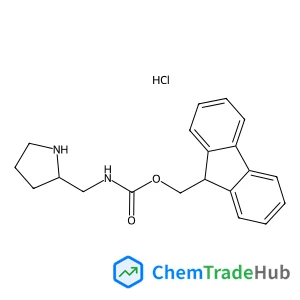
(S)-(9H-Fluoren-9-yl)methyl (pyrrolidin-2-ylmethyl)carbamate hydrochloride
CAS番号:
1217813-15-4
分子式:
C20H23ClN2O2
![2-Methylbenzo[h]quinoline structure](https://static.chemtradehub.com/structs/605/605-88-9-ac43.webp "2-Methylbenzo[h]quinoline structure")
おすすめサプライヤー





免責事項
このページに表示される学術雑誌情報は、参考および研究目的のみを目的としています。当社は雑誌出版社とは提携しておらず、投稿の取り扱いも行っておりません。出版に関するお問い合わせは、各雑誌出版社に直接ご連絡ください。
表示されている情報に誤りがある場合は、support@chemtradehub.com までご連絡ください。迅速に確認し、対応いたします。