












Synthesis and characterization of a novel hydrogel: salecan/polyacrylamide semi-IPN hydrogel with a desirable pore structure
文献情報
出版日
2014-04-03
DOI
10.1039/C3TB21711F
インパクトファクター
6.331
著者
Xinyu Hu, Liandong Feng, Aming Xie, Wei Wei, Shiming Wang, Jianfa Zhang, Wei Dong
原文を見る
要旨
Salecan is a novel water-soluble β-glucan produced by a salt-tolerant strain Agrobacterium sp. ZX09 which was isolated from a soil sample in our laboratory and the 16S rDNA sequence of this novel strain was deposited in the GenBank database under the accession number GU810841. Salecan has excellent physicochemical properties and can be used in industries such as food and medicine. In this paper, novel semi-interpenetrating polymer network (semi-IPN) hydrogels based on salecan and polyacrylamide (PAAm) were synthesized by radical polymerization/cryopolymerization and semi-IPN techniques. The resulting hydrogels with different salecan/PAAm composition ratios and preparation temperatures were characterized using FTIR, XRD, TGA and SEM measurements. The semi-IPNs exhibited a homogeneous porous architecture with a tunable pore size in a very broad range of 5–150 μm. Furthermore, swelling behaviors of the hydrogels were also studied to investigate the response properties of the hydrogels. The hydrogels obtained at subzero temperature can attain the equilibrium state in water within 260 seconds. Mechanical measurements showed that all semi-IPNs possessed good mechanical properties. In vitro degradation was also studied in PBS solution. Cytotoxicity results suggested that semi-IPN hydrogels were non-toxic to COS-7 cells. A cell culture experiment performed using COS-7 cells revealed their appropriateness for cell adhesion. Together, these results make salecan/PAAm semi-IPNs promising materials for biomedical applications.
関連文献
Density functional theoretical investigation of intramolecular proton transfer mechanisms in the derivatives of 3-hydroxychromone
Jin-Dou Huang, Jianbin Zhang, Dengyi Chen, Huipeng Ma
2017-06-13
Research Article
DOI: 10.1039/C7QO00367F
2-Methoxyphenyl isocyanate: a chemoselective multitasking reagent for an amine protection/deprotection sequence
Anand Babu Velappan, Subhashini Kogatam, Dhrubajyoti Datta, Rakshantha Srithar, Gunasekaran Nanjappan, Joy Debnath
2019-04-17
Research Article
DOI: 10.1039/C9QO00293F
Bifunctional Brønsted base catalyzed inverse-electron-demand aza-Diels–Alder reactions of saccharin-derived 1-azadienes with azlactones
Xiao-Rui Ren, Jun-Bing Lin, Xiu-Qin Hu, Peng-Fei Xu
2019-05-09
Research Article
DOI: 10.1039/C9QO00357F
Asymmetric synthesis of highly functionalized furanones via direct Michael reactions mediated by a bulky primary amine
Huicai Huang, Xue Lu, Yukang Mao, Jinxing Ye
2018-11-22
Research Article
DOI: 10.1039/C8QO01132J
Iridium-catalyzed asymmetric hydrogenation of quinazolinones
Guang-Shou Feng, Zi-Biao Zhao, Lei Shi
2019-04-29
Research Article
DOI: 10.1039/C9QO00443B
Endo/exo binding of alkyl and aryl diammonium ions by cyclopentanocucurbit[6]uril
Yun-Xia Qu, Rui-Lian Lin, Yun-Qian Zhang, Kai-Zhi Zhou, Qing-Di Zhou, Qian-Jiang Zhu, Zhu Tao, Pei-Hua Ma, Jing-Xin Liu, Gang Wei
2017-06-12
Research Article
DOI: 10.1039/C7QO00376E
Catalytic enantioselective bromohydroxylation of aryl olefins with flexible functionalities
2017-02-22
Research Article
DOI: 10.1039/C6QO00636A
Rh(i)-Catalyzed intramolecular [3 + 2] cycloaddition reactions of yne-vinylidenecyclopropanes
Kang-Hua Rui
2019-04-03
Research Article
DOI: 10.1039/C9QO00343F
Transition-metal-free borylation of propargylic alcohols: structurally variable synthesis in ionic liquid medium
Sangepu Bhavanarushi, Yin Xu, Imran Khan, Zhibin Luo, Bin Liu, Jimin Xie
2019-04-16
Research Article
DOI: 10.1039/C9QO00322C
こちらもおすすめ
化合物よくある質問
6- bromo-1-cyclopropyl-1H-benzimidazoleの市場動向や研究トレンドはどうですか?
6- bromo-1-cyclopropyl-1H-benzimidazoleは、抗炎症、抗ウイルス作用を持つことが報告されており、新薬開発の研究対象として注目...
1416713-53-56-Bromo-1-cyclopropy...
化合物よくある質問
環氧プロpanol-d5を取り扱う際の実験室安全事項は何ですか?
取り扱う際には、防護眼鏡と手袋を使用し、ドラフトチャンバー内で操作することを推奨します。漏洩時には適切な手順で処理し、安全データシートを常に参照してください。
1246819-20-4Glycidol-d5
化合物よくある質問
2,2’-ジメチル-3,3’-ビピリジンはどのように合成されますか?
2,2’-ジメチル-3,3’-ビピリジンは、ピリジンと2-メチルアクリルアミドを有機合成反応で合成します。この反応では、ピリジンと2-メチルアクリルアミドを含有...
86156-55-02,2’-Dimethyl-3,3’-b...
化合物よくある質問
6-甲基ピリジン-2-ボリック酸の主な用途は何ですか?
6-甲基ピリジン-2-ボリック酸は、合成化学、医薬品合成、以及研究用途などに広く使用され、特に組換えDNA技術や分子生物学の研究において重要な役割を果たします。
372963-50-3(6-Methyl-2-pyridiny...
化合物よくある質問
(R)-3-(1-甲基-2-氧環己基)プロpano酸メチルは安全ですか?
(R)-3-(1-甲基-2-氧環己基)プロpano酸メチルは一定の安全性がありますが、直接的な皮膚接触や吸入は避けるべきです。使用する際は適切な個々の安全データ...
94089-47-1methyl 3-[(1R)-1-met...
化合物よくある質問
ketorolacはどのように保存すればよいですか?
ketorolacは、密封して遮光容器に保管し、直射日光や高温を避けて保存してください。温度は常温で保存し、湿度をなるべく低く保つことが推奨されます。
74103-06-3rac Ketorolac
化合物よくある質問
L-2,3-二氨基丙酸二盐酸盐を取り扱う際の実験室安全事項は何ですか?
L-2,3-二氨基丙酸二盐酸盐は腐食性が強く、皮膚や粘膜に刺激を与える可能性があります。取り扱う際は、防塵マスク、ゴーグル、手袋を使用し、適切な排気設備を使用し...
19777-68-5(S)-2,3-Diaminopropa...
化合物よくある質問
2-(4-溴ピリジン-2-基)乙腈の物理化学的性質は何ですか?
2-(4-溴ピリジン-2-基)乙腈のCAS番号は312325-73-8です。主に結晶形態で存在し、分子量は159.01 g/molです。この化合物は水に溶けやす...
312325-73-8(4-Bromo-2-pyridinyl...
化合物よくある質問
3-フローロ-[1,1-ベンジレン]-3,4-ジカルボン酸を取り扱う際の実験室安全事項は何ですか?
この化合物は毒性は低いですが、直接的な接触や吸入に注意が必要です。PPE(個人防護具)を着用し、ドラフトチャンバーを使用して操作することを推奨します。また、漏洩...
1261915-32-53'-Fluoro-[1,1'-biph...
化合物よくある質問
3-(1-氧代-1,3-二氢-2H-2-异吲哚)丙酸の主な用途は何ですか?
3-(1-氧代-1,3-二氢-2H-2-异吲哚)丙酸は、薬理学研究や医薬品製造において広く用いられる化合物です。また、工業的な用途でも一部の化学反応の触媒や助剤...
83747-30-23-(1-Oxo-1,3-dihydro...
掲載誌
Journal of Materials Chemistry B
CiteScore:
12
自己引用率:
4.9%
年間論文数:
831
Journal of Materials Chemistry A, B & C cover high quality studies across all fields of materials chemistry. The journals focus on those theoretical or experimental studies that report new understanding, applications, properties and synthesis of materials. The journals have a strong history of publishing quality reports of interest to interdisciplinary communities and providing an efficient and rigorous service through peer review and publication. The journals are led by an international team of Editors-in-Chief and Associate Editors who are all active researchers in their fields. Journal of Materials Chemistry A, B & C are separated by the intended application of the material studied. Broadly, applications in energy and sustainability are of interest to Journal of Materials Chemistry A, applications in biology and medicine are of interest to Journal of Materials Chemistry B, and applications in optical, magnetic and electronic devices are of interest to Journal of Materials Chemistry C. More than one Journal of Materials Chemistry journal may be suitable for certain fields and researchers are encouraged to submit their paper to the journal that they feel best fits for their particular article. Example topic areas within the scope of Journal of Materials Chemistry B are listed below. This list is neither exhaustive nor exclusive. Antifouling coatings Biocompatible materials Bioelectronics Bioimaging Biomimetics Biomineralisation Bionics Biosensors Diagnostics Drug delivery Gene delivery Immunobiology Nanomedicine Regenerative medicine & Tissue engineering Scaffolds Soft robotics Stem cells Therapeutic devices image block All articles published in Journal of Materials Chemistry B from 2019 onwards will be indexed in MEDLINE®. Articles that primarily focus on providing insight into the underlying science and performance of biomaterials within a biological environment are more suited to our companion journal, Biomaterials Science.
おすすめ化合物
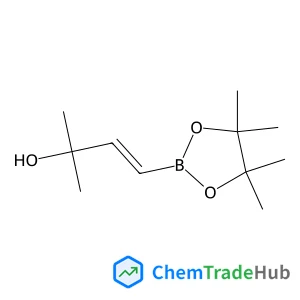
(E)-2-methyl-4-(4,4,5,5-tetramethyl-1,3,2-dioxaborolan-2-yl)but-3-en-2-ol
CAS番号:
581802-26-8
分子式:
C11H21BO3
![4-[(3-Chloro-2-fluorophenyl)amino]-7-methoxy-6-quinazolinyl acetate structure](https://static.chemtradehub.com/structs/740/740081-22-5-f58f.webp "4-[(3-Chloro-2-fluorophenyl)amino]-7-methoxy-6-quinazolinyl acetate structure")
4-[(3-Chloro-2-fluorophenyl)amino]-7-methoxy-6-quinazolinyl acetate
CAS番号:
740081-22-5
分子式:
C17H13ClFN3O3
おすすめサプライヤー





免責事項
このページに表示される学術雑誌情報は、参考および研究目的のみを目的としています。当社は雑誌出版社とは提携しておらず、投稿の取り扱いも行っておりません。出版に関するお問い合わせは、各雑誌出版社に直接ご連絡ください。
表示されている情報に誤りがある場合は、support@chemtradehub.com までご連絡ください。迅速に確認し、対応いたします。