












![6-Bromo-2,3-dihydro-1H-pyrido[2,3-b][1,4]oxazine structure](https://static.chemtradehub.com/structs/120/1203499-17-5-b4d1.webp "6-Bromo-2,3-dihydro-1H-pyrido[2,3-b][1,4]oxazine structure")
Rapid Wolff–Kishner reductions in a silicon carbide microreactor
文献情報
出版日
2013-11-12
DOI
10.1039/C3GC41942H
インパクトファクター
10.182
著者
Stephen G. Newman, Lei Gu, Christoph Lesniak, Georg Victor, Frank Meschke, Lahbib Abahmane, Klavs F. Jensen
原文を見る
要旨
Wolff–Kishner reductions are performed in a novel silicon carbide microreactor. Greatly reduced reaction times and safer operation are achieved, giving high yields without requiring a large excess of hydrazine. The corrosion resistance of silicon carbide avoids the problematic reactor compatibility issues that arise when Wolff–Kishner reductions are done in glass or stainless steel reactors. With only nitrogen gas and water as by-products, this opens the possibility of performing selective, large scale ketone reductions without the generation of hazardous waste streams.
おすすめジャーナル
関連文献
2-(2,3,4,5,6-Pentafluorophenyl)-1H-benzo[d]imidazole, a fluorine-rich building block for the preparation of conjugated polymer donors for organic solar cell applications
Marios Neophytou, Heraklidia A. Ioannidou, Christos L. Chochos, Solon P. Economopoulos, Panayiotis A. Koutentis, Grigorios Itskos, Stelios A. Choulis
2012-06-01
Paper
DOI: 10.1039/C2PY20198D
Cyclopenta[c]thiophene oligomers based solution processable D–A copolymers and their application as FET materials
Anjan Bedi, Satyaprasad P. Senanayak, Soumyajit Das, K. S. Narayan, Sanjio S. Zade
2012-04-27
Paper
DOI: 10.1039/C2PY20032E
Bioinspired dual self-folding of single polymer chains via reversible hydrogen bonding
Ozcan Altintas, Peter Gerstel
2011-11-11
Paper
DOI: 10.1039/C1PY00392E
Honeycomb structured polymer films via breath figures
Maribel Hernández-Guerrero, Martina H. Stenzel
2011-11-02
Review Article
DOI: 10.1039/C1PY00219H
Highly sensitive detection of DNA-binding proteins based on a cationic conjugated polymervia a target-mediated fluorescence resonance energy transfer (TMFRET) strategy
Xingfen Liu, Lan Ouyang, Yanqin Huang, Xiaomiao Feng, Quli Fan, Wei Huang
2012-01-17
Paper
DOI: 10.1039/C2PY00499B
Rapidly thiol-responsive degradable block copolymer nanocarriers with facile bioconjugation
Samuel Aleksanian, Behnoush Khorsand, Rolf Schmidt, Jung Kwon Oh
2012-04-18
Paper
DOI: 10.1039/C2PY20154B
Three new conjugated polymers based on benzo[2,1-b:3,4-b′]dithiophene: synthesis, characterization, photoinduced charge transfer and theoretical calculation studies
Shaojie Chen, Qiuyu Zhang, Hepeng Zhang, Junwei Gu, Mingliang Ma, Tiejun Xin, Yanyang Zhou, Jian Zhou, Qing Liu
2012-06-07
Paper
DOI: 10.1039/C2PY20122D
Self-healable and recyclable triple-shape PPDO–PTMEG co-network constructed through thermoreversible Diels–Alder reaction
Jingjing Zhang, Ying Niu, Caili Huang, Liping Xiao, Zhongtao Chen, Keke Yang, Yuzhong Wang
2012-04-26
Communication
DOI: 10.1039/C2PY20028G
A new story of cyclodextrin as a bulky pendent group causing uncommon behaviour to random copolymers in solution
Fuji Sakai, Guosong Chen, Ming Jiang
2012-01-31
Paper
DOI: 10.1039/C2PY00614F
こちらもおすすめ
化合物よくある質問
6- bromo-1-cyclopropyl-1H-benzimidazoleの市場動向や研究トレンドはどうですか?
6- bromo-1-cyclopropyl-1H-benzimidazoleは、抗炎症、抗ウイルス作用を持つことが報告されており、新薬開発の研究対象として注目...
1416713-53-56-Bromo-1-cyclopropy...
化合物よくある質問
環氧プロpanol-d5を取り扱う際の実験室安全事項は何ですか?
取り扱う際には、防護眼鏡と手袋を使用し、ドラフトチャンバー内で操作することを推奨します。漏洩時には適切な手順で処理し、安全データシートを常に参照してください。
1246819-20-4Glycidol-d5
化合物よくある質問
2,2’-ジメチル-3,3’-ビピリジンはどのように合成されますか?
2,2’-ジメチル-3,3’-ビピリジンは、ピリジンと2-メチルアクリルアミドを有機合成反応で合成します。この反応では、ピリジンと2-メチルアクリルアミドを含有...
86156-55-02,2’-Dimethyl-3,3’-b...
化合物よくある質問
6-甲基ピリジン-2-ボリック酸の主な用途は何ですか?
6-甲基ピリジン-2-ボリック酸は、合成化学、医薬品合成、以及研究用途などに広く使用され、特に組換えDNA技術や分子生物学の研究において重要な役割を果たします。
372963-50-3(6-Methyl-2-pyridiny...
化合物よくある質問
(R)-3-(1-甲基-2-氧環己基)プロpano酸メチルは安全ですか?
(R)-3-(1-甲基-2-氧環己基)プロpano酸メチルは一定の安全性がありますが、直接的な皮膚接触や吸入は避けるべきです。使用する際は適切な個々の安全データ...
94089-47-1methyl 3-[(1R)-1-met...
化合物よくある質問
ketorolacはどのように保存すればよいですか?
ketorolacは、密封して遮光容器に保管し、直射日光や高温を避けて保存してください。温度は常温で保存し、湿度をなるべく低く保つことが推奨されます。
74103-06-3rac Ketorolac
化合物よくある質問
L-2,3-二氨基丙酸二盐酸盐を取り扱う際の実験室安全事項は何ですか?
L-2,3-二氨基丙酸二盐酸盐は腐食性が強く、皮膚や粘膜に刺激を与える可能性があります。取り扱う際は、防塵マスク、ゴーグル、手袋を使用し、適切な排気設備を使用し...
19777-68-5(S)-2,3-Diaminopropa...
化合物よくある質問
2-(4-溴ピリジン-2-基)乙腈の物理化学的性質は何ですか?
2-(4-溴ピリジン-2-基)乙腈のCAS番号は312325-73-8です。主に結晶形態で存在し、分子量は159.01 g/molです。この化合物は水に溶けやす...
312325-73-8(4-Bromo-2-pyridinyl...
化合物よくある質問
3-フローロ-[1,1-ベンジレン]-3,4-ジカルボン酸を取り扱う際の実験室安全事項は何ですか?
この化合物は毒性は低いですが、直接的な接触や吸入に注意が必要です。PPE(個人防護具)を着用し、ドラフトチャンバーを使用して操作することを推奨します。また、漏洩...
1261915-32-53'-Fluoro-[1,1'-biph...
化合物よくある質問
3-(1-氧代-1,3-二氢-2H-2-异吲哚)丙酸の主な用途は何ですか?
3-(1-氧代-1,3-二氢-2H-2-异吲哚)丙酸は、薬理学研究や医薬品製造において広く用いられる化合物です。また、工業的な用途でも一部の化学反応の触媒や助剤...
83747-30-23-(1-Oxo-1,3-dihydro...
掲載誌
Green Chemistry

CiteScore:
16.1
自己引用率:
7.5%
年間論文数:
944
Green Chemistry provides a unique forum for the publication of innovative research on the development of alternative green and sustainable technologies. The scope of Green Chemistry is based on, but not limited to, the definition proposed by Anastas and Warner (Green Chemistry: Theory and Practice, P T Anastas and J C Warner, Oxford University Press, Oxford, 1998). Green chemistry is the utilisation of a set of principles that reduces or eliminates the use or generation of hazardous substances in the design, manufacture and application of chemical products. Green Chemistry is at the frontiers of this continuously-evolving interdisciplinary science and publishes research that attempts to reduce the environmental impact of the chemical enterprise by developing a technology base that is inherently non-toxic to living things and the environment. Submissions on all aspects of research relating to the endeavour are welcome. The journal publishes original and significant cutting-edge research that is likely to be of wide general appeal. To be published, work must present a significant advance in green chemistry. Papers must contain a comparison with existing methods and demonstrate advantages over those methods before publication can be considered. For more information please see this Editorial. Coverage includes the following, but is not limited to: Design (e.g. biomimicry, design for degradation/recycling/reduced toxicity…) Reagents & Feedstocks (e.g. renewables, CO2, solvents, auxiliary agents, waste utilization…) Synthesis (e.g. organic, inorganic, synthetic biology…) Catalysis (e.g. homogeneous, heterogeneous, enzyme, whole cell…) Process (e.g. process design, intensification, separations, recycling, efficiency…) Energy (e.g. renewable energy, fuels, photovoltaics, fuel cells, energy storage, energy carriers…) Applications (e.g. electronics, dyes, consumer products, coatings, pharmaceuticals, preservatives, building materials, chemicals for industry/agriculture/mining…) Impact (e.g. safety, metrics, LCA, sustainability, (eco)toxicology…) Green chemistry is, by definition, a continuously-evolving frontier. Therefore, the inclusion of a particular material or technology does not, of itself, guarantee that a paper is suitable for the journal. To be suitable, the novel advance should have the potential for reduced environmental impact relative to the state of the art. Green Chemistry does not normally deal with research associated with 'end-of-pipe' or remediation issues.
おすすめ化合物
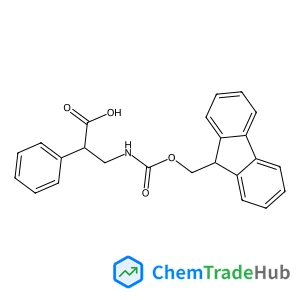
(S)-3-((((9H-Fluoren-9-yl)methoxy)carbonyl)amino)-2-phenylpropanoic acid
CAS番号:
1217663-60-9
分子式:
C24H21NO4
![2-{[(1R,2S)-2-Aminocyclohexyl]amino}-4-{[3-(2H-1,2,3-triazol-2-yl)phenyl]amino}-5-pyrimidinecarboxamide structure](https://static.chemtradehub.com/structs/137/1370261-96-3-40df.webp "2-{[(1R,2S)-2-Aminocyclohexyl]amino}-4-{[3-(2H-1,2,3-triazol-2-yl)phenyl]amino}-5-pyrimidinecarboxamide structure")
おすすめサプライヤー



免責事項
このページに表示される学術雑誌情報は、参考および研究目的のみを目的としています。当社は雑誌出版社とは提携しておらず、投稿の取り扱いも行っておりません。出版に関するお問い合わせは、各雑誌出版社に直接ご連絡ください。
表示されている情報に誤りがある場合は、support@chemtradehub.com までご連絡ください。迅速に確認し、対応いたします。