












Plasmon spectroscopy of small indium–silver clusters: monitoring the indium shell oxidation
文献情報
出版日
2014-01-30
DOI
10.1039/C3CP55135K
インパクトファクター
3.676
著者
Emmanuel Cottancin, Cyril Langlois, Jean Lermé, Michel Broyer, Marie-Ange Lebeault, Michel Pellarin
原文を見る
要旨
Owing to the very different electrovalences of indium and silver, nanoparticles made of these elements are among the simplest examples of hybrid plasmonic systems retaining a full metallic character. The optical properties of small indium–silver clusters are investigated here for the first time in relation to their structural characterization. They are produced in the gas phase by a laser vaporization source and co-deposited in a silica matrix. The optical absorption of fresh samples is dominated by a strong surface plasmon resonance (SPR) in the near UV, in an intermediate position between those of pure elements. A combination of SPR analysis and electron microscopy imaging provides evidence for the favourable surface segregation of indium. After a prolonged exposure to ambient air and because of the silica matrix porosity, changes in the SPR reflect the spontaneous formation of a dielectric indium oxide shell around a metallic silver core. The metallic character of indium can nevertheless be recovered by annealing under a reducing atmosphere. The reversibility of these processes is directly mirrored in optical measurements through SPR shifts and broadenings as supported by multi-shell Mie theory calculations. By controlling their oxidation level, In–Ag clusters can be considered as new candidates to extend SPR spectroscopy in the UV range and model plasmonic systems consisting of a silver particle of potentially very small size, fully protected by a dielectric oxide shell.
関連文献
Integrated microsystems for the in situ genetic detection of dengue virus in whole blood using direct sample preparation and isothermal amplification
Hyun Jin Yoo, Changyoon Baek, Min-Ho Lee, Junhong Min
2020-01-29
Paper
DOI: 10.1039/C9AN02435B
Correction: Total viable bacterial count using a real time all-fibre spectroscopic system
2016-07-07
Correction
DOI: 10.1039/C6AN90038K
An array of individually addressable micro-needles for mapping pH distributions
Claudio Zuliani, Fu Siong Ng, Andrea Alenda, Amir Eftekhar, Nicholas S. Peters, Christofer Toumazou
2016-05-11
Paper
DOI: 10.1039/C6AN00639F
Investigating CC positions and hydroxylation sites in lipids using Paternò–Büchi functionalization mass spectrometry
Patrick Esch, Sven Heiles
2020-01-23
Paper
DOI: 10.1039/C9AN02260K
Gadolinium-based MRI contrast agent for the detection of tyrosinase
Hyewon Seo
2019-12-17
Communication
DOI: 10.1039/C9AN02213A
Engineering DNAzyme cascade for signal transduction and amplification
Jing Li, Ke Quan, Yanjing Yang, Xiaohai Yang, Xiangxian Meng, Jin Huang, Kemin Wang
2020-01-10
Paper
DOI: 10.1039/C9AN02003A
NMR detection in biofluid extracts at sub-μM concentrations via para-H2 induced hyperpolarization
I. Reile, N. Eshuis, N. K. J. Hermkens, B. J. A. van Weerdenburg, M. C. Feiters, F. P. J. T. Rutjes, M. Tessari
2016-05-11
Communication
DOI: 10.1039/C6AN00804F
Detection of UVA/UVC-induced damage of p53 fragment by rolling circle amplification with AIEgens
Xiaowen Ou, Benmei Wei, Zhenyu Zhang, Mengshi Zhang, Yuan Zhuang, Pengcheng Gao, Xiaoding Lou, Fan Xia, Ben Zhong Tang
2016-05-09
Paper
DOI: 10.1039/C6AN00831C
Mathematical chromatography deciphers the molecular fingerprints of dissolved organic matter
Urban J. Wünsch, Jeffrey A. Hawkes
2020-01-09
Paper
DOI: 10.1039/C9AN02176K
こちらもおすすめ
化合物よくある質問
2,3-スチオエポキシマドルを取り扱う際の実験室安全事項は何ですか?
取り扱いにはPPE(プロテクティブ・パーソナル・エイド)が必要で、防ぐ手袋と保護眼鏡を着用してください。ドラフトチャンバーの使用を推奨します。漏洩した場合は、適...
4267-80-52,3-Thioepoxy Madol
53981-25-22-Amino-6-fluorophen...
化合物よくある質問
BOC-S-3-アミニ-4-(4-メチオキシベンチル)-ブタン酸の代替品はありますか?
この化合物の代替品としては、BOC保護基を有さないアミノ酸やその他の保護基化合物が考えられます。また、メチオキシ基を有しない他の芳香族アミノ酸も代替品として挙げ...
126800-59-7(3S)-4-(4-Methoxyphe...
化合物よくある質問
Methyl 2-(chloromethyl)-3-nitrobenzoate(1218910-61-2)の代替品はありますか?
Methyl 2-(chloromethyl)-3-nitrobenzoate(1218910-61-2)の代替品としては、化学組成を変えることで効果を達成する...
1218910-61-2Methyl 2-(chlorometh...
化合物よくある質問
(2R)-2-アミノ-N-ベンジル-3-ヒドロキシプロパナミドを含む廃棄物はどのように処理すべきですか?
(2R)-2-アミノ-N-ベンジル-3-ヒドロキシプロパナミドを含む廃棄物は、適切な廃棄物管理ガイドラインに基づき処理する必要があります。まず、廃棄物を適切に収...
175481-39-7(2R)-2-amino-N-benzy...
化合物よくある質問
6,7-二氢-咪唑並[1,2-a]ピリドイン-8(5h)-酮はどのように合成されますか?
6,7-二氢-咪唑並[1,2-a]ピリドイン-8(5h)-酮は、2-ブロモフェニルアセトインとリン酸ハロゲン化物を反応させることで合成できます。この反応は高温で...
457949-09-66,7-Dihydroimidazo[1...
化合物よくある質問
エチル(3R)-3-ピロリジニル酢酸水和塩とは何ですか?
エチル(3R)-3-ピロリジニル酢酸水和塩は、CAS番号1332459-32-1の化合物で、(R)-乙基2-(ピロリジン-3-基)酢酸塩水和塩と呼ばれます。この...
1332459-32-1Ethyl (3R)-3-pyrroli...
化合物よくある質問
(2S)-{[(2-メチルエチルオキシ]カルボニル}アミノ)[2-(トリアフルオロメチルフェニル]エチカシック酸の物理化学的性質は何ですか?
(2S)-{[(2-メチルエチルオキシ]カルボニル}アミノ)[2-(トリアフルオロメチルフェニル]エチカシック酸のCAS番号は1203454-45-8です。この...
1203454-45-8(2S)-({[(2-Methyl-2-...
化合物よくある質問
2-ブロモ-1-(2-メチル-2-プロパニル)-4-ニトロベンゼンはどのように保存すればよいですか?
2-ブロモ-1-(2-メチル-2-プロパニル)-4-ニトロベンゼンは、直射日光を避けて暗所で、室温(約15℃〜25℃)、乾燥した場所に保存する必要があります。ま...
6310-17-42-Bromo-1-(2-methyl-...
化合物よくある質問
1-[(4-硝基フェニル)スルホニル]-1H-1,2,4-三唑の市場動向や研究トレンドはどうですか?
市場動向としては、1-[(4-硝基フェニル)スルホニル]-1H-1,2,4-三唑は主に農業用除草剤や合成化学製品の原料として利用されています。研究トレンドとして...
57777-84-11-[(4-Nitrophenyl)su...
掲載誌
Physical Chemistry Chemical Physics

CiteScore:
5.5
自己引用率:
10.3%
年間論文数:
3036
Physical Chemistry Chemical Physics (PCCP) is an international journal co-owned by 19 physical chemistry and physics societies from around the world. This journal publishes original, cutting-edge research in physical chemistry, chemical physics and biophysical chemistry. To be suitable for publication in PCCP, articles must include significant innovation and/or insight into physical chemistry; this is the most important criterion that reviewers and Editors will judge against when evaluating submissions. The journal has a broad scope and welcomes contributions spanning experiment, theory, computation and data science. Topical coverage includes spectroscopy, dynamics, kinetics, statistical mechanics, thermodynamics, electrochemistry, catalysis, surface science, quantum mechanics, quantum computing and machine learning. Interdisciplinary research areas such as polymers and soft matter, materials, nanoscience, energy, surfaces/interfaces, and biophysical chemistry are welcomed if they demonstrate significant innovation and/or insight into physical chemistry. Joined experimental/theoretical studies are particularly appreciated when complementary and based on up-to-date approaches.
おすすめ化合物
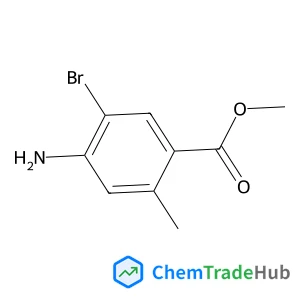
![6,6-Dimethylbicyclo[3.1.1]hept-2-ene-2-carbaldehyde structure](https://static.chemtradehub.com/structs/564/564-94-3-e746.webp "6,6-Dimethylbicyclo[3.1.1]hept-2-ene-2-carbaldehyde structure")
おすすめサプライヤー




免責事項
このページに表示される学術雑誌情報は、参考および研究目的のみを目的としています。当社は雑誌出版社とは提携しておらず、投稿の取り扱いも行っておりません。出版に関するお問い合わせは、各雑誌出版社に直接ご連絡ください。
表示されている情報に誤りがある場合は、support@chemtradehub.com までご連絡ください。迅速に確認し、対応いたします。