


Dispersion corrected DFT approaches for anharmonic vibrational frequency calculations: nucleobases and their dimers
文献情報
出版日
2014-01-28
DOI
10.1039/C3CP54724H
インパクトファクター
3.676
著者
Teresa Fornaro, Malgorzata Biczysko, Vincenzo Barone
原文を見る
要旨
Computational spectroscopy techniques have become in the last few years an effective means to analyze and assign infrared (IR) spectra of molecular systems of increasing dimensions and in different environments. However, transition from compilation of harmonic data to fully anharmonic simulations of spectra is still underway. The most promising results for large systems have been obtained, in our opinion, by perturbative vibrational approaches based on potential energy surfaces computed by hybrid (especially B3LYP) density functionals and medium size (e.g. SNSD) basis sets. In this framework, we are actively developing a comprehensive and robust computational protocol aimed at quantitative reproduction of the spectra of nucleic acid base complexes and their adsorption on solid supports (organic/inorganic). In this contribution we report the essential results of the first step devoted to isolated monomers and dimers. It is well known that in order to model the vibrational spectra of weakly bound molecular complexes dispersion interactions should be taken into proper account. In this work we have chosen two popular and inexpensive approaches to model dispersion interactions, namely the semi-empirical dispersion correction (D3) and pseudopotential based (DCP) methodologies both in conjunction with the B3LYP functional. These have been used for simulating fully anharmonic IR spectra of nucleobases and their dimers through generalized second order vibrational perturbation theory (GVPT2). We have studied, in particular, isolated adenine, hypoxanthine, uracil, thymine and cytosine, the hydrogen-bonded and stacked adenine and uracil dimers, and the stacked adenine–naphthalene heterodimer. Anharmonic frequencies are compared with standard B3LYP results and experimental findings, while the computed interaction energies and structures of complexes are compared to the best available theoretical estimates.
おすすめジャーナル

Bioorganic & Medicinal Chemistry

Journal of the Indian Institute of Science

Journal of Asian Natural Products Research

Polycyclic Aromatic Compounds

Bioorganic & Medicinal Chemistry Letters

Herald of the Russian Academy of Sciences

Chinese Journal of Chemistry

Acta Metallurgica Sinica-English Letters

Journal of Chemical Sciences

Electroanalysis
関連文献
Highly sensitive and reproducible silicon-based surface-enhanced Raman scattering sensors for real applications
Houyu Wang, Xiangxu Jiang, Yao He
2016-07-04
Minireview
DOI: 10.1039/C6AN01251E
An experimental study on the influence of trace impurities on ionization of atmospheric noble gas dielectric barrier discharges
F. D. Klute, A. Schütz, A. Michels, C. Vadla, D. Veza, V. Horvatic, J. Franzke
2016-08-04
Paper
DOI: 10.1039/C6AN01352J
Detection, differentiation, and identification of botulinum neurotoxin serotypes C, CD, D, and DC by highly specific immunoassays and mass spectrometry
Eva-Maria Hansbauer, Martin Skiba, Tanja Endermann, Jasmin Weisemann, Daniel Stern, Martin B. Dorner, Friedrich Finkenwirth, Jessica Wolf, Werner Luginbühl, Ute Messelhäußer, Laurent Bellanger, Cédric Woudstra, Andreas Rummel, Patrick Fach, Brigitte G. Dorner
2016-06-23
Paper
DOI: 10.1039/C6AN00693K
Nanoscale silicon surface-assisted laser desorption/ionization mass spectrometry: environment stability and activation by simple vacuum oven desiccation
Chia-Wen Tsao, Yuan-Jing Lin, Pi-Yu Chen, Yu-Liang Yang, Say Hwa Tan
2016-06-13
Paper
DOI: 10.1039/C6AN00659K
A tunable Au core–Ag shell nanoparticle tip for tip-enhanced spectroscopy
Woong Kim, Nara Kim, Eunbyoul Lee, Duckhoe Kim, Zee Hwan Kim, Joon Won Park
2016-02-17
Communication
DOI: 10.1039/C6AN00035E
Biomolecular environment, quantification, and intracellular interaction of multifunctional magnetic SERS nanoprobes
Tina Büchner, Daniela Drescher, Heike Traub, Peter Guttmann, Stephan Werner, Norbert Jakubowski, Gerd Schneider, Janina Kneipp
2016-06-13
Paper
DOI: 10.1039/C6AN00890A
Enzymatic conversion of magnetic nanoparticles to a non-magnetic precipitate: a new approach to magnetic sensing
Arati G. Kolhatkar, Andrew C. Jamison, Ivan Nekrashevich, Katerina Kourentzi, Audrius Brazdeikis, T. Randall Lee
2016-07-25
Communication
DOI: 10.1039/C6AN00709K
A novel microscale preparative gel electrophoresis system
Feiran Hao, Jiabin Li, Rui Zhai, Fenglong Jiao, Yangjun Zhang, Xiaohong Qian
2016-05-31
Paper
DOI: 10.1039/C6AN00780E
Pseudo isobaric peptide termini labelling for relative proteome quantification by SWATH MS acquisition
Yichu Shan, Zhigang Sui, Qi Wu, Lihua Zhang, Zhen Liang, Yukui Zhang
2016-06-09
Paper
DOI: 10.1039/C6AN00388E
こちらもおすすめ
化合物よくある質問
2-氟-4-イオドベンzo酸エチルエステルを取り扱う際の実験室安全事項は何ですか?
2-氟-4-イオドベンzo酸エチルエステルは有機溶媒を用いた反応であり、ドラフトチャンバーでの操作が必要です。漏洩時にはSDS参照の安全措置を講じ、PPE(防護...
205750-82-9Benzoic acid, 2-fluo...
化合物よくある質問
血根碱の主な用途は何ですか?
血根碱は主に医薬分野で利用され、抗炎症や抗がん剤としての潜在的な効果が研究されています。また、化学研究や薬物開発において、新しい薬剤設計の参考となる化合物として...
2447-54-313-Methyl[1,3]benzod...
化合物よくある質問
Methyl 3-methoxythiophene-2-carboxylateの主な用途は何ですか?
Methyl 3-メトキシスチフェン-2-カルボン酸メチルエステルは、薬品合成、染料製造、以及合成中間体としての用途が広がっています。
62353-75-7Methyl 3-methoxythio...
化合物よくある質問
丹磺酰-L-亮氨酸はどのように保存すればよいですか?
丹磺酰-L-亮氨酸は乾燥した場所で、直射日光から保護し、低温(室温以下)で保存してください。密閉容器に入れて保管することをおすすめします。
1100-22-7N-{[5-(Dimethylamino...
化合物よくある質問
5-(苄氧基)ピラミジン-4-アミンの代替品はありますか?
5-(苄氧基)ピラミジン-4-アミンの代替品として、6-メトキシピラミジンや5-フェニルピラミジンなどが挙げられます。これらの化合物は、5-(苄氧基)ピラミジン...
92289-50-45-benzyloxypyrimidin...
化合物よくある質問
8-ヒドロキシノルデコペントアセートの物理化学的性質は何ですか?
8-ヒドロキシノルデコペントアセートはCAS番号84807-87-4の化合物で、分子量は750.02 uです。これは油溶性で、水に溶けにくい特徴があります。反応...
84807-87-4(5Z,8Z,11Z,13E,15S)-...
化合物よくある質問
tert-ブチル(エス)-1-ヒドロキシペンタ-4-エン-2-イルカルバamateの主な用途は何ですか?
tert-ブチル(エス)-1-ヒドロキシペンタ-4-エン-2-イルカルバamateは主に医薬品の合成材料や分析化学の試薬として使用されます。
116613-81-12-Methyl-2-propanyl ...
化合物よくある質問
ブコール-L-2-フローヨルブリンについて適切な法規ガイドラインは何ですか?
ブコール-L-2-フローヨルブリン(CAS番号: 1196107-73-9)は、GHS(グローバルハザードアサessmentシステム)に基づく危害分類と表示が求...
1196107-73-92-Bromo-13,13-dimeth...
化合物よくある質問
6-ブロモ-N-環丙基-2-ピリジニニメタンの市場動向や研究トレンドはどうですか
6-ブロモ-N-環丙基-2-ピリジニニメタンは、薬理学研究や合成化学に使用される化合物であり、特に抗ウイルス薬や抗がん薬の開発に注目されています。市場では、薬物...
959237-20-86-Bromo-N-cyclopropy...
化合物よくある質問
RS-AMPÀはどのように保存すればよいですか?
RS-AMPÀは、遮光容器に保存し、室温(15〜25℃)で保管することが推奨されます。高湿や熱は物質を劣化させるため、湿度は50%以下に保つことが重要です。また...
74341-63-2(RS)-AMPA
掲載誌
Physical Chemistry Chemical Physics

CiteScore:
5.5
自己引用率:
10.3%
年間論文数:
3036
Physical Chemistry Chemical Physics (PCCP) is an international journal co-owned by 19 physical chemistry and physics societies from around the world. This journal publishes original, cutting-edge research in physical chemistry, chemical physics and biophysical chemistry. To be suitable for publication in PCCP, articles must include significant innovation and/or insight into physical chemistry; this is the most important criterion that reviewers and Editors will judge against when evaluating submissions. The journal has a broad scope and welcomes contributions spanning experiment, theory, computation and data science. Topical coverage includes spectroscopy, dynamics, kinetics, statistical mechanics, thermodynamics, electrochemistry, catalysis, surface science, quantum mechanics, quantum computing and machine learning. Interdisciplinary research areas such as polymers and soft matter, materials, nanoscience, energy, surfaces/interfaces, and biophysical chemistry are welcomed if they demonstrate significant innovation and/or insight into physical chemistry. Joined experimental/theoretical studies are particularly appreciated when complementary and based on up-to-date approaches.
おすすめ化合物
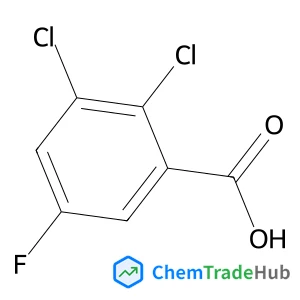
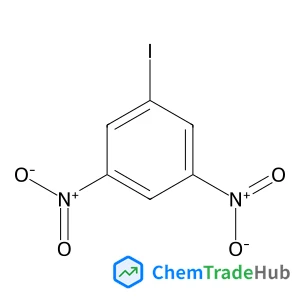
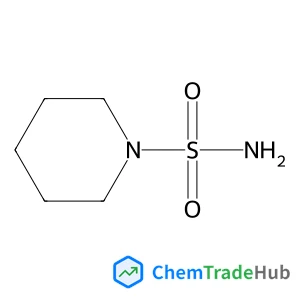
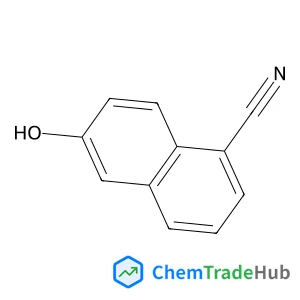
おすすめサプライヤー


免責事項
このページに表示される学術雑誌情報は、参考および研究目的のみを目的としています。当社は雑誌出版社とは提携しておらず、投稿の取り扱いも行っておりません。出版に関するお問い合わせは、各雑誌出版社に直接ご連絡ください。
表示されている情報に誤りがある場合は、support@chemtradehub.com までご連絡ください。迅速に確認し、対応いたします。