


Evolution of nanoscale amorphous, crystalline and phase-segregated PtNiP nanoparticles and their electrocatalytic effect on methanol oxidation reaction
文献情報
出版日
2013-12-16
DOI
10.1039/C3CP54600D
インパクトファクター
3.676
著者
Yanjiao Ma, Rongfang Wang, Hui Wang, Vladimir Linkov, Shan Ji
原文を見る
要旨
The design of amorphous noble metallic nanoparticle electrocatalysts is an important fundamental and applied research challenge because their surface is rich in low-coordination sites and defects which could act as the active sites in various catalytic processes. Here we describe new findings on the amorphous platinum–nickel–phosphorous nanoparticles supported on carbon black (PtNiPa/C) and the comparison between their catalytic activity and that of the nanoscale crystalline and phase-segregated PtNiP nanoparticles. The nanoscale amorphous, crystalline and phase-segregated catalysts were probed as a function of surface composition, particle size, and thermal treatment conditions using X-ray diffraction, X-ray photoelectron spectroscopy, transmission electron microscopy, selected area electron diffraction and electrochemical characterization. The results provide the experimental evidence in support of nanoscale amorphous, crystalline, and phase-segregated PtNiP nanoparticles evolution dependence on the catalyst synthesis temperature. More importantly, the results of the electrochemical performance investigation showed that the amorphous structure has not only better catalytic activity for methanol oxidation but also stronger tolerance to carbon monoxide poisoning compared to the crystalline and phase-segregated structure. Besides, the thermal control of the formation of nanoscale amorphous, crystalline and phase-segregated structured catalysts provided the opportunity for establishing the correlation between the nanoscale phase structures of the catalysts and their electrocatalytic activity in methanol oxidation reaction, which plays an important role in developing highly active electrocatalysts for direct methanol fuel cells.
おすすめジャーナル

Kinetics and Catalysis

Pure and Applied Chemistry

Israel Journal of Chemistry

Proceedings of the National Academy of Sciences of the United States of America

Journal of Organometallic Chemistry

Molecular Pharmacology

Helvetica Chimica Acta

Journal of Catalysis

Planta Medica

Organic Preparations and Procedures International
関連文献
Multi-size control of homogeneous explosives by coaxial microfluidics
Jinyu Shi, Shuangfei Zhao, Hanyu Jiang, Siyu Xu, Fengqi Zhao, Ruiqi Shen, Yinghua Ye, Peng Zhu
2021-09-17
Paper
DOI: 10.1039/D1RE00328C
Efficient continuous-flow synthesis of long-chain alkylated naphthalene catalyzed by ionic liquids in a microreaction system
Tian Yang, Fajun Wang, Jinpei Huang, Si Da Ling, Suli Liu, Angui Zhang, Yundong Wang, Jianhong Xu
2021-07-14
Paper
DOI: 10.1039/D1RE00223F
Microkinetic and sensitivity analysis of oxidative dry reforming of methane on Ni–Co catalyst using a reaction mechanism based on Ni
A. S. Russel, Puneet Kumar Chaudhary, Pulkit Jain, Goutam Deo
2021-09-16
Paper
DOI: 10.1039/D1RE00086A
Synthesis of well-defined primary amine-based homopolymers and block copolymers and their Michael addition reactions with acrylates and acrylamides
Elizabeth S. Read, Kate L. Thompson, Steven P. Armes
2010-01-08
Paper
DOI: 10.1039/B9PY00320G
Polyolefin plastic waste hydroconversion to fuels, lubricants, and waxes: a comparative study
Pavel A. Kots
2021-12-01
Perspective
DOI: 10.1039/D1RE00447F
Energy optimization of bio-oil production from biomass by fast pyrolysis using microwaves
Lilivet Ubiera, Isabelle Polaert, Michel Delmotte, Lokmane Abdelouahed, Bechara Taouk
2021-07-15
Paper
DOI: 10.1039/D1RE00146A
One-flow upscaling neutralization of an organophosphonate-derived pesticide/nerve agent simulant to value-added chemicals in a novel Teflon microreactor platform
Brijesh M. Sharma, Se-Jun Yim, Arun Nikam, Gwang-Noh Ahn, Dong-Pyo Kim
2021-06-06
Paper
DOI: 10.1039/D1RE00147G
Surface engineering of a Cu-based heterogeneous catalyst for efficient azide–alkyne click cycloaddition
Gianvito Vilé, Jiaxu Liu, Zhenmei Zhang
2021-07-06
Paper
DOI: 10.1039/D1RE00199J
Activation of β-diketones for CO2 capture and utilization
Khaleel I. Assaf, Abdussalam K. Qaroush, Ibrahim K. Okashah, Feda'a M. Al-Qaisi, Fatima Alsoubani, Ala'a F. Eftaiha
2021-09-08
Paper
DOI: 10.1039/D1RE00278C
Global opportunities and challenges on net-zero CO2 emissions towards a sustainable future
A. Joseph Nathanael, Kumaran Kannaiyan, Aruna K Kunhiraman, Seeram Ramakrishna
2021-09-21
Perspective
DOI: 10.1039/D1RE00233C
こちらもおすすめ
化合物よくある質問
3-イチチルビフェニルはどのように合成されますか?
3-イチチルビフェニルは、ビフェニルとイチプロピオニトリルを回収率約90%で反応させて合成されます。触媒は通常、亜リチウムホウ素を用います。
5668-93-93-Ethylbiphenyl
化合物よくある質問
8-溴-5-三氟甲基喹啉はどのように合成されますか?
8-溴-5-三氟甲基喹啉は、5-トリフルオロメチル-2-メチル-1,3-ベンゼンジオールをブロモエタノールと反応させて生成します。この反応は塩基性条件下で行われ...
917251-92-48-Bromo-5-(trifluoro...
化合物よくある質問
ジメチル4-(4,4,5,5-テトラメチル-1,3,2-ドioxaborolan-2-基)-2,6-ピリジンジカルボイル酸フェニルアミニドの代替品はありますか?
ジメチル4-(4,4,5,5-テトラメチル-1,3,2-ドioxaborolan-2-基)-2,6-ピリジンジカルボイル酸フェニルアミニドの代替品としては、4-...
741709-66-0Dimethyl 4-(4,4,5,5-...
化合物よくある質問
N-(3,5-ヘキサクロロ-4-ピリドインイル)-8-メチオキシ-5-キノリンカーボン酸の市場動向や研究トレンドはどのようなものでしょうか?
N-(3,5-ヘキサクロロ-4-ピリドインイル)-8-メチオキシ-5-キノリンカーボン酸の市場動向は、主に産業用途での需要により影響を受けます。研究トレンドとし...
199871-63-1N-(3,5-Dichloro-4-py...
化合物よくある質問
イソステアロイルグリセリルは安全ですか?
イソステアロイルグリセリルは一般的に安全性が高いとされていますが、過度な使用や個人差により皮�owsん炎などの反応が起こる可能性があります。使用前に医師に相談す...
222723-55-92-[(5Z,8Z,11Z,14Z)-5...
化合物よくある質問
1-(二苯甲基)-3,3-二氟-氮杂环丁烷の市場動向や研究トレンドはどうですか?
1-(二苯甲基)-3,3-二氟-氮杂环丁烷の市場動向は、医薬品や合成化学の研究分野で注目を集めています。新興研究は、該当化合物の合成改良と生体内での作用メカニズ...
288315-02-61-Benzhydryl-3,3-dif...
化合物よくある質問
3-チオフェンスチオールの物理化学的性質は何ですか?
3-チオフェンスチオールのCAS番号は7774-73-4です。結晶性の白色粉末で、分子量は122.17です。この化合物は水に微溶解し、エタノールやジクロロメタン...
7774-73-43-Thiophenethiol
化合物よくある質問
2-Methyl-2-propanyl (2S)-2-(aminomethyl)-1-piperidinecarboxylateは安全ですか?
2-Methyl-2-propanyl (2S)-2-(aminomethyl)-1-piperidinecarboxylateは一定の安全性基準を満たしていま...
475105-35-22-Methyl-2-propanyl ...
化合物よくある質問
CAS番号1316822-90-8の化合物は安全ですか?
CAS番号1316822-90-8の化合物は安全性に関しては評価が不足していますが、一般的には生物学的に活性な物質であり、取り扱いには適切な安全防護措置が必要で...
1316822-90-8Gal beta(1-3)[Neu5Ac...
化合物よくある質問
Tert-butyl 2-(2-羟基乙基)哌嗪-1-羧酸はどのように保存すればよいですか?
Tert-butyl 2-(2-羟基乙基)哌嗪-1-羧酸は、冷暗所で保存し、直射日光から遠ざけてください。容器は密閉し、高湿度や高温を避けて保管してください。
517866-79-4Tert-butyl 2-(2-hydr...
掲載誌
Physical Chemistry Chemical Physics

CiteScore:
5.5
自己引用率:
10.3%
年間論文数:
3036
Physical Chemistry Chemical Physics (PCCP) is an international journal co-owned by 19 physical chemistry and physics societies from around the world. This journal publishes original, cutting-edge research in physical chemistry, chemical physics and biophysical chemistry. To be suitable for publication in PCCP, articles must include significant innovation and/or insight into physical chemistry; this is the most important criterion that reviewers and Editors will judge against when evaluating submissions. The journal has a broad scope and welcomes contributions spanning experiment, theory, computation and data science. Topical coverage includes spectroscopy, dynamics, kinetics, statistical mechanics, thermodynamics, electrochemistry, catalysis, surface science, quantum mechanics, quantum computing and machine learning. Interdisciplinary research areas such as polymers and soft matter, materials, nanoscience, energy, surfaces/interfaces, and biophysical chemistry are welcomed if they demonstrate significant innovation and/or insight into physical chemistry. Joined experimental/theoretical studies are particularly appreciated when complementary and based on up-to-date approaches.
おすすめ化合物
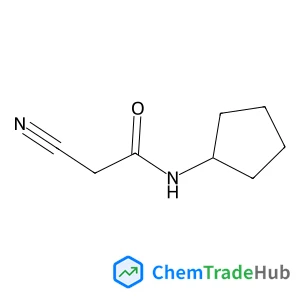
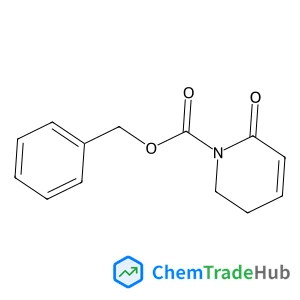
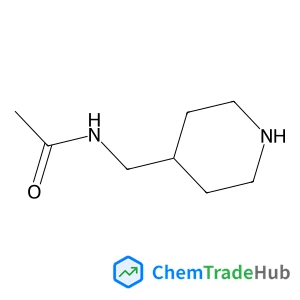
おすすめサプライヤー





免責事項
このページに表示される学術雑誌情報は、参考および研究目的のみを目的としています。当社は雑誌出版社とは提携しておらず、投稿の取り扱いも行っておりません。出版に関するお問い合わせは、各雑誌出版社に直接ご連絡ください。
表示されている情報に誤りがある場合は、support@chemtradehub.com までご連絡ください。迅速に確認し、対応いたします。