












Three milieux for interstellar chemistry: gas, dust, and ice
文献情報
出版日
2013-10-30
DOI
10.1039/C3CP54065K
インパクトファクター
3.676
著者
原文を見る
要旨
The interdisciplinary science of astrochemistry is 45 years of age, if we pinpoint its origin to have occurred when the first polyatomic molecules were detected in the interstellar gas. Since that time, the field has grown remarkably from an esoteric area of research to one that unites scientists around the globe. Almost 200 different molecules have been detected in the gas-phase of interstellar clouds, mainly by rotational spectroscopy, while dust particles and their icy mantles in colder regions can be probed by vibrational spectroscopy. Astrochemistry is exciting to scientists in a number of different fields. Astronomers are interested in molecular spectra from the heavens because such spectra are excellent probes of the physical conditions where molecules exist, while chemists are interested in the exotic molecules, their spectra, and the unusual chemical processes that produce and destroy them under conditions often very different from those on our home planet. Chemical simulations involving thousands of reactions are now used to calculate concentrations and spectra of interstellar molecules as functions of time. Even biologists share an interest in the subject, because the interstellar clouds of gas and dust, portions of which collapse to form stars and planetary systems, contain organic molecules that may become part of the initial inventory of new planets and may indeed be the precursors of life. An irresistible subject to its practitioners, astrochemistry is proving to be exciting to a much wider audience. In this perspective article, the field is first introduced, and the emphasis is then placed on the three environments in which chemistry occurs in the interstellar medium: the gas phase, the surfaces of bare dust particles, and the ice mantles that cover bare grains in cold dense interstellar clouds. What we do know and what we do not know is distinguished. The status of chemical simulations for a variety of interstellar sources having to do with stellar and planetary evolution is surveyed. An optimistic view of the future of astrochemistry ends the article.
関連文献
Self-assembly of an amyloid peptide fragment–PEG conjugate: lyotropic phase formation and influence of PEG crystallization
V. Castelletto, G. E. Newby, D. Hermida Merino, D. Liu, L. Noirez
2010-02-01
Paper
DOI: 10.1039/B9PY00349E
Construction of supramolecular laccase enzymes and understanding of catalytic dye degradation using multispectral and molecular docking approaches
Qingteng Zhou, Kaijie Ni, Francesca M. Kerton
2021-07-26
Paper
DOI: 10.1039/D1RE00111F
Efficient continuous-flow synthesis of long-chain alkylated naphthalene catalyzed by ionic liquids in a microreaction system
Tian Yang, Fajun Wang, Jinpei Huang, Si Da Ling, Suli Liu, Angui Zhang, Yundong Wang, Jianhong Xu
2021-07-14
Paper
DOI: 10.1039/D1RE00223F
Multi-size control of homogeneous explosives by coaxial microfluidics
Jinyu Shi, Shuangfei Zhao, Hanyu Jiang, Siyu Xu, Fengqi Zhao, Ruiqi Shen, Yinghua Ye, Peng Zhu
2021-09-17
Paper
DOI: 10.1039/D1RE00328C
Global opportunities and challenges on net-zero CO2 emissions towards a sustainable future
A. Joseph Nathanael, Kumaran Kannaiyan, Aruna K Kunhiraman, Seeram Ramakrishna
2021-09-21
Perspective
DOI: 10.1039/D1RE00233C
Ionic liquid-derived polyelectrolyte promoting the biphasic condensation of immiscible reactants at moderate temperature
Yuki Kohno, Takashi Makino
2021-08-27
Communication
DOI: 10.1039/D1RE00304F
UO2F2 particulate formation in an impinging jet gas reactor
Joshua A. Hubbard, Meng-Dawn Cheng, Lawrence Cheung, Jared R. Kirsch, Jason M. Richards, Glenn A. Fugate
2021-06-14
Paper
DOI: 10.1039/D1RE00105A
Enhanced methane conversion using Ni-doped calcium ferrite oxygen carriers in chemical looping partial oxidation systems with CO2 utilization
Vedant Shah, Zhuo Cheng, Pinak Mohapatra, Liang-Shih Fan
2021-07-14
Paper
DOI: 10.1039/D1RE00150G
Electroluminescent main-chain copolymers containing phosphorescent benzimidazole-based iridium complexes as copolymerization backbone units or dopants
Wei-Sheng Huang, Ying-Hsien Wu, Hong-Cheu Lin, Jiann T. Lin
2010-01-12
Paper
DOI: 10.1039/B9PY00276F
Direct RAFT polymerization of an unprotected isocyanate-containing monomer and subsequent structopendant functionalization using “click”-type reactions
Joel D. Flores, Junghwan Shin
2009-12-22
Paper
DOI: 10.1039/B9PY00294D
こちらもおすすめ
化合物よくある質問
3-イチチルビフェニルはどのように合成されますか?
3-イチチルビフェニルは、ビフェニルとイチプロピオニトリルを回収率約90%で反応させて合成されます。触媒は通常、亜リチウムホウ素を用います。
5668-93-93-Ethylbiphenyl
化合物よくある質問
8-溴-5-三氟甲基喹啉はどのように合成されますか?
8-溴-5-三氟甲基喹啉は、5-トリフルオロメチル-2-メチル-1,3-ベンゼンジオールをブロモエタノールと反応させて生成します。この反応は塩基性条件下で行われ...
917251-92-48-Bromo-5-(trifluoro...
化合物よくある質問
ジメチル4-(4,4,5,5-テトラメチル-1,3,2-ドioxaborolan-2-基)-2,6-ピリジンジカルボイル酸フェニルアミニドの代替品はありますか?
ジメチル4-(4,4,5,5-テトラメチル-1,3,2-ドioxaborolan-2-基)-2,6-ピリジンジカルボイル酸フェニルアミニドの代替品としては、4-...
741709-66-0Dimethyl 4-(4,4,5,5-...
化合物よくある質問
N-(3,5-ヘキサクロロ-4-ピリドインイル)-8-メチオキシ-5-キノリンカーボン酸の市場動向や研究トレンドはどのようなものでしょうか?
N-(3,5-ヘキサクロロ-4-ピリドインイル)-8-メチオキシ-5-キノリンカーボン酸の市場動向は、主に産業用途での需要により影響を受けます。研究トレンドとし...
199871-63-1N-(3,5-Dichloro-4-py...
化合物よくある質問
イソステアロイルグリセリルは安全ですか?
イソステアロイルグリセリルは一般的に安全性が高いとされていますが、過度な使用や個人差により皮�owsん炎などの反応が起こる可能性があります。使用前に医師に相談す...
222723-55-92-[(5Z,8Z,11Z,14Z)-5...
化合物よくある質問
1-(二苯甲基)-3,3-二氟-氮杂环丁烷の市場動向や研究トレンドはどうですか?
1-(二苯甲基)-3,3-二氟-氮杂环丁烷の市場動向は、医薬品や合成化学の研究分野で注目を集めています。新興研究は、該当化合物の合成改良と生体内での作用メカニズ...
288315-02-61-Benzhydryl-3,3-dif...
化合物よくある質問
3-チオフェンスチオールの物理化学的性質は何ですか?
3-チオフェンスチオールのCAS番号は7774-73-4です。結晶性の白色粉末で、分子量は122.17です。この化合物は水に微溶解し、エタノールやジクロロメタン...
7774-73-43-Thiophenethiol
化合物よくある質問
2-Methyl-2-propanyl (2S)-2-(aminomethyl)-1-piperidinecarboxylateは安全ですか?
2-Methyl-2-propanyl (2S)-2-(aminomethyl)-1-piperidinecarboxylateは一定の安全性基準を満たしていま...
475105-35-22-Methyl-2-propanyl ...
化合物よくある質問
CAS番号1316822-90-8の化合物は安全ですか?
CAS番号1316822-90-8の化合物は安全性に関しては評価が不足していますが、一般的には生物学的に活性な物質であり、取り扱いには適切な安全防護措置が必要で...
1316822-90-8Gal beta(1-3)[Neu5Ac...
化合物よくある質問
Tert-butyl 2-(2-羟基乙基)哌嗪-1-羧酸はどのように保存すればよいですか?
Tert-butyl 2-(2-羟基乙基)哌嗪-1-羧酸は、冷暗所で保存し、直射日光から遠ざけてください。容器は密閉し、高湿度や高温を避けて保管してください。
517866-79-4Tert-butyl 2-(2-hydr...
掲載誌
Physical Chemistry Chemical Physics

CiteScore:
5.5
自己引用率:
10.3%
年間論文数:
3036
Physical Chemistry Chemical Physics (PCCP) is an international journal co-owned by 19 physical chemistry and physics societies from around the world. This journal publishes original, cutting-edge research in physical chemistry, chemical physics and biophysical chemistry. To be suitable for publication in PCCP, articles must include significant innovation and/or insight into physical chemistry; this is the most important criterion that reviewers and Editors will judge against when evaluating submissions. The journal has a broad scope and welcomes contributions spanning experiment, theory, computation and data science. Topical coverage includes spectroscopy, dynamics, kinetics, statistical mechanics, thermodynamics, electrochemistry, catalysis, surface science, quantum mechanics, quantum computing and machine learning. Interdisciplinary research areas such as polymers and soft matter, materials, nanoscience, energy, surfaces/interfaces, and biophysical chemistry are welcomed if they demonstrate significant innovation and/or insight into physical chemistry. Joined experimental/theoretical studies are particularly appreciated when complementary and based on up-to-date approaches.
おすすめ化合物

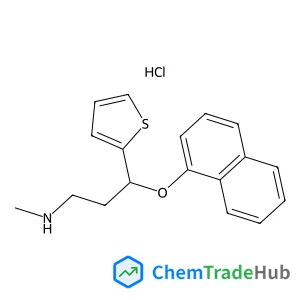
N-Methyl-3-(1-naphthyloxy)-3-(2-thienyl)-1-propanamine hydrochloride (1:1)
CAS番号:
1188266-11-6
分子式:
C18H20ClNOS

おすすめサプライヤー




免責事項
このページに表示される学術雑誌情報は、参考および研究目的のみを目的としています。当社は雑誌出版社とは提携しておらず、投稿の取り扱いも行っておりません。出版に関するお問い合わせは、各雑誌出版社に直接ご連絡ください。
表示されている情報に誤りがある場合は、support@chemtradehub.com までご連絡ください。迅速に確認し、対応いたします。