












Unravelling the quantum-entanglement effect of noble gas coordination on the spin ground state of CUO
文献情報
出版日
2013-11-04
DOI
10.1039/C3CP53975J
インパクトファクター
3.676
著者
Paweł Tecmer, Katharina Boguslawski, Örs Legeza, Markus Reiher
原文を見る
要旨
The accurate description of the complexation of the CUO molecule by Ne and Ar noble gas matrices represents a challenging task for present-day quantum chemistry. Especially, the accurate prediction of the spin ground state of different CUO–noble-gas complexes remains elusive. In this work, the interaction of the CUO unit with the surrounding noble gas matrices is investigated in terms of complexation energies and dissected into its molecular orbital quantum entanglement patterns. Our analysis elucidates the anticipated singlet–triplet ground-state reversal of the CUO molecule diluted in different noble gas matrices and demonstrates that the strongest uranium–noble gas interaction is found for CUOAr4 in its triplet configuration.
関連文献
Resistive switching memory devices based on electrical conductance tuning in poly(4-vinyl phenol)–oxadiazole composites
Yanmei Sun, Fengjuan Miao, Rui Li, Dianzhong Wen
2015-10-08
Paper
DOI: 10.1039/C5CP05481H
Hydrogen bond mediated stabilization of the salt bridge structure for the glycine dimer anion
S. Heiles, Richard J. Cooper, Giel Berden, Evan R. Williams
2015-10-27
Paper
DOI: 10.1039/C5CP06120B
Radiation-induced transformations of matrix-isolated formic acid: evidence for the HCOOH → HOCO + H channel
Sergey V. Ryazantsev, Vladimir I. Feldman
2015-10-23
Paper
DOI: 10.1039/C5CP05446J
A theoretical study of O2 activation by the Au7-cluster on Mg(OH)2: roles of surface hydroxyls and hydroxyl defects
Weiliu Fan
2015-10-26
Paper
DOI: 10.1039/C5CP05591A
A comparative first principles study on trivalent ion incorporated SSZ-13 zeolites
Cui Wen, Lu Geng, Lina Han, Jiancheng Wang, Liping Chang, Dejin Kong, Jianwen Liu
2015-10-07
Paper
DOI: 10.1039/C5CP04788A
Morphology-dependent interplay of reduction behaviors, oxygen vacancies and hydroxyl reactivity of CeO2 nanocrystals
Yuxian Gao, Rongtan Li, Shilong Chen, Liangfeng Luo, Tian Cao, Weixin Huang
2015-11-05
Paper
DOI: 10.1039/C5CP04570C
Ultrafast charge carrier relaxation and charge transfer processes in CdS/CdTe thin films
Ruvini Dharmadasa, I. M. Dharmadasa, Thad Druffel
2015-05-27
Paper
DOI: 10.1039/C5CP01652E
Gas-phase synthesis of Mg–Ti nanoparticles for solid-state hydrogen storage
M. Calizzi, F. Venturi, M. Ponthieu, F. Cuevas, V. Morandi, T. Perkisas, S. Bals, L. Pasquini
2015-11-05
Paper
DOI: 10.1039/C5CP03092G
The R- and S-diastereoisomeric effects on the guanidinohydantoin-induced mutations in DNA
N. R. Jena, Vivek Gaur, P. C. Mishra
2015-06-15
Paper
DOI: 10.1039/C5CP02636A
こちらもおすすめ
化合物よくある質問
カルボニル基が付いた5-氰基-1-{[(2-メチル-2-プロpanyl)オキシ]カーボンイル}1H-吲哚-2-イリド-2-ボリン酸はどのように保存すればよいですか?
カルボニル基が付いた5-氰基-1-{[(2-メチル-2-プロpanyl)オキシ]カーボンイル}1H-吲哚-2-イリド-2-ボリン酸は、直射日光を避けて室温(15...
475102-15-9(5-Cyano-1-{[(2-meth...
化合物よくある質問
tert-ブチル2-クロロメチルピリジン-3-基炭酸エステルの市場動向や研究トレンドはどうですか?
この化合物は合成化学分野において、特にピリジン化合物の合成や改良に用いられます。最近の研究では、ピリジン化合物の新規合成法や特性の改良が注目されています。市場動...
1203498-98-9tert-Butyl 2-chloro-...
化合物よくある質問
聚二季戊四醇六丙烯酸酯はどの業界で使用されていますか?
聚二季戊四醇六丙烯酸酯は、医薬品、ポリマー、センサー、半導体などの業界で広く使用されています。特にポリマー業界では硬化剤として、医薬分野では医療機器の製造に使用...
29570-58-93-(Acryloyloxy)-2-({...
化合物よくある質問
1-氯-5-硝基异喹啉の市場動向や研究トレンドはどうですか?
1-氯-5-硝基异喹啉は、薬理学や合成化学の研究分野で注目されています。市場動向としては、その生物学的な活性や合成可能性を評価する研究が増えています。また、代替...
58142-97-51-Chloro-5-nitroisoq...
化合物よくある質問
2-チロール-5-メチルスルフェニル-3-trifルオルメチルベンゼンはどのように合成されますか?
2-チロール-5-メチルスルフェニル-3-trifルオルメチルベンゼンは、トリフルオロメチル化反応と硫化反応を経て合成されます。通常、トリフルオロメチル化剤と硫...
957066-04-51-Chloro-4-(methylsu...
化合物よくある質問
p-トールイルマグネシウムブロミドの物理化学的性質は何ですか?
p-トールイルマグネシウムブロミドのCAS番号は4294-57-9です。この化合物は白色の結晶性粉末で、分子量は204.32です。溶剤中で良好に溶解しますが、水...
4294-57-9p-Tolylmagnesium bro...
化合物よくある質問
1-(5-甲基-2-硫化素基)プロパン-1-酮の市場動向や研究トレンドはどうですか?
1-(5-甲基-2-硫化素基)プロパン-1-酮の市場動向は、化学産業全体の需要に影響を受けますが、最近では pharmaceutical 分野での応用が注目され...
59303-13-81-(5-Methyl-2-thieny...
化合物よくある質問
十一碳烯酰甘氨酸を取り扱う際の実験室安全事項は何ですか?
十一碳烯酰甘氨酸は吸入や皮膚から吸収されることがあり、取り扱う際には防塵マスクと手袋を使用してください。ドラフトチャンバーを用いて漏洩を処理し、適切なSDS(S...
54301-26-7N-10-Undecenoylglyci...
化合物よくある質問
1H,1H-全氟-3,6-二氧杂葵-1-醇を取り扱う際の実験室安全事項は何ですか?
この化合物は吸入や皮膚吸収による毒性があるため、防塵マスク、ゴーグル、防護手袋を使用する必要があります。ドラフトチャンバーでの操作が必要です。漏洩時には即座に換...
152914-73-32,2-Difluoro-2-[1,1,...
化合物よくある質問
3-(4-(フルオロメチルオキシ)フェニル)-1,2,4-オキサジアゾール-5-カルボハイドライドは安全ですか?
安全性は化合物の使用方法によります。直接的な毒性は報告されていませんが、吸入や皮膚接触には注意が必要です。適切な防護服を着用し、換気を図ることを推奨します。
883028-82-83-(4-(Trifluorometho...
掲載誌
Physical Chemistry Chemical Physics

CiteScore:
5.5
自己引用率:
10.3%
年間論文数:
3036
Physical Chemistry Chemical Physics (PCCP) is an international journal co-owned by 19 physical chemistry and physics societies from around the world. This journal publishes original, cutting-edge research in physical chemistry, chemical physics and biophysical chemistry. To be suitable for publication in PCCP, articles must include significant innovation and/or insight into physical chemistry; this is the most important criterion that reviewers and Editors will judge against when evaluating submissions. The journal has a broad scope and welcomes contributions spanning experiment, theory, computation and data science. Topical coverage includes spectroscopy, dynamics, kinetics, statistical mechanics, thermodynamics, electrochemistry, catalysis, surface science, quantum mechanics, quantum computing and machine learning. Interdisciplinary research areas such as polymers and soft matter, materials, nanoscience, energy, surfaces/interfaces, and biophysical chemistry are welcomed if they demonstrate significant innovation and/or insight into physical chemistry. Joined experimental/theoretical studies are particularly appreciated when complementary and based on up-to-date approaches.
おすすめ化合物
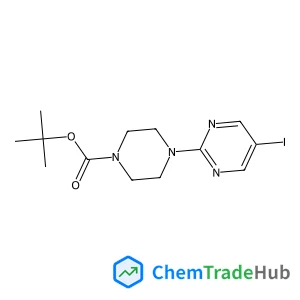
2-Methyl-2-propanyl 4-(5-iodo-2-pyrimidinyl)-1-piperazinecarboxylate
CAS番号:
1027616-32-5
分子式:
C13H19IN4O2
![4-{[4-(Trifluoromethoxy)benzyl]oxy}benzonitrile structure](https://static.chemtradehub.com/structs/103/1036629-63-6-2172.webp "4-{[4-(Trifluoromethoxy)benzyl]oxy}benzonitrile structure")
おすすめサプライヤー




免責事項
このページに表示される学術雑誌情報は、参考および研究目的のみを目的としています。当社は雑誌出版社とは提携しておらず、投稿の取り扱いも行っておりません。出版に関するお問い合わせは、各雑誌出版社に直接ご連絡ください。
表示されている情報に誤りがある場合は、support@chemtradehub.com までご連絡ください。迅速に確認し、対応いたします。