













Grain boundaries at the surface of consolidated MgO nanocrystals and acid–base functionality
文献情報
出版日
2013-07-09
DOI
10.1039/C3CP51086G
インパクトファクター
3.676
著者
Dima Vingurt, David Fuks, Miron V. Landau, Roxana Vidruk, Moti Herskowitz
原文を見る
要旨
The increase of the surface basicity–acidity of MgO material by factors of 1.8–3.0 due to consolidation of its nanocrystals was demonstrated by the indicator titration. It was shown that the parallel increase of surface acidity and basicity is attributed to the formation of grain boundaries (GB) after MgO aerogel densification. A simple model predicting the increase of surface acidity–basicity of MgO that correlates with the results of direct measurements was proposed. The model is based on the study of the fine atomic structure at GB surface areas in consolidated MgO nanocrystals in the framework of Density Functional Theory. It is found that the displacements of coordinatively unsaturated surface ions near the GB are significant at the distances ∼3–4 atomic layers from the geometrical contact plane between nanocrystals. The detailed analysis of atomic positions inside GB demonstrated the coordination deficiency of surface atoms at the GB areas leading to the formation of stretched bonds and to creation of low coordinated surface ions due to splitting of coordination numbers of surface atoms belonging to GB areas. Density of states for electrons shows the existence of additional states in the band gap close to the bottom of the conduction band. The adsorption energy of CO2 molecules atop oxygen atoms exposed at surface GB areas is of the same order of magnitude as that reported for oxygen atoms at crystallographic edges and corners of MgO crystals. It provides additional options for bonding of molecules at the surface of nanocrystalline MgO increasing the adsorption capacity and catalytic activity.
関連文献
All-solid-state reference electrodes based on conducting polymers
Anna Kisiel, Honorata Marcisz, Agata Michalska, Krzysztof Maksymiuk
2005-10-27
Paper
DOI: 10.1039/B510868C
NMR-based metabolomics and fluxomics: developments and future prospects
2020-03-02
Critical Review
DOI: 10.1039/D0AN00142B
An integrating strategy for serum metabolomics and microarray analysis to expand the understanding of diet-induced obesity
Wuping Liu, Jingjing Xu, Tao Dai, Guiping Shen, Jianghua Feng
2021-06-15
Paper
DOI: 10.1039/D1AY00821H
Micromachined multigroove silicon ATR FT-IR internal reflection elements for chemical imaging of microfluidic devices
Stuart T. Read, Garth Wells, Michael Jacobs, Scott M. Rosendahl, Sven Achenbach, Ian J. Burgess
2019-10-24
Paper
DOI: 10.1039/C9AY02248A
Carbon dot-based colorimetric sensor array for the discrimination of different water samples
Masoud Shariati-Rad, Zahra Ghorbani
2019-10-11
Paper
DOI: 10.1039/C9AY01439J
Capillary introduction mass spectrometry coupled with selective cryotrapping for analysis of volatile compounds in water
Siyu Xu, Quan Yu
2019-09-02
Paper
DOI: 10.1039/C9AY01669D
Flow-through PCR on a 3D qiandu-shaped polydimethylsiloxane (PDMS) microdevice employing a single heater: toward microscale multiplex PCR
Wenming Wu, Kieu The Loan Trinh, Nae Yoon Lee
2012-02-23
Paper
DOI: 10.1039/C2AN35077G
A fast-responding, highly sensitive detection system consisting of a fluorescent probe and palladium ions for N2H4 in environmental water and living cells
Lingzhi Cao, Guangshun Wang, Wenjia Ji, Hailiang Nie, Chunliu Yang, Xiaoling Zhang
2019-08-30
Paper
DOI: 10.1039/C9AY01555H
こちらもおすすめ
化合物よくある質問
6- bromo-1-cyclopropyl-1H-benzimidazoleの市場動向や研究トレンドはどうですか?
6- bromo-1-cyclopropyl-1H-benzimidazoleは、抗炎症、抗ウイルス作用を持つことが報告されており、新薬開発の研究対象として注目...
1416713-53-56-Bromo-1-cyclopropy...
化合物よくある質問
環氧プロpanol-d5を取り扱う際の実験室安全事項は何ですか?
取り扱う際には、防護眼鏡と手袋を使用し、ドラフトチャンバー内で操作することを推奨します。漏洩時には適切な手順で処理し、安全データシートを常に参照してください。
1246819-20-4Glycidol-d5
化合物よくある質問
2,2’-ジメチル-3,3’-ビピリジンはどのように合成されますか?
2,2’-ジメチル-3,3’-ビピリジンは、ピリジンと2-メチルアクリルアミドを有機合成反応で合成します。この反応では、ピリジンと2-メチルアクリルアミドを含有...
86156-55-02,2’-Dimethyl-3,3’-b...
化合物よくある質問
6-甲基ピリジン-2-ボリック酸の主な用途は何ですか?
6-甲基ピリジン-2-ボリック酸は、合成化学、医薬品合成、以及研究用途などに広く使用され、特に組換えDNA技術や分子生物学の研究において重要な役割を果たします。
372963-50-3(6-Methyl-2-pyridiny...
化合物よくある質問
(R)-3-(1-甲基-2-氧環己基)プロpano酸メチルは安全ですか?
(R)-3-(1-甲基-2-氧環己基)プロpano酸メチルは一定の安全性がありますが、直接的な皮膚接触や吸入は避けるべきです。使用する際は適切な個々の安全データ...
94089-47-1methyl 3-[(1R)-1-met...
化合物よくある質問
ketorolacはどのように保存すればよいですか?
ketorolacは、密封して遮光容器に保管し、直射日光や高温を避けて保存してください。温度は常温で保存し、湿度をなるべく低く保つことが推奨されます。
74103-06-3rac Ketorolac
化合物よくある質問
L-2,3-二氨基丙酸二盐酸盐を取り扱う際の実験室安全事項は何ですか?
L-2,3-二氨基丙酸二盐酸盐は腐食性が強く、皮膚や粘膜に刺激を与える可能性があります。取り扱う際は、防塵マスク、ゴーグル、手袋を使用し、適切な排気設備を使用し...
19777-68-5(S)-2,3-Diaminopropa...
化合物よくある質問
2-(4-溴ピリジン-2-基)乙腈の物理化学的性質は何ですか?
2-(4-溴ピリジン-2-基)乙腈のCAS番号は312325-73-8です。主に結晶形態で存在し、分子量は159.01 g/molです。この化合物は水に溶けやす...
312325-73-8(4-Bromo-2-pyridinyl...
化合物よくある質問
3-フローロ-[1,1-ベンジレン]-3,4-ジカルボン酸を取り扱う際の実験室安全事項は何ですか?
この化合物は毒性は低いですが、直接的な接触や吸入に注意が必要です。PPE(個人防護具)を着用し、ドラフトチャンバーを使用して操作することを推奨します。また、漏洩...
1261915-32-53'-Fluoro-[1,1'-biph...
化合物よくある質問
3-(1-氧代-1,3-二氢-2H-2-异吲哚)丙酸の主な用途は何ですか?
3-(1-氧代-1,3-二氢-2H-2-异吲哚)丙酸は、薬理学研究や医薬品製造において広く用いられる化合物です。また、工業的な用途でも一部の化学反応の触媒や助剤...
83747-30-23-(1-Oxo-1,3-dihydro...
掲載誌
Physical Chemistry Chemical Physics

CiteScore:
5.5
自己引用率:
10.3%
年間論文数:
3036
Physical Chemistry Chemical Physics (PCCP) is an international journal co-owned by 19 physical chemistry and physics societies from around the world. This journal publishes original, cutting-edge research in physical chemistry, chemical physics and biophysical chemistry. To be suitable for publication in PCCP, articles must include significant innovation and/or insight into physical chemistry; this is the most important criterion that reviewers and Editors will judge against when evaluating submissions. The journal has a broad scope and welcomes contributions spanning experiment, theory, computation and data science. Topical coverage includes spectroscopy, dynamics, kinetics, statistical mechanics, thermodynamics, electrochemistry, catalysis, surface science, quantum mechanics, quantum computing and machine learning. Interdisciplinary research areas such as polymers and soft matter, materials, nanoscience, energy, surfaces/interfaces, and biophysical chemistry are welcomed if they demonstrate significant innovation and/or insight into physical chemistry. Joined experimental/theoretical studies are particularly appreciated when complementary and based on up-to-date approaches.
おすすめ化合物
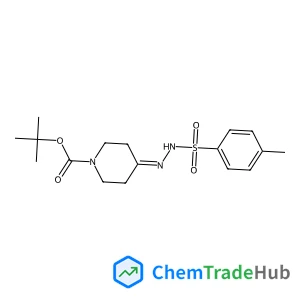
tert-Butyl 4-(2-(p-Tolylsulfonyl)hydrazono)piperidine-1-carboxylate
CAS番号:
1046478-89-0
分子式:
C17H25N3O4S

おすすめサプライヤー




免責事項
このページに表示される学術雑誌情報は、参考および研究目的のみを目的としています。当社は雑誌出版社とは提携しておらず、投稿の取り扱いも行っておりません。出版に関するお問い合わせは、各雑誌出版社に直接ご連絡ください。
表示されている情報に誤りがある場合は、support@chemtradehub.com までご連絡ください。迅速に確認し、対応いたします。