












Synthesis of LaMnO3 in molten chlorides: effect of preparation conditions
文献情報
出版日
2013-04-30
DOI
10.1039/C3CP50713K
インパクトファクター
3.676
著者
Leonid Vradman, Jonatan Zana, Alon Kirschner, Moti Herskowitz
原文を見る
要旨
LaMnO3 perovskite was successfully synthesized in molten chlorides. In order to explore the effect of the molten salt type, NaCl–KCl and LiCl–KCl eutectic mixtures were employed as a liquid medium for the perovskite formation process. The synthesis included heating the La-nitrate, Mn-nitrate and chlorides mixture to above the melting point of the corresponding chlorides. This procedure yielded a LaMnO3 phase integrated in the fused chloride matrix. Washing with water removed the salts completely, yielding pure LaMnO3 perovskite crystals. The synthesis without molten salt at 800 °C yielded several by-products in addition to the LaMnO3 phase, while with LiCl–KCl the pure perovskite phase was obtained at temperatures as low as 600 °C. Variation of temperature in the range 600–800 °C for LiCl–KCl and 700–800 °C for NaCl–KCl had no significant effect either on the morphology or on the particle size of the product. On the other hand, the effect of the molten salt type on the morphology and size of perovskite particles was remarkable. The synthesis in NaCl–KCl resulted in sub-micron LaMnO3 particles with shapes that range from truncated hexahedrons to spheres, while in LiCl–KCl mostly cubic particles of up to 2-microns were obtained. The effect of the molten salt type on LaMnO3 perovskite formation is explained based on the nucleation and crystal growth model and difference in the melting point of eutectic mixtures.
関連文献
Optimization of partial multicanonical molecular dynamics simulations applied to an alaninedipeptide in explicit water solvent
2010-10-29
Paper
DOI: 10.1039/C0CP00371A
Internal dynamics in complexes of water with organic molecules. Details of the internal motions in tert-butylalcohol–water
Luca Evangelisti, Walther Caminati
2010-10-13
Perspective
DOI: 10.1039/C0CP01195A
Engineering 3D ordered molecular thin films by nanoscale control
Simone Fabiano, Bruno Pignataro
2010-10-15
Perspective
DOI: 10.1039/C0CP01012J
Simultaneous in situ generation of hydrogen peroxide and Fenton reaction over Pd–Fe catalysts
Mohammad S. Yalfani, Sandra Contreras, Jordi Llorca, Montserrat Dominguez, Jesus E. Sueiras, Francesc Medina
2010-10-13
Communication
DOI: 10.1039/C0CP01157F
Benzocarbazole anions intercalated layered double hydroxide and its tunable fluorescence
Dongpeng Yan, Jun Lu, Jing Ma, Min Wei, David G. Evans, Xue Duan
2010-10-20
Paper
DOI: 10.1039/C0CP00854K
Carbazole endcapped heterofluorenes as host materials: theoretical study of their structural, electronic, and optical properties
Jun Yin, Sheng-Lan Zhang, Run-Feng Chen, Qi-Dan Ling, Wei Huang
2010-10-22
Paper
DOI: 10.1039/C0CP00132E
Detailed product analysis during the low temperature oxidation of n-butane
Olivier Herbinet, Frédérique Battin-Leclerc, Sarah Bax, Hervé Le Gall, Pierre-Alexandre Glaude, René Fournet, Zhongyue Zhou, Liulin Deng, Huijun Guo, Mingfeng Xie, Fei Qi
2010-10-28
Paper
DOI: 10.1039/C0CP00539H
Water as a solute: competitive shell formation in (He,Ne) mixed microdroplets
F. Marinetti, F. A. Gianturco
2010-11-30
Paper
DOI: 10.1039/C0CP01342K
Hydrophobicity in Lennard-Jones solutions
Mario Ishizaki, Hideki Tanaka, Kenichiro Koga
2010-11-30
Paper
DOI: 10.1039/C0CP01767A
こちらもおすすめ
化合物よくある質問
オステニ二甲磺酸塩に適用される法規ガイドラインは何ですか?
オステニ二甲磺酸塩は、GHS分類に基づき corrosive 物質として分類されます。REACH規則では、該当物質の登録が要求される可能性があります。また、FD...
2070014-82-1N-(2-{[2-(Dimethylam...
化合物よくある質問
環丁基肼盐酸盐は安全ですか?
環丁基肼盐酸盐は毒性があり、吸入や皮膚接触は有害です。使用時の安全対策として、密閉システムを使用し、適切な排気設備を備えた場所で作業することが推奨されます。
1156980-49-2Cyclobutylhydrazine ...
化合物よくある質問
N-(4-パリドン基ソニルフェニル)硫代イソシアネートを取り扱う際の実験室安全事項は何ですか?
N-(4-パリドン基ソニルフェニル)硫代イソシアネートは高毒性で、皮膚や吸入による毒性があります。取り扱う際は防毒マスク、保護用手袋、保護眼鏡などのPPEを着用...
7356-55-01-[(4-Isothiocyanato...
化合物よくある質問
5-ヒドロキシ-1,3-ジヒドロ-2H-インドン-2-酮の物理化学的性質は何ですか?
CAS番号3416-18-0の5-ヒドロキシ-1,3-ジヒドロ-2H-インドン-2-酮は、結晶性の白色粉末です。分子量は228.25であり、 aqueous m...
3416-18-05-Hydroxy-1,3-dihydr...
化合物よくある質問
O-苄基-D-丝氨醇はどのように合成されますか?
O-苄基-D-丝氨醇は、D-アミノ酸とベンゼン環の経由で合成されます。触媒としてジメチルアミノピリジンが使用され、選択性は高いです。一般的な収率は約90%です。
58577-88-1(s)-2-Amino-3-benzyl...
化合物よくある質問
ナトリウム3-ヒドロキシbutano酸とは何ですか?
ナトリウム3-ヒドロキシbutano酸は、CAS番号13613-65-5で登録されている化合物です。この化合物は、(3R)-3-ヒドロキシbutano酸とナトリ...
13613-65-5sodium;(3R)-3-hydrox...
化合物よくある質問
1-(二苯甲基)-4-甲基ベンゼンの物理化学的性質は何ですか?
CAS番号603-37-2の1-(二苯甲基)-4-甲基ベンゼンは、結晶性の固体で、分子量は244.28であり、水中的には微溶です。この化合物は有機反応において中...
603-37-21-(Diphenylmethyl)-4...
化合物よくある質問
ネアミン塩酸塩の物理化学的性質は何ですか?
ネアミン塩酸塩の分子量は321.19であり、結晶性の白色粉末です。この化合物は水に溶けやすく、pHが低くなると不溶性になります。反応活性は高く、水溶液中の酸化還...
15446-43-2NEAMINE HYDROCHLORID...
化合物よくある質問
偶氮二甲酰二哌啶の主な用途は何ですか?
偶氮二甲酰二哌啶は、医薬品、染料、高 Então 剤、触媒、溶媒、量論試薬など、様々な分野で使用されています。特に、高 Enough 反応において、グリコール酸...
10465-81-3(E)-1,2-Diazenediylb...
664969-54-44-[(2E)-3-Phenyl-2-p...
掲載誌
Physical Chemistry Chemical Physics

CiteScore:
5.5
自己引用率:
10.3%
年間論文数:
3036
Physical Chemistry Chemical Physics (PCCP) is an international journal co-owned by 19 physical chemistry and physics societies from around the world. This journal publishes original, cutting-edge research in physical chemistry, chemical physics and biophysical chemistry. To be suitable for publication in PCCP, articles must include significant innovation and/or insight into physical chemistry; this is the most important criterion that reviewers and Editors will judge against when evaluating submissions. The journal has a broad scope and welcomes contributions spanning experiment, theory, computation and data science. Topical coverage includes spectroscopy, dynamics, kinetics, statistical mechanics, thermodynamics, electrochemistry, catalysis, surface science, quantum mechanics, quantum computing and machine learning. Interdisciplinary research areas such as polymers and soft matter, materials, nanoscience, energy, surfaces/interfaces, and biophysical chemistry are welcomed if they demonstrate significant innovation and/or insight into physical chemistry. Joined experimental/theoretical studies are particularly appreciated when complementary and based on up-to-date approaches.
おすすめ化合物
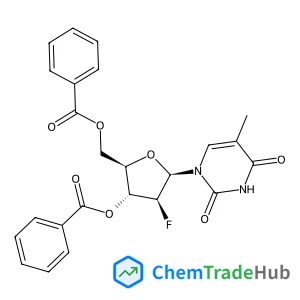
1-(3',5'-Di-O-benzoyl-2'-deoxy-2'-fluoro-b-D-arabinofuranosyl)thymine
CAS番号:
97614-47-6
分子式:
C24H21FN2O7
![4,4-Difluoro-2-methyl-1-{[(2-methyl-2-propanyl)oxy]carbonyl}-L-proline structure](https://static.chemtradehub.com/structs/119/1194032-23-9-f426.webp "4,4-Difluoro-2-methyl-1-{[(2-methyl-2-propanyl)oxy]carbonyl}-L-proline structure")
4,4-Difluoro-2-methyl-1-{[(2-methyl-2-propanyl)oxy]carbonyl}-L-proline
CAS番号:
1194032-23-9
分子式:
C11H17F2NO4
おすすめサプライヤー





免責事項
このページに表示される学術雑誌情報は、参考および研究目的のみを目的としています。当社は雑誌出版社とは提携しておらず、投稿の取り扱いも行っておりません。出版に関するお問い合わせは、各雑誌出版社に直接ご連絡ください。
表示されている情報に誤りがある場合は、support@chemtradehub.com までご連絡ください。迅速に確認し、対応いたします。