













Simplification through complexity: the role of Ni-complexes in catalysed diyne–cyclobutanone [4+2+2] cycloadditions, a comparative DFT study
文献情報
出版日
2012-04-10
DOI
10.1039/C2CP40067G
インパクトファクター
3.676
著者
Jia-Yuan Tao, De-Cai Fang, Gregory A. Chass
原文を見る
要旨
A series of density functional theory (DFT) experiments carried out on selected nickel(0)-catalysed diyne–cyclobutanone [4+2+2] cycloadditions provided quantitative confirmation of proposed multistep mechanisms, while clarifying the catalytic role of Ni in the reactions. Geometric and energetic results of the Ni-catalysed process were compared to the one-step non-catalysed complement. Results show the first oxidation to be the rate-determining step, with the intramolecular reaction being the preferred one of the two competing pathways. Ligand-identity is also shown to greatly influence reaction barriers, leading to large deviation in product yields, in direct agreement with experimental observations.
関連文献
Elucidating the real-time Ag nanoparticle growth on α-Ag2WO4 during electron beam irradiation: experimental evidence and theoretical insights
Wyllamanney da Silva Pereira, Juan Andrés, Lourdes Gracia, Miguel A. San-Miguel, Edison Z. da Silva, Elson Longo, Valeria M. Longo
2015-01-12
Paper
DOI: 10.1039/C4CP05849F
The effect of TiO2 surface on the electron injection efficiency in PbS quantum dot solar cells: a first-principles study
Jesus M. Ugalde, Lioz Etgar, Filippo De Angelis
2015-01-13
Paper
DOI: 10.1039/C4CP04976D
Highly chromium contaminant tolerant BaO infiltrated La0.6Sr0.4Co0.2Fe0.8O3−δ cathodes for solid oxide fuel cells
Kongfa Chen, Na Ai, Kane M. O'Donnell, San Ping Jiang
2015-01-15
Communication
DOI: 10.1039/C4CP04172K
Activation of a MnO2 cathode by water-stimulated Mg2+ insertion for a magnesium ion battery
Jaehee Song, Eleanor Gillette, Jonathon Duay, Gary Rubloff
2015-01-15
Paper
DOI: 10.1039/C4CP05591H
Exploring the possibilities of two-dimensional transition metal carbides as anode materials for sodium batteries
Eunjeong Yang, Hyunjun Ji, Jaehoon Kim, Yousung Jung
2015-01-09
Paper
DOI: 10.1039/C4CP05140H
A soft/hard magnetic nanostructure based on multisegmented CoNi nanowires
A. Pereira, J. L. Palma, M. Vázquez
2015-01-09
Paper
DOI: 10.1039/C4CP05665E
Relating voltage and thermal safety in Li-ion battery cathodes: a high-throughput computational study
Anubhav Jain, Geoffroy Hautier, Shyue Ping Ong, Stephen Dacek, Gerbrand Ceder
2015-01-30
Paper
DOI: 10.1039/C5CP00250H
Buckybowl superatom states: a unique route for electron transport?
L. Zoppi, K. K. Baldridge
2015-02-03
Paper
DOI: 10.1039/C4CP05776G
The theoretical investigation on the 4-(4-phenyl-4-α-naphthylbutadieny)-triphenylamine derivatives as hole transporting materials for perovskite-type solar cells
2015-01-21
Paper
DOI: 10.1039/C4CP05096G
In vivo EPR on spin labeled colicin A reveals an oligomeric assembly of the pore-forming domain in E. coli membranes
S. Dunkel, L. P. Pulagam, H.-J. Steinhoff, J. P. Klare
2015-01-16
Communication
DOI: 10.1039/C4CP05638H
こちらもおすすめ
化合物よくある質問
2-ブロモ-9,9-ジフェニル-9H-フルオレンの主な用途は何ですか?
2-溴-9,9-二苯基芴は、医薬品、工業材料、有機合成の研究分野で応用されます。特に、レーザー材料や機能性ポリマーの合成に使用されることがあります。また、蛍光色...
474918-32-62-Bromo-9,9-diphenyl...
化合物よくある質問
四氯化铱の市場動向や研究トレンドはどうですか?
四氯化铱の市場は研究開発分野で注目されており、特にナノ技術や金属有機框架(MOFs)の分野での需要が増加傾向にあります。価格は安定しており、中国や韓国での生産が...
207399-11-9Tetrachloroiridium h...
882-06-44-Nitrocinnamic acid
化合物よくある質問
1-(4-溴-3-氟苯基)-2-氯乙酮を含む廃棄物はどのように処理すべきですか?
1-(4-溴-3-氟苯基)-2-氯乙酮 (CAS番号: 1260857-14-4) の廃棄物は専門的な廃棄処理が必要です。まず、廃棄物は密閉された容器に収集し、...
1260857-14-41-(4-Bromo-3-fluorop...
化合物よくある質問
苦参酚Kとは何ですか?
苦参酚Kは、CAS番号101236-49-1を持つ化合物で、主に天然由来の生薬から抽出されます。この化合物は、抗炎症作用や抗癌作用を持つことが報告されています。
101236-49-1Kushenol K
化合物よくある質問
POTASSIUM (1-(TERTBUTOXYCARBONYL)AZETIDIN-3-YL)TRIFLUOROBORATE を含む廃棄物はどのように処理すべきですか?
POTASSIUM (1-(TERTBUTOXYCARBONYL)AZETIDIN-3-YL)TRIFLUOROBORATE を含む廃棄物は、まず安全なエント...
1430219-73-0Potassium (1-(tert-b...
化合物よくある質問
4-庚基-4’-联苯羧酸の市場動向や研究トレンドはどうですか?
4-庚基-4’-聯苯羧酸は、特殊化学品や合成化学の分野で用いられる化学物質ですが、市場動向としては、研究開発の進展とともに需要が増加しています。また、環境配慮型...
58573-94-74'-Heptyl-4-biphenyl...
化合物よくある質問
6-ブロモ-3-メトキシ-1-フェニル-1H-インドゾールを含む廃棄物はどのように処理すべきですか?
6-ブロモ-3-メトキシ-1-フェニル-1H-インドゾールを含む廃棄物は、適切な化学廃棄処理が必要です。通常、廃棄物は密閉容器に収集され、専門の廃棄処理業者に引...
1332527-03-36-Bromo-3-methoxy-1-...
化合物よくある質問
4,4-二甲基-2-吡咯烷酮はどの業界で使用されていますか?
4,4-二甲基-2-吡咯烷酮は医薬、ポリマー、センサー、半導体などの業界で広く使用されています。特に溶媒としての性能が高く評価されています。
66899-02-34,4-dimethylpyrrolid...
51312-42-6Sodium Phosphotungst...
掲載誌
Physical Chemistry Chemical Physics

CiteScore:
5.5
自己引用率:
10.3%
年間論文数:
3036
Physical Chemistry Chemical Physics (PCCP) is an international journal co-owned by 19 physical chemistry and physics societies from around the world. This journal publishes original, cutting-edge research in physical chemistry, chemical physics and biophysical chemistry. To be suitable for publication in PCCP, articles must include significant innovation and/or insight into physical chemistry; this is the most important criterion that reviewers and Editors will judge against when evaluating submissions. The journal has a broad scope and welcomes contributions spanning experiment, theory, computation and data science. Topical coverage includes spectroscopy, dynamics, kinetics, statistical mechanics, thermodynamics, electrochemistry, catalysis, surface science, quantum mechanics, quantum computing and machine learning. Interdisciplinary research areas such as polymers and soft matter, materials, nanoscience, energy, surfaces/interfaces, and biophysical chemistry are welcomed if they demonstrate significant innovation and/or insight into physical chemistry. Joined experimental/theoretical studies are particularly appreciated when complementary and based on up-to-date approaches.
おすすめ化合物

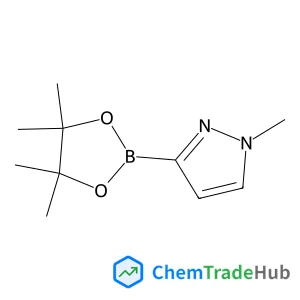
1-Methyl-3-(4,4,5,5-tetramethyl-1,3,2-dioxaborolan-2-yl)-1H-pyrazole
CAS番号:
1020174-04-2
分子式:
C10H17BN2O2
![N-[(Benzyloxy)carbonyl]serine structure](https://static.chemtradehub.com/structs/276/2768-56-1-77f7.webp "N-[(Benzyloxy)carbonyl]serine structure")
おすすめサプライヤー





免責事項
このページに表示される学術雑誌情報は、参考および研究目的のみを目的としています。当社は雑誌出版社とは提携しておらず、投稿の取り扱いも行っておりません。出版に関するお問い合わせは、各雑誌出版社に直接ご連絡ください。
表示されている情報に誤りがある場合は、support@chemtradehub.com までご連絡ください。迅速に確認し、対応いたします。