












The theoretical investigation on the 4-(4-phenyl-4-α-naphthylbutadieny)-triphenylamine derivatives as hole transporting materials for perovskite-type solar cells
文献情報
出版日
2015-01-21
DOI
10.1039/C4CP05096G
インパクトファクター
3.676
著者
原文を見る
要旨
The electronic structures, optical properties and hole mobilities of 4-(4-phenyl-4-α-naphthylbutadieny)-triphenylamine and its five derivatives are investigated by density functional theory (DFT). The results show that the highest occupied molecular orbital (HOMO) of all molecules is almost fully delocalized throughout the whole molecule, and the substituents –N(CH3)2 and –C6H5 denoted as molecules 6 and 2, respectively, have the largest contribution to the HOMO, which is favorable for hole transfer integral and hole mobility. Spectrum analysis indicates that all molecules have large Stokes shifts based on absorption and emission spectra. In addition, it is found that the hole reorganization energy of all molecules is about 0.5 times compared to that of electrons, which implies that hole mobility is bigger than electron mobility. On the basis of predicted packing motifs, the hole mobilities (u) of all molecules are also obtained. The largest hole mobility of molecule 2 (0.1063 cm2 V−1 s−1) is found to be higher than that of other molecules due to the face-to-face stacking mode, which suggests that –C6H5 is a good substituent group for improving hole mobility compared to other electron releasing groups. We hope that our results will be helpful for the further rational molecular design and synthesis of novel hole transport materials (HTMs) for high performance perovskite-type solar cells.
関連文献
Tranylcypromine specificity for monoamine oxidase is limited by promiscuous protein labelling and lysosomal trapping
Jonas Drechsel, Christina Kyrousi, Silvia Cappello, Stephan A. Sieber
2020-08-12
Communication
DOI: 10.1039/D0CB00048E
Advances in single-cell multi-omics profiling
Dongsheng Bai, Jinying Peng
2021-01-20
Review Article
DOI: 10.1039/D0CB00163E
One-step mild biorefinery of functional biomolecules from microalgae extracts
Rupali K. Desai, Hélène Monteillet, Xiaohua Li, Boelo Schuur, J. Mieke Kleijn, Frans A. M. Leermakers, Michel H. M. Eppink
2017-11-17
Paper
DOI: 10.1039/C7RE00116A
Evaluating the effect of ionic strength on PNA:DNA duplex formation kinetics
Colin S. Swenson, Hershel H. Lackey, Eric J. Reece, Joel M. Harris, Jennifer M. Heemstra, Eric M. Peterson
2021-05-21
Paper
DOI: 10.1039/D1CB00025J
Combining bacteriophage engineering and linear dichroism spectroscopy to produce a DNA hybridisation assay
Haydn A. Little, Jake G. Carter, Craig Douglas, Matthew R. Hicks, David M. Kenyon, Christophe Lacomme, Richard T. Logan, Timothy R. Dafforn, James H. R. Tucker
2020-10-23
Paper
DOI: 10.1039/D0CB00135J
In silico peptide-directed ligand design complements experimental peptide-directed binding for protein–protein interaction modulator discovery
Lesley Ann Howell, Andrew Michael Beekman
2020-11-19
Paper
DOI: 10.1039/D0CB00148A
A COVID-19 vaccine candidate composed of the SARS-CoV-2 RBD dimer and Neisseria meningitidis outer membrane vesicles‡
Darielys Santana-Mederos, Rocmira Perez-Nicado, Yanet Climent, Laura Rodriguez, Belinda Sanchez Ramirez, Sonia Perez-Rodriguez, Meybi Rodriguez, Claudia Labrada, Tays Hernandez, Marianniz Diaz, Ivette Orosa, Ubel Ramirez, Reynaldo Oliva, Raine Garrido, Felix Cardoso, Mario Landys, Roselyn Martinez, Humberto Gonzalez, Tamara Hernandez, Rolando Ochoa-Azze, Jose L. Perez, Juliet Enriquez, Nibaldo Gonzalez, Yenicet Infante, Luis A. Espinosa, Yassel Ramos, Luis Javier González, Carmen Valenzuela, Ana Victoria Casadesus, Briandy Fernandez, Gertrudis Rojas, Beatriz Pérez-Massón, Yaima Tundidor, Ernesto Bermudez, Claudia A. Plasencia, Tammy Boggiano, Eduardo Ojito, Sonsire Fernandez, Françoise Paquet, Cheng Fang, Guang-Wu Chen, Daniel G. Rivera, Yury Valdes-Balbin, Dagmar Garcia-Rivera, Vicente Verez Bencomo
2021-12-08
Paper
DOI: 10.1039/D1CB00200G
Medicinal chemistry of the myeloid C-type lectin receptors Mincle, Langerin, and DC-SIGN
Jonathan Cramer
2021-09-16
Review Article
DOI: 10.1039/D1MD00238D
こちらもおすすめ
化合物よくある質問
2-メトキシ-4-(メチルスルフィニル)アミンの主な用途は何ですか?
2-メトキシ-4-(メチルスルフィニル)アミンは、主に医薬品および農薬の製造に使用されます。また、合成化学の一部として研究用材料としても利用されます。
41608-73-52-Methoxy-4-(methyls...
118684-13-24-(Bromomethyl)-3-me...
化合物よくある質問
4,6-二氯-N-甲基ピラミジンアミンの代替品はありますか?
代替品としては、4,6-二クロロピラミジンアミンや他のピラミジン系化合物が考えられます。ただし、目的と用途によって最適な代替品は異なります。
10397-15-64,6-Dichloro-N-methy...
化合物よくある質問
6-氯-4-甲基-1H-吲哚を含む廃棄物はどのように処理すべきですか?
6-氯-4-甲基-1H-吲哚の廃棄物は、適切な容器に収集し、密閉して保管します。温度は常温、湿度は低く、直射日光を避けて保管することを推奨します。廃棄処理は専門...
885520-84-36-chloro-4-methyl-1H...
化合物よくある質問
2-フローユロ-4-(トリフルオロメチル)ベンゾイドについて「に適用される法規ガイドラインは何ですか」
2-フローユロ-4-(トリフルオロメチル)ベンゾイドのCAS番号は207974-08-1です。この化合物はGHS分類で毒性物質と有害な反応物質として分類されます...
207974-08-1[2-Fluoro-4-(trifluo...
化合物よくある質問
4-ニトロフェニルN-[(ベンゼルオキシルカーボンイル]グリシングリシングリシン酸はどのように保存すればよいですか?
4-ニトロフェニルN-[(ベンゼルオキシルカーボンイル]グリシングリシングリシン酸は、室温で暗所に保管し、乾燥した環境で保存することを推奨します。容器は密閉性の...
19811-64-44-Nitrophenyl N-[(be...
化合物よくある質問
イソデスロラタドリンの代替品はありますか?
イソデスロラタドリンの代替品としては、デスロラタドリンや他の抗ヒスタミン薬が挙げられます。具体的には、デスロラタドリン、ラセカミド、フェルタドリンなどが、症状や...
183198-49-4Iso Desloratadine
化合物よくある質問
5-甲氧基-1,2,3,4-四氢异喹啉盐酸盐はどのように合成されますか?
5-甲氧基-1,2,3,4-四氢异喹啉盐酸盐の一般的な合成方法は、メタノール中で5-メトキシ-1,2,3,4-四ヒュドロイソキシンを塩酸で塩化します。この反応で...
103030-69-95-Methoxy-1,2,3,4-te...
化合物よくある質問
4-アミノ-5-メトキシ-2-トルエンサルホニック酸についての法規ガイドラインは何ですか?
CAS番号6471-78-9の4-アミノ-5-メトキシ-2-トルエンサルホニック酸は、GHS分類では corrosive(腐食性)と識別されます。EUのREAC...
6471-78-94-Amino-5-Methoxy-2-...
化合物よくある質問
甲基孕酮を取り扱う際の実験室安全事項は何ですか?
甲基孕酮の取り扱いは、PPE(個人保護具)の使用が必要な重要な安全事項を伴います。防塵マスク、ゴーグル、手袋を着用することが推奨されます。ドラフトチャンバーを使...
204063-33-22-[(Diphenylmethyl)a...
掲載誌
Physical Chemistry Chemical Physics

CiteScore:
5.5
自己引用率:
10.3%
年間論文数:
3036
Physical Chemistry Chemical Physics (PCCP) is an international journal co-owned by 19 physical chemistry and physics societies from around the world. This journal publishes original, cutting-edge research in physical chemistry, chemical physics and biophysical chemistry. To be suitable for publication in PCCP, articles must include significant innovation and/or insight into physical chemistry; this is the most important criterion that reviewers and Editors will judge against when evaluating submissions. The journal has a broad scope and welcomes contributions spanning experiment, theory, computation and data science. Topical coverage includes spectroscopy, dynamics, kinetics, statistical mechanics, thermodynamics, electrochemistry, catalysis, surface science, quantum mechanics, quantum computing and machine learning. Interdisciplinary research areas such as polymers and soft matter, materials, nanoscience, energy, surfaces/interfaces, and biophysical chemistry are welcomed if they demonstrate significant innovation and/or insight into physical chemistry. Joined experimental/theoretical studies are particularly appreciated when complementary and based on up-to-date approaches.
おすすめ化合物
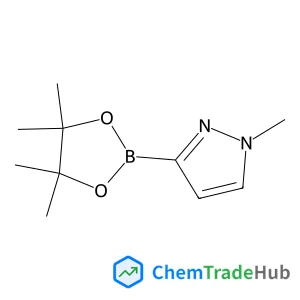
1-Methyl-3-(4,4,5,5-tetramethyl-1,3,2-dioxaborolan-2-yl)-1H-pyrazole
CAS番号:
1020174-04-2
分子式:
C10H17BN2O2

おすすめサプライヤー



免責事項
このページに表示される学術雑誌情報は、参考および研究目的のみを目的としています。当社は雑誌出版社とは提携しておらず、投稿の取り扱いも行っておりません。出版に関するお問い合わせは、各雑誌出版社に直接ご連絡ください。
表示されている情報に誤りがある場合は、support@chemtradehub.com までご連絡ください。迅速に確認し、対応いたします。