












Synthesis of star and H-shape polymersvia a combination of cobalt-mediated radical polymerization and nitrone-mediated radical coupling reactions
文献情報
出版日
2011-09-12
DOI
10.1039/C1PY00297J
インパクトファクター
5.582
著者
Christophe Detrembleur, Antoine Debuigne, Ozcan Altintas, Matthias Conradi, Edgar H. H. Wong, Christine Jérôme, Christopher Barner-Kowollik, Tanja Junkers
原文を見る
要旨
Via consecutive cobalt-mediated radical polymerization (CMRP), nitrone-mediated radical coupling (NMRC) and copper catalyzed azide-alkynecycloaddition (CuAAC), polymers with mikto-arm star and H-shape architecture were synthesized. Poly(vinyl acetate)40-block-poly(acrylonitrile)78-Co(acac)2polymers were synthesized viaCMRC and subsequently coupled using an alkyne functional nitrone. The coupling efficiency of the NMRC process was assessed employing N-tert-butyl α-phenyl nitrone (PBN), which is structurally very similar to the later employed coupling agent. Generally, coupling efficiencies of close to 90% or higher were observed in all cases. Since the coupling reaction yields triblock copolymers bearing an alkoxyamine functionality (and thus also an alkynegroup) in the middle of the chain, well defined PEG conjugates could be obtained viaCuAAC. Miktoarm star polymers of the structure (PVAc-b-PAN)2-PEG were generated as well as H-shaped material of the structure (PVAc-b-PAN)2-PEG-(PVAc-b-PAN)2viaconjugation with bifunctional PEG. In all cases, very narrow molecular weight material was obtained. Molecular weight analysis of the intermediate and the final products reveals that the hydrodynamic volume of the miktoarm star and the H-shaped materials is not substantially increased during the final conjugation reaction despite the fact that the absolute molecular weight increases by more than a factor of two in the latter case. Success of the conjugation reactions was confirmed via composition analysis viaNMR.
関連文献
Oligo(p-phenyleneethynylene) embedded amphiphiles: synthesis, photophysical properties and self-assembled nanoparticles with high structural stability and photostability for cell imaging
Chao Yin, Wenli Song, Rongcui Jiang, Wenbo Hu, Qingming Shen, Xiang Li, Jie Li, Quli Fan
2014-05-29
Paper
DOI: 10.1039/C4PY00376D
Factors affecting bottlebrush polymer synthesis by the transfer-to method using reversible addition–fragmentation chain transfer (RAFT) polymerization
Scott C. Radzinski, Jeffrey C. Foster, Sally E. Lewis, Eric V. French, John B. Matson
2017-02-06
Paper
DOI: 10.1039/C6PY01982J
In situ synthesis of thermo-responsive ABC triblock terpolymer nano-objects by seeded RAFT polymerization
Yaqing Qu, Fei Huo, Quanlong Li, Xin He, Shentong Li, Wangqing Zhang
2014-05-30
Paper
DOI: 10.1039/C4PY00510D
Conformation pre-organization in fluorene-based conjugated polymer for simultaneous enhancement of luminescence and charge mobility
Juxin He, Luyang Du, Cong Wang, Mingjian Jiang, Linlin Liu, Yueqi Mo, Zengqi Xie, Bing Yang, Yuguang Ma
2017-01-11
Paper
DOI: 10.1039/C6PY01995A
Hyperbranched PEG-based multi-NHS polymer and bioconjugation with BSA
Sigen A, Qian Xu, Dezhong Zhou, Yongsheng Gao, Jeddah Marie Vasquez, Udo Greiser, Wenguang Liu
2017-01-04
Communication
DOI: 10.1039/C6PY01719C
Preparation of sulfonic acid functional proton conducting phosphazenes by covalent protection
Ferda Hacıvelioğlu
2017-04-17
Paper
DOI: 10.1039/C7PY00189D
Janus nanoparticles inside polymeric materials: interfacial arrangement toward functional hybrid materials
Qiuyan Yang, Katja Loos
2016-11-17
Review Article
DOI: 10.1039/C6PY01795A
A known photoinitiator for a novel technology: 2-(4-methoxystyryl)-4,6-bis(trichloromethyl)-1,3,5-triazine for near UV or visible LED
Jing Zhang, Pu Xiao, Fabrice Morlet-Savary, Bernadette Graff, Jean Pierre Fouassier, Jacques Lalevée
2014-06-27
Paper
DOI: 10.1039/C4PY00770K
The in situ formation of nanoparticles via RAFT polymerization-induced self-assembly in a continuous tubular reactor
Jinying Peng, Chun Tian, Lifen Zhang, Zhenping Cheng, Xiulin Zhu
2017-01-26
Paper
DOI: 10.1039/C6PY02133F
Fast conversion of terminal thiocarbonylthio groups of RAFT polymers to “clickable” thiol groups via versatile sodium azide
Yang Wu, Yanyan Zhou, Jian Zhu, Wei Zhang, Xiangqiang Pan, Zhengbiao Zhang, Xiulin Zhu
2014-06-17
Communication
DOI: 10.1039/C4PY00732H
こちらもおすすめ
化合物よくある質問
6- bromo-1-cyclopropyl-1H-benzimidazoleの市場動向や研究トレンドはどうですか?
6- bromo-1-cyclopropyl-1H-benzimidazoleは、抗炎症、抗ウイルス作用を持つことが報告されており、新薬開発の研究対象として注目...
1416713-53-56-Bromo-1-cyclopropy...
化合物よくある質問
環氧プロpanol-d5を取り扱う際の実験室安全事項は何ですか?
取り扱う際には、防護眼鏡と手袋を使用し、ドラフトチャンバー内で操作することを推奨します。漏洩時には適切な手順で処理し、安全データシートを常に参照してください。
1246819-20-4Glycidol-d5
化合物よくある質問
2,2’-ジメチル-3,3’-ビピリジンはどのように合成されますか?
2,2’-ジメチル-3,3’-ビピリジンは、ピリジンと2-メチルアクリルアミドを有機合成反応で合成します。この反応では、ピリジンと2-メチルアクリルアミドを含有...
86156-55-02,2’-Dimethyl-3,3’-b...
化合物よくある質問
6-甲基ピリジン-2-ボリック酸の主な用途は何ですか?
6-甲基ピリジン-2-ボリック酸は、合成化学、医薬品合成、以及研究用途などに広く使用され、特に組換えDNA技術や分子生物学の研究において重要な役割を果たします。
372963-50-3(6-Methyl-2-pyridiny...
化合物よくある質問
(R)-3-(1-甲基-2-氧環己基)プロpano酸メチルは安全ですか?
(R)-3-(1-甲基-2-氧環己基)プロpano酸メチルは一定の安全性がありますが、直接的な皮膚接触や吸入は避けるべきです。使用する際は適切な個々の安全データ...
94089-47-1methyl 3-[(1R)-1-met...
化合物よくある質問
ketorolacはどのように保存すればよいですか?
ketorolacは、密封して遮光容器に保管し、直射日光や高温を避けて保存してください。温度は常温で保存し、湿度をなるべく低く保つことが推奨されます。
74103-06-3rac Ketorolac
化合物よくある質問
L-2,3-二氨基丙酸二盐酸盐を取り扱う際の実験室安全事項は何ですか?
L-2,3-二氨基丙酸二盐酸盐は腐食性が強く、皮膚や粘膜に刺激を与える可能性があります。取り扱う際は、防塵マスク、ゴーグル、手袋を使用し、適切な排気設備を使用し...
19777-68-5(S)-2,3-Diaminopropa...
化合物よくある質問
2-(4-溴ピリジン-2-基)乙腈の物理化学的性質は何ですか?
2-(4-溴ピリジン-2-基)乙腈のCAS番号は312325-73-8です。主に結晶形態で存在し、分子量は159.01 g/molです。この化合物は水に溶けやす...
312325-73-8(4-Bromo-2-pyridinyl...
化合物よくある質問
3-フローロ-[1,1-ベンジレン]-3,4-ジカルボン酸を取り扱う際の実験室安全事項は何ですか?
この化合物は毒性は低いですが、直接的な接触や吸入に注意が必要です。PPE(個人防護具)を着用し、ドラフトチャンバーを使用して操作することを推奨します。また、漏洩...
1261915-32-53'-Fluoro-[1,1'-biph...
化合物よくある質問
3-(1-氧代-1,3-二氢-2H-2-异吲哚)丙酸の主な用途は何ですか?
3-(1-氧代-1,3-二氢-2H-2-异吲哚)丙酸は、薬理学研究や医薬品製造において広く用いられる化合物です。また、工業的な用途でも一部の化学反応の触媒や助剤...
83747-30-23-(1-Oxo-1,3-dihydro...
掲載誌
Polymer Chemistry

CiteScore:
8.6
自己引用率:
7.3%
年間論文数:
457
Polymer Chemistry welcomes submissions in all areas of polymer science that have a strong focus on macromolecular chemistry. Manuscripts may cover a broad range of fields, yet no direct application focus is required.
おすすめ化合物
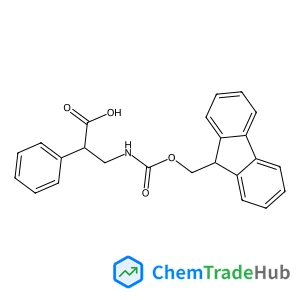
(S)-3-((((9H-Fluoren-9-yl)methoxy)carbonyl)amino)-2-phenylpropanoic acid
CAS番号:
1217663-60-9
分子式:
C24H21NO4
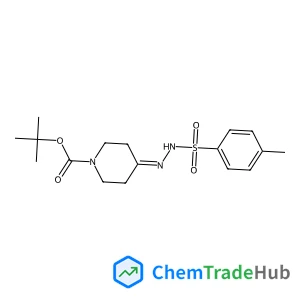
tert-Butyl 4-(2-(p-Tolylsulfonyl)hydrazono)piperidine-1-carboxylate
CAS番号:
1046478-89-0
分子式:
C17H25N3O4S
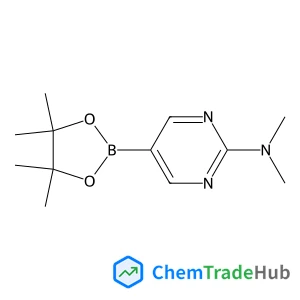
N,N-Dimethyl-5-(4,4,5,5-tetramethyl-1,3,2-dioxaborolan-2-yl)-2-pyrimidinamine
CAS番号:
1032759-30-0
分子式:
C12H20BN3O2
おすすめサプライヤー





免責事項
このページに表示される学術雑誌情報は、参考および研究目的のみを目的としています。当社は雑誌出版社とは提携しておらず、投稿の取り扱いも行っておりません。出版に関するお問い合わせは、各雑誌出版社に直接ご連絡ください。
表示されている情報に誤りがある場合は、support@chemtradehub.com までご連絡ください。迅速に確認し、対応いたします。