


Crossed beam reaction of phenyl and D5-phenyl radicals with propene and deuterated counterparts—competing atomic hydrogen and methyl loss pathways
文献情報
出版日
2011-11-25
DOI
10.1039/C1CP22758K
インパクトファクター
3.676
著者
R. I. Kaiser, D. S. N. Parker, M. Goswami, F. Zhang, V. V. Kislov, A. M. Mebel, J. Aguilera-Iparraguirre, W. H. Green
原文を見る
要旨
We conducted the crossed molecular beams reactions of the phenyl and D5-phenyl radicals with propylene together with its partially deuterated reactants at collision energies of ∼45 kJ mol−1 under single collision conditions. The scattering dynamics were found to be indirect and were mainly dictated by an addition of the phenyl radical to the sterically accessible CH2 unit of the propylene reactant. The resulting doublet radical isomerized to multiple C9H11 intermediates, which were found to be long-lived, decomposing in competing methyl group loss and atomic hydrogen loss pathways with the methyl group loss leading to styrene (C6H5C2H3) and the atomic hydrogen loss forming C9H10 isomers cis/trans1-phenylpropene (CH3CHCHC6H5) and 3-phenylpropene (C6H5CH2C2H3). Fractions of the methylversushydrogen loss channels of 68 ± 16% : 32 ± 10% were derived experimentally, which agrees nicely with RRKM theory. As the collision energy rises to 200 kJmol−1, the contribution of the methyl loss channel decreases sharply to typically 25%; the decreased importance of the methyl group loss channel was also demonstrated in previous crossed beam experiments conducted at elevated collision energies of 130–193 kJ mol−1. The presented work highlights the interesting differences of the branching ratios with rising collision energies in the reaction dynamics of phenyl radicals with unsaturated hydrocarbons related to combustion processes. The facility of forming styrene, a common molecule found in combustion against the elusiveness of forming the cyclic indane molecule demonstrates the need to continue to explore the potential surfaces through the combinative single collision experiment and electronic structure calculations.
おすすめジャーナル

Bioorganic & Medicinal Chemistry Letters

Polycyclic Aromatic Compounds

Biocatalysis and Biotransformation

Critical Reviews in Solid State and Materials Sciences

Atomization and Sprays

Bioorganic & Medicinal Chemistry

Acta Metallurgica Sinica-English Letters

Electroanalysis

Heteroatom Chemistry

Colloid Journal
関連文献
Organocatalytic 1,5-trifluoromethylthio-sulfonylation of vinylcyclopropane mediated by visible light in the water phase
Junkai Liu, Hong Yao, Xinnan Li, Hongyu Wu, Aijun Lin, Hequan Yao, Jinyi Xu, Shengtao Xu
2020-04-24
Research Article
DOI: 10.1039/D0QO00343C
Expeditious access of chromone analogues via a Michael addition-driven multicomponent reaction
Liu-Jun He, Ya-Fei Luo, Dian-Yong Tang, Wei Yan, Hui-Kuan Lin, Hong-yu Li, Zhong-Zhu Chen, Zhi-Gang Xu
2020-03-06
Research Article
DOI: 10.1039/D0QO00145G
Bicyclic acetals: biological relevance, scaffold analysis, and applications in diversity-oriented synthesis
Elena Lenci, Fernanda I. Saldívar-Gonzalez, José L. Medina-Franco
2018-12-19
Review Article
DOI: 10.1039/C8OB02808G
Protic additives or impurities promote imine reduction with pinacolborane
Blake S. N. Huchenski, Alexander W. H. Speed
2018-11-06
Paper
DOI: 10.1039/C8OB02330A
Mechanism and origins of stereo- and enantioselectivities of palladium-catalyzed hydroamination of racemic internal allenes via dynamic kinetic resolution: a computational study
Zhenzhen Wu, Mei Zhang, Yu Shi, Genping Huang
2020-05-08
Research Article
DOI: 10.1039/D0QO00174K
An Aspidosperma-type alkaloid dimer from Tabernaemontana bovina as a candidate for the inhibition of microglial activation
Si-Meng Zhao, Mei-Fen Bao, Xiang-Hai Cai
2020-04-27
Research Article
DOI: 10.1039/D0QO00296H
Iron-catalyzed asymmetric intramolecular cyclopropanation reactions using chiral tetramethyl-1,1′-spirobiindane-based bisoxazoline (TMSI-BOX) ligands
Haorui Gu, Shaoying Huang, Xufeng Lin
2019-01-09
Paper
DOI: 10.1039/C8OB03065K
Aromatization-driven deconstruction/refunctionalization of unstrained rings
Fangzhi Hu, Lubin Xu
2020-06-01
Highlight
DOI: 10.1039/D0QO00344A
Imidazole carbamate probes for affinity guided azide-transfer to metal-binding proteins
Johan Palmfeldt
2019-01-16
Communication
DOI: 10.1039/C8OB03017K
Direct synthesis of 2,4,5-trisubstituted imidazoles from primary alcohols by diruthenium(ii) catalysts under aerobic conditions
Saranya Sundar, Ramesh Rengan
2019-01-09
Paper
DOI: 10.1039/C8OB02785D
こちらもおすすめ
化合物よくある質問
環戊烷-1,3-二甲酸甲酯はどのように合成されますか?
環戊烷-1,3-二甲酸甲酯は、環戊烷と塩酸によるヒンデンブルク反応を経由して合成されます。この反応では、環戊烷が塩酸と作用し、1,3-ジカルボキシ基が導入されま...
2435-36-1Dimethyl 1,3-cyclope...
化合物よくある質問
4-メトキシ-1,2,3-スチアゼ-3,5-ジオンとは何ですか?
4-メトキシ-1,2,3-スチアゼ-3,5-ジオンは、CAS番号107843-77-6の化合物で、(E)-ベンジル3-(3,4-ジヒドロキシフェニル) acry...
107843-77-6(E)-Benzyl 3-(3,4-di...
化合物よくある質問
プロスタグランジンA2について「に適用される法規ガイドラインは何ですか?'
プロスタグランジンA2 (CAS番号: 41691-92-3) は、化学物質の安全管理に関する規制として、GHS (危険物質の国際的ハザード分類・ラベル付けシス...
41691-92-316,16-DIMETHYL PROST...
化合物よくある質問
4-アミノ-1-ナフタレン sulfonic 酸についての物理化学的性質は何ですか?
4-アミノ-1-ナフタレン sulfonic 酸のCAS番号は84-86-6です。この化合物は結晶性で、分子量は212.15 g/molです。アルコールや水など...
84-86-64-Amino-1-naphthalen...
化合物よくある質問
N-GlcNAc-生物素を取り扱う際の実験室安全事項は何ですか?
N-GlcNAc-生物素は吸収性があり、皮膚や目への接触を避けることが重要です。PPE(個体保護具)は使用し、ドラフトチャンバーは必要に応じて使用します。漏洩時...
1272755-69-72-Acetamido-2-deoxy-...
化合物よくある質問
3-アミノメチルフローラノピペリジン-1-カルボニル酸テルブチルエステルとは何ですか?
CAS番号1209781-11-2の3-アミノメチルフローラノピペリジン-1-カルボニル酸テルブチルエステルは、有機化合物の一種で、化学式はC10H17FNO3...
1209781-11-22-Methyl-2-propanyl ...
化合物よくある質問
6-溴-1-甲基-1H-ベンゾ[d][1,2,3]三氮唑はどのように合成されますか?
6- bromo-1-methyl-1H-benzotriazoleは、ブロモフリオリンと1-メチル-1H-ベンゾ[d][1,2,3]三氮唑の反応により合成され...
944718-32-56-Bromo-1-methyl-1H-...
化合物よくある質問
4-硫代尿苷はどのように合成されますか?
4-硫代尿苷は、尿素とD-リボシルヒドロキシアルデヒドを用いてスルホン化反応を経て合成されます。通常は塩酸ヒドロキシチオニルスルホン酸などの触媒を使用し、選択性...
6741-73-71-(4-thio-beta-D-rib...
化合物よくある質問
ブレインナトリユリックペプチド32ラットとは何ですか?
ブレインナトリユリックペプチド32ラット(CAS番号: 133448-20-1)は、心臓で作られるホルモンの一つで、心不全の診断や予後評価に使用されます。
133448-20-1Brain Natriuretic Pe...
化合物よくある質問
1-(3-氮杂啶)-4-羟基哌啶双盐酸盐の物理化学的性質は何ですか?
CAS番号810680-60-5の1-(3-氮杂啶)-4-羟基哌啶双盐酸盐は、白色の結晶性粉末である。分子量は360.84 g/molで、水に溶けやすい。反応活...
810680-60-51-(3-Azetidinyl)-4-p...
掲載誌
Physical Chemistry Chemical Physics

CiteScore:
5.5
自己引用率:
10.3%
年間論文数:
3036
Physical Chemistry Chemical Physics (PCCP) is an international journal co-owned by 19 physical chemistry and physics societies from around the world. This journal publishes original, cutting-edge research in physical chemistry, chemical physics and biophysical chemistry. To be suitable for publication in PCCP, articles must include significant innovation and/or insight into physical chemistry; this is the most important criterion that reviewers and Editors will judge against when evaluating submissions. The journal has a broad scope and welcomes contributions spanning experiment, theory, computation and data science. Topical coverage includes spectroscopy, dynamics, kinetics, statistical mechanics, thermodynamics, electrochemistry, catalysis, surface science, quantum mechanics, quantum computing and machine learning. Interdisciplinary research areas such as polymers and soft matter, materials, nanoscience, energy, surfaces/interfaces, and biophysical chemistry are welcomed if they demonstrate significant innovation and/or insight into physical chemistry. Joined experimental/theoretical studies are particularly appreciated when complementary and based on up-to-date approaches.
おすすめ化合物
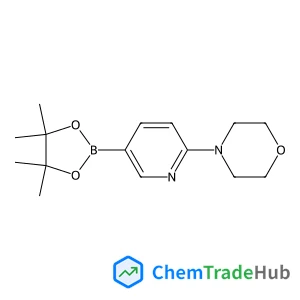
4-(5-(4,4,5,5-tetramethyl-1,3,2-dioxaborolan-2-yl)pyridin-2-yl)morpholine
CAS番号:
485799-04-0
分子式:
C15H23BN2O3
おすすめサプライヤー


免責事項
このページに表示される学術雑誌情報は、参考および研究目的のみを目的としています。当社は雑誌出版社とは提携しておらず、投稿の取り扱いも行っておりません。出版に関するお問い合わせは、各雑誌出版社に直接ご連絡ください。
表示されている情報に誤りがある場合は、support@chemtradehub.com までご連絡ください。迅速に確認し、対応いたします。