


In situ study of electrochemical activation and surface segregation of the SOFC electrode material La0.75Sr0.25Cr0.5Mn0.5O3±δ
文献情報
出版日
2011-11-25
DOI
10.1039/C1CP21743G
インパクトファクター
3.676
著者
Anne-Katrin Huber, Mareike Falk, Marcus Rohnke, Bjoern Luerßen, Luca Gregoratti, Matteo Amati, Jürgen Janek
原文を見る
要旨
Mixed-conducting perovskite-type electrodes which are used as cathodes in solid oxide fuel cells (SOFCs) exhibit pronounced performance improvement after cathodic polarization. The current in situ study addresses the mechanism of this activation process which is still unknown. We chose the new perovskite-type material La0.75Sr0.25Cr0.5Mn0.5O3±δ which is a potential candidate for use in symmetrical solid oxide fuel cells (SFCs). We prepared La0.75Sr0.25Cr0.5Mn0.5O3±δ thin film model electrodes on YSZ (111) single crystals by pulsed laser deposition (PLD). Impedance spectroscopy (EIS) measurements show that the kinetics of these electrodes can be drastically improved by applying a cathodic potential. To understand the origin of the enhanced electrocatalytic activity the surfaces of operating LSCrM electrodes were studied in situ (at low pressure) with spatially resolving X-ray photoelectron spectroscopy (μ-ESCA, SPEM) and quasi static secondary ion mass spectrometry (ToF-SIMS) after applying different electrical potentials in the SIMS chamber. We observed that the electrode surfaces which were annealed at 600 °C are enriched significantly in strontium. Subsequent cathodic polarization decreases the strontium surface concentration while anodic polarization increases the strontium accumulation at the electrode surface. We propose a mechanism based on the reversible incorporation of a passivating SrO surface phase into the LSCrM lattice to explain the observed activation/deactivation process.
おすすめジャーナル

Medicinal Chemistry Research

Atomization and Sprays

Polycyclic Aromatic Compounds

Main Group Chemistry

Journal of Asian Natural Products Research

Journal of Chemical Sciences

Herald of the Russian Academy of Sciences

Journal of the Indian Institute of Science

Critical Reviews in Solid State and Materials Sciences

Topics in Catalysis
関連文献
Synthesis of fused tricyclic systems by thermal Cope rearrangement of furan-substituted vinyl cyclopropanes
Verena Klaus, Stéphane Wittmann, Hans M. Senn, J. Stephen Clark
2018-05-15
Paper
DOI: 10.1039/C8OB00924D
Synthesis and biochemical evaluation of two novel N-hydroxyalkylated cyclosporin A analogs
Viktoria Kahlert, Oliver Ohlenschläger, Jelena Melesina, Christian Lücke
2018-05-24
Paper
DOI: 10.1039/C8OB00980E
Electrophilic N-trifluoromethylthiophthalimide as a fluorinated reagent in the synthesis of acyl fluorides
Chen Zhu, Serik Zhumagazy, Huifeng Yue, Magnus Rueping
2021-11-25
Research Article
DOI: 10.1039/D1QO01633D
Building of neomycin–nucleobase–amino acid conjugates for the inhibition of oncogenic miRNAs biogenesis
Duc Duy Vo, Cécile Becquart, Thi Phuong Anh Tran, Audrey Di Giorgio, Fabien Darfeuille, Cathy Staedel, Maria Duca
2018-08-13
Paper
DOI: 10.1039/C8OB01858H
A multifaceted approach towards understanding the peculiar behavior of (α)-hydroxyiminophosphonates
Thomas Toupy, Christopher Kune, Kristof Van Hecke, Loïc Quinton, Jean-Christophe M. Monbaliu
2021-11-22
Research Article
DOI: 10.1039/D1QO01564H
Synthesis of δ-phosphorothiolated alcohols by photoredox/copper catalyzed remote C(sp3)–H phosphorothiolation of N-alkoxypyridinium salts
Zhipeng Zheng, Shanshan Shi, Qianru Ma, Yufei Yang, Yan Liu, Guo Tang
2021-10-02
Research Article
DOI: 10.1039/D1QO01178B
Recent advances in catalytic enantioselective direct C–H bond functionalization of electron-deficient N-containing heteroarenes
Xiao-Lan Liu, Luo-Bin Jiang, Mu-Peng Luo, Zhi Ren, Shou-Guo Wang
2021-09-22
Review Article
DOI: 10.1039/D1QO01223A
A photoredox/nickel dual-catalytic strategy for benzylic C–H alkoxylation
Min Dong, Yuqi Jia, Wei Zhou, Jinlai Gao, Xiaoqing Lv, Fan Luo, Yongqiang Zhang, Shihui Liu
2021-10-26
Research Article
DOI: 10.1039/D1QO01421H
Construction of polysubstituted spiro[2.3] or [3.3] cyclic frameworks fused with a tosylated pyrrolidine promoted by visible-light-induced photosensitization
Xintao Gu, Yin Wei
2021-11-04
Research Article
DOI: 10.1039/D1QO01373D
Regioselective nitration of anilines with Fe(NO3)3·9H2O as a promoter and a nitro source
Yang Gao, Yuanyou Mao, Biwei Zhang, Yingying Zhan, Yanping Huo
2018-05-03
Communication
DOI: 10.1039/C8OB00841H
こちらもおすすめ
化合物よくある質問
環戊烷-1,3-二甲酸甲酯はどのように合成されますか?
環戊烷-1,3-二甲酸甲酯は、環戊烷と塩酸によるヒンデンブルク反応を経由して合成されます。この反応では、環戊烷が塩酸と作用し、1,3-ジカルボキシ基が導入されま...
2435-36-1Dimethyl 1,3-cyclope...
化合物よくある質問
4-メトキシ-1,2,3-スチアゼ-3,5-ジオンとは何ですか?
4-メトキシ-1,2,3-スチアゼ-3,5-ジオンは、CAS番号107843-77-6の化合物で、(E)-ベンジル3-(3,4-ジヒドロキシフェニル) acry...
107843-77-6(E)-Benzyl 3-(3,4-di...
化合物よくある質問
プロスタグランジンA2について「に適用される法規ガイドラインは何ですか?'
プロスタグランジンA2 (CAS番号: 41691-92-3) は、化学物質の安全管理に関する規制として、GHS (危険物質の国際的ハザード分類・ラベル付けシス...
41691-92-316,16-DIMETHYL PROST...
化合物よくある質問
4-アミノ-1-ナフタレン sulfonic 酸についての物理化学的性質は何ですか?
4-アミノ-1-ナフタレン sulfonic 酸のCAS番号は84-86-6です。この化合物は結晶性で、分子量は212.15 g/molです。アルコールや水など...
84-86-64-Amino-1-naphthalen...
化合物よくある質問
N-GlcNAc-生物素を取り扱う際の実験室安全事項は何ですか?
N-GlcNAc-生物素は吸収性があり、皮膚や目への接触を避けることが重要です。PPE(個体保護具)は使用し、ドラフトチャンバーは必要に応じて使用します。漏洩時...
1272755-69-72-Acetamido-2-deoxy-...
化合物よくある質問
3-アミノメチルフローラノピペリジン-1-カルボニル酸テルブチルエステルとは何ですか?
CAS番号1209781-11-2の3-アミノメチルフローラノピペリジン-1-カルボニル酸テルブチルエステルは、有機化合物の一種で、化学式はC10H17FNO3...
1209781-11-22-Methyl-2-propanyl ...
化合物よくある質問
6-溴-1-甲基-1H-ベンゾ[d][1,2,3]三氮唑はどのように合成されますか?
6- bromo-1-methyl-1H-benzotriazoleは、ブロモフリオリンと1-メチル-1H-ベンゾ[d][1,2,3]三氮唑の反応により合成され...
944718-32-56-Bromo-1-methyl-1H-...
化合物よくある質問
4-硫代尿苷はどのように合成されますか?
4-硫代尿苷は、尿素とD-リボシルヒドロキシアルデヒドを用いてスルホン化反応を経て合成されます。通常は塩酸ヒドロキシチオニルスルホン酸などの触媒を使用し、選択性...
6741-73-71-(4-thio-beta-D-rib...
化合物よくある質問
ブレインナトリユリックペプチド32ラットとは何ですか?
ブレインナトリユリックペプチド32ラット(CAS番号: 133448-20-1)は、心臓で作られるホルモンの一つで、心不全の診断や予後評価に使用されます。
133448-20-1Brain Natriuretic Pe...
化合物よくある質問
1-(3-氮杂啶)-4-羟基哌啶双盐酸盐の物理化学的性質は何ですか?
CAS番号810680-60-5の1-(3-氮杂啶)-4-羟基哌啶双盐酸盐は、白色の結晶性粉末である。分子量は360.84 g/molで、水に溶けやすい。反応活...
810680-60-51-(3-Azetidinyl)-4-p...
掲載誌
Physical Chemistry Chemical Physics

CiteScore:
5.5
自己引用率:
10.3%
年間論文数:
3036
Physical Chemistry Chemical Physics (PCCP) is an international journal co-owned by 19 physical chemistry and physics societies from around the world. This journal publishes original, cutting-edge research in physical chemistry, chemical physics and biophysical chemistry. To be suitable for publication in PCCP, articles must include significant innovation and/or insight into physical chemistry; this is the most important criterion that reviewers and Editors will judge against when evaluating submissions. The journal has a broad scope and welcomes contributions spanning experiment, theory, computation and data science. Topical coverage includes spectroscopy, dynamics, kinetics, statistical mechanics, thermodynamics, electrochemistry, catalysis, surface science, quantum mechanics, quantum computing and machine learning. Interdisciplinary research areas such as polymers and soft matter, materials, nanoscience, energy, surfaces/interfaces, and biophysical chemistry are welcomed if they demonstrate significant innovation and/or insight into physical chemistry. Joined experimental/theoretical studies are particularly appreciated when complementary and based on up-to-date approaches.
おすすめ化合物
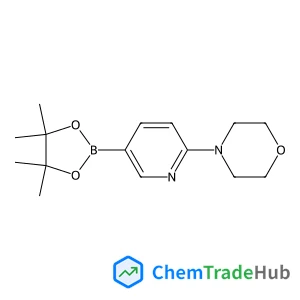
4-(5-(4,4,5,5-tetramethyl-1,3,2-dioxaborolan-2-yl)pyridin-2-yl)morpholine
CAS番号:
485799-04-0
分子式:
C15H23BN2O3
おすすめサプライヤー




免責事項
このページに表示される学術雑誌情報は、参考および研究目的のみを目的としています。当社は雑誌出版社とは提携しておらず、投稿の取り扱いも行っておりません。出版に関するお問い合わせは、各雑誌出版社に直接ご連絡ください。
表示されている情報に誤りがある場合は、support@chemtradehub.com までご連絡ください。迅速に確認し、対応いたします。