












![tert-butyl 8-benzyl-2,8-diazaspiro[4.5]decane-2-carboxylate structure](https://static.chemtradehub.com/structs/336/336191-16-3-bb55.webp "tert-butyl 8-benzyl-2,8-diazaspiro[4.5]decane-2-carboxylate structure")
Infrared spectra of protonated neurotransmitters: dopamine
文献情報
出版日
2010-12-13
DOI
10.1039/C0CP02133D
インパクトファクター
3.676
著者
Anita Lagutschenkov, Judith Langer, Giel Berden, Otto Dopfer
原文を見る
要旨
The infrared (IR) spectrum of the isolated protonated neurotransmitter dopamine was recorded in the fingerprint range (570–1880 cm−1) by means of IR multiple photon dissociation (IRMPD) spectroscopy. The spectrum was obtained in a Fourier transform ion cyclotron resonance mass spectrometer equipped with an electrospray ionization source, which was coupled to a free electron laser (FEL). The spectroscopic studies are complemented by quantum chemical calculations at the B3LYP and MP2 levels of theory using the cc-pVDZ basis set. Several low-energy isomers with protonation occurring at the amino group are predicted in the energy range 0–50 kJ mol−1. Good agreement between the measured IRMPD spectrum and the calculated linear absorption spectra is observed for the two gauche conformers lowest in energy (ΔE) and free energy (ΔG) at both levels of theory, denoted g−1 and g+1. Minor contributions of higher lying gauche isomers cannot be ruled out spectroscopically but their calculated energies suggest only minor population in the sampled ion cloud. In all these gauche structures, one of the three protons of the ammonium group is pointing toward the catechol subunit, thereby maximizing the intramolecular NH–π interaction of the positive charge with the aromatic ring. In total, 16 distinct vibrational bands are observed in the IRMPD spectrum and assigned to individual normal modes of the energetically most stable g−1 conformer, with deviations of less than 24 cm−1 (average 11 cm−1) between measured and calculated frequencies. Comparison with neutral dopamine reveals the effects of protonation on the geometric and electronic structure.
関連文献
Synthesis of linear and star poly(ε-caprolactone) with controlled and high molecular weights via cyclic trimeric phosphazene base catalyzed ring-opening polymerization
Huaike Li, Na Zhao, Chuanli Ren, Shaofeng Liu, Zhibo Li
2017-11-13
Paper
DOI: 10.1039/C7PY01673E
Metallic organophosphate catalyzed bulk ring-opening polymerization
Siming Chen, Haixin Wang, Zhenjiang Li, Fulan Wei, Hui Zhu, Songquan Xu, Jiaxi Xu, Jingjing Liu, Hailemariam Gebru, Kai Guo
2018-01-09
Paper
DOI: 10.1039/C7PY02086D
Coordination polymers based on bis-ZnII salphen complexes and functional ditopic ligands for efficient polymer light-emitting diodes (PLEDs)
Jiang Zhao, Boao Liu, Zhao Feng, Deyuan Jin, Wanping Dang, Xiaolong Yang, Guijiang Zhou, Zhaoxin Wu
2017-08-04
Paper
DOI: 10.1039/C7PY01074E
A pH and redox dual responsive homopolypeptide: synthesis, characterization, and application in “smart” single-walled carbon nanotube dispersion
Jiang Xiao, Junyan Tan, Rujian Jiang, Xiongliang He, Yanzhi Xu, Ying Ling, Shifang Luan, Haoyu Tang
2017-10-27
Paper
DOI: 10.1039/C7PY01393K
Donor–acceptor conjugated ladder polymer via aromatization-driven thermodynamic annulation
Jongbok Lee, Alexander J. Kalin, Chenxu Wang, Julia T. Early, Mohammed Al-Hashimi
2018-01-24
Paper
DOI: 10.1039/C7PY02059G
Synthesis of a sequence-controlled in-chain alkynyl/tertiary amino dual-functionalized terpolymer via living anionic polymerization
Lincan Yang, Hongwei Ma, Li Han, Xinyu Hao, Pibo Liu, Heyu Shen, Yang Li
2017-11-29
Paper
DOI: 10.1039/C7PY01837A
Biomimetic antimicrobial polymers: recent advances in molecular design
Cansu Ergene, Kazuma Yasuhara, Edmund F. Palermo
2018-04-23
Review Article
DOI: 10.1039/C8PY00012C
Conjugate substitution and addition of α-substituted acrylate: a highly efficient, facile, convenient, and versatile approach to fabricate degradable polymers by dynamic covalent chemistry
Yasuhiro Kohsaka, Takumi Miyazaki, Keito Hagiwara
2017-12-28
Paper
DOI: 10.1039/C7PY02114C
Charge-reversible and pH-responsive biodegradable micelles and vesicles from linear-dendritic supramolecular amphiphiles for anticancer drug delivery
Hong Shen, Zuquan Weng
2017-10-27
Paper
DOI: 10.1039/C7PY01556A
こちらもおすすめ
化合物よくある質問
2,3-スチオエポキシマドルを取り扱う際の実験室安全事項は何ですか?
取り扱いにはPPE(プロテクティブ・パーソナル・エイド)が必要で、防ぐ手袋と保護眼鏡を着用してください。ドラフトチャンバーの使用を推奨します。漏洩した場合は、適...
4267-80-52,3-Thioepoxy Madol
53981-25-22-Amino-6-fluorophen...
化合物よくある質問
BOC-S-3-アミニ-4-(4-メチオキシベンチル)-ブタン酸の代替品はありますか?
この化合物の代替品としては、BOC保護基を有さないアミノ酸やその他の保護基化合物が考えられます。また、メチオキシ基を有しない他の芳香族アミノ酸も代替品として挙げ...
126800-59-7(3S)-4-(4-Methoxyphe...
化合物よくある質問
Methyl 2-(chloromethyl)-3-nitrobenzoate(1218910-61-2)の代替品はありますか?
Methyl 2-(chloromethyl)-3-nitrobenzoate(1218910-61-2)の代替品としては、化学組成を変えることで効果を達成する...
1218910-61-2Methyl 2-(chlorometh...
化合物よくある質問
(2R)-2-アミノ-N-ベンジル-3-ヒドロキシプロパナミドを含む廃棄物はどのように処理すべきですか?
(2R)-2-アミノ-N-ベンジル-3-ヒドロキシプロパナミドを含む廃棄物は、適切な廃棄物管理ガイドラインに基づき処理する必要があります。まず、廃棄物を適切に収...
175481-39-7(2R)-2-amino-N-benzy...
化合物よくある質問
6,7-二氢-咪唑並[1,2-a]ピリドイン-8(5h)-酮はどのように合成されますか?
6,7-二氢-咪唑並[1,2-a]ピリドイン-8(5h)-酮は、2-ブロモフェニルアセトインとリン酸ハロゲン化物を反応させることで合成できます。この反応は高温で...
457949-09-66,7-Dihydroimidazo[1...
化合物よくある質問
エチル(3R)-3-ピロリジニル酢酸水和塩とは何ですか?
エチル(3R)-3-ピロリジニル酢酸水和塩は、CAS番号1332459-32-1の化合物で、(R)-乙基2-(ピロリジン-3-基)酢酸塩水和塩と呼ばれます。この...
1332459-32-1Ethyl (3R)-3-pyrroli...
化合物よくある質問
(2S)-{[(2-メチルエチルオキシ]カルボニル}アミノ)[2-(トリアフルオロメチルフェニル]エチカシック酸の物理化学的性質は何ですか?
(2S)-{[(2-メチルエチルオキシ]カルボニル}アミノ)[2-(トリアフルオロメチルフェニル]エチカシック酸のCAS番号は1203454-45-8です。この...
1203454-45-8(2S)-({[(2-Methyl-2-...
化合物よくある質問
2-ブロモ-1-(2-メチル-2-プロパニル)-4-ニトロベンゼンはどのように保存すればよいですか?
2-ブロモ-1-(2-メチル-2-プロパニル)-4-ニトロベンゼンは、直射日光を避けて暗所で、室温(約15℃〜25℃)、乾燥した場所に保存する必要があります。ま...
6310-17-42-Bromo-1-(2-methyl-...
化合物よくある質問
1-[(4-硝基フェニル)スルホニル]-1H-1,2,4-三唑の市場動向や研究トレンドはどうですか?
市場動向としては、1-[(4-硝基フェニル)スルホニル]-1H-1,2,4-三唑は主に農業用除草剤や合成化学製品の原料として利用されています。研究トレンドとして...
57777-84-11-[(4-Nitrophenyl)su...
掲載誌
Physical Chemistry Chemical Physics

CiteScore:
5.5
自己引用率:
10.3%
年間論文数:
3036
Physical Chemistry Chemical Physics (PCCP) is an international journal co-owned by 19 physical chemistry and physics societies from around the world. This journal publishes original, cutting-edge research in physical chemistry, chemical physics and biophysical chemistry. To be suitable for publication in PCCP, articles must include significant innovation and/or insight into physical chemistry; this is the most important criterion that reviewers and Editors will judge against when evaluating submissions. The journal has a broad scope and welcomes contributions spanning experiment, theory, computation and data science. Topical coverage includes spectroscopy, dynamics, kinetics, statistical mechanics, thermodynamics, electrochemistry, catalysis, surface science, quantum mechanics, quantum computing and machine learning. Interdisciplinary research areas such as polymers and soft matter, materials, nanoscience, energy, surfaces/interfaces, and biophysical chemistry are welcomed if they demonstrate significant innovation and/or insight into physical chemistry. Joined experimental/theoretical studies are particularly appreciated when complementary and based on up-to-date approaches.
おすすめ化合物
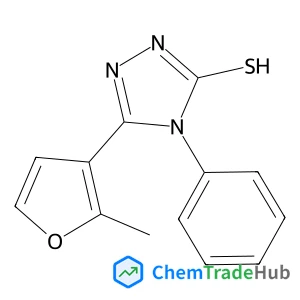
5-(2-Methyl-3-furyl)-4-phenyl-2,4-dihydro-3H-1,2,4-triazole-3-thione
CAS番号:
346464-59-3
分子式:
C13H11N3OS

![Benzeneacetic acid, 2-bromo-α-[[(1,1-dimethylethoxy)carbonyl]amino]-, (αS)- structure](https://static.chemtradehub.com/structs/122/1228547-87-2-f296.webp "Benzeneacetic acid, 2-bromo-α-[[(1,1-dimethylethoxy)carbonyl]amino]-, (αS)- structure")
Benzeneacetic acid, 2-bromo-α-[[(1,1-dimethylethoxy)carbonyl]amino]-, (αS)-
CAS番号:
1228547-87-2
分子式:
C13H16BrNO4
おすすめサプライヤー




免責事項
このページに表示される学術雑誌情報は、参考および研究目的のみを目的としています。当社は雑誌出版社とは提携しておらず、投稿の取り扱いも行っておりません。出版に関するお問い合わせは、各雑誌出版社に直接ご連絡ください。
表示されている情報に誤りがある場合は、support@chemtradehub.com までご連絡ください。迅速に確認し、対応いたします。