












Conformational analysis and UV/Vis spectroscopic properties of a rotaxane-based molecular machine in acetonitrile dilute solution: when simulations meet experiments
文献情報
出版日
2010-12-06
DOI
10.1039/C0CP01773F
インパクトファクター
3.676
著者
Giordano Mancini, Costantino Zazza, Massimiliano Aschi, Nico Sanna
原文を見る
要旨
A reduced form of a synthetic hydrogen-assembled molecular shuttle for nano-technological applications has been investigated by molecular dynamics simulations and density functional theory calculations. It is composed by a benzylic amide macrocycle mechanically locked onto a thread in acetonitrile solution. Classical sampling indicates, in agreement with experimental findings, that in equilibrium condition at 298 K the macrocycle and the naphthalimide radical anion moiety within the thread strongly interact forming four strong OCN–H–OCNR hydrogen bonds. Simulations also revealed that the geometry of the supramolecular assembly reversibly oscillates between unfolded and folded conformations, with the latter characterized by an electrostatic hook involving the succinamide end group and the macrocycle itself. Finally, the simulated UV-Vis absorption spectra for free and complexed reduced naphthalimide quantitatively confirm that the transient spectroscopic change experimentally used as a probe for monitoring the translational motion of the macrocycle, from succinamide to naphthalimide stations, accompanying the selective electrochemical reduction.
関連文献
Bio-derived 3D TiO2 hollow spheres with a mesocrystal nanostructure to achieve improved electrochemical performance of Na-ion batteries in ether-based electrolytes
Rongrong Yang, Lanju Sun, Wei Liu, Yuan Zhang, Yongpeng Cui, Yongxiu Du, Shuang Liu, Huanlei Wang, Minghua Huang
2019-01-22
Paper
DOI: 10.1039/C9TA00334G
A hierarchical carbon nitride tube with oxygen doping and carbon defects promotes solar-to-hydrogen conversion
Wu Wang, Qianwen Chen, Yayun Pu, Weiman Zhuang
2020-01-03
Paper
DOI: 10.1039/C9TA13012H
Nanoparticle counting: towards accurate determination of the molar concentration
Jing Shang, Xiaohu Gao
2014-08-07
Tutorial Review
DOI: 10.1039/C4CS00128A
Direct carbon conversion in a SOFC-system with a non-porous anode
S. Nürnberger, R. Bußar, P. Desclaux, B. Franke, M. Rzepka
2009-11-09
Paper
DOI: 10.1039/B916995D
Podoviridae bacteriophage for the biocontrol of Pseudomonas aeruginosa in rainwater
Brandon Reyneke, Sehaam Khan, Pilar Fernández-Ibáñez, Wesaal Khan
2019-11-13
Paper
DOI: 10.1039/C9EW00896A
Enzyme-catalyzed synthesis of malonate polyesters and their use as metal chelating materials
Fergal P. Byrne, Jamie M. Z. Assemat, Amy E. Stanford, Thomas J. Farmer
2021-06-29
Communication
DOI: 10.1039/D1GC01783G
Construction of mesoporous Cu-doped Co9S8 rectangular nanotube arrays for high energy density all-solid-state asymmetric supercapacitors
Wen Lu, Ze Yuan, Chunyang Xu, Jiqiang Ning, Yijun Zhong, Ziyang Zhang, Yong Hu
2019-02-04
Paper
DOI: 10.1039/C8TA10998B
Polymeric carbon nitride-based photocatalysts for photoreforming of biomass derivatives
Jiu Wang, Pawan Kumar, Heng Zhao, Md Golam Kibria, Jinguang Hu
2021-08-16
Tutorial Review
DOI: 10.1039/D1GC02307A
こちらもおすすめ
化合物よくある質問
オステニ二甲磺酸塩に適用される法規ガイドラインは何ですか?
オステニ二甲磺酸塩は、GHS分類に基づき corrosive 物質として分類されます。REACH規則では、該当物質の登録が要求される可能性があります。また、FD...
2070014-82-1N-(2-{[2-(Dimethylam...
化合物よくある質問
環丁基肼盐酸盐は安全ですか?
環丁基肼盐酸盐は毒性があり、吸入や皮膚接触は有害です。使用時の安全対策として、密閉システムを使用し、適切な排気設備を備えた場所で作業することが推奨されます。
1156980-49-2Cyclobutylhydrazine ...
化合物よくある質問
N-(4-パリドン基ソニルフェニル)硫代イソシアネートを取り扱う際の実験室安全事項は何ですか?
N-(4-パリドン基ソニルフェニル)硫代イソシアネートは高毒性で、皮膚や吸入による毒性があります。取り扱う際は防毒マスク、保護用手袋、保護眼鏡などのPPEを着用...
7356-55-01-[(4-Isothiocyanato...
化合物よくある質問
5-ヒドロキシ-1,3-ジヒドロ-2H-インドン-2-酮の物理化学的性質は何ですか?
CAS番号3416-18-0の5-ヒドロキシ-1,3-ジヒドロ-2H-インドン-2-酮は、結晶性の白色粉末です。分子量は228.25であり、 aqueous m...
3416-18-05-Hydroxy-1,3-dihydr...
化合物よくある質問
O-苄基-D-丝氨醇はどのように合成されますか?
O-苄基-D-丝氨醇は、D-アミノ酸とベンゼン環の経由で合成されます。触媒としてジメチルアミノピリジンが使用され、選択性は高いです。一般的な収率は約90%です。
58577-88-1(s)-2-Amino-3-benzyl...
化合物よくある質問
ナトリウム3-ヒドロキシbutano酸とは何ですか?
ナトリウム3-ヒドロキシbutano酸は、CAS番号13613-65-5で登録されている化合物です。この化合物は、(3R)-3-ヒドロキシbutano酸とナトリ...
13613-65-5sodium;(3R)-3-hydrox...
化合物よくある質問
1-(二苯甲基)-4-甲基ベンゼンの物理化学的性質は何ですか?
CAS番号603-37-2の1-(二苯甲基)-4-甲基ベンゼンは、結晶性の固体で、分子量は244.28であり、水中的には微溶です。この化合物は有機反応において中...
603-37-21-(Diphenylmethyl)-4...
化合物よくある質問
ネアミン塩酸塩の物理化学的性質は何ですか?
ネアミン塩酸塩の分子量は321.19であり、結晶性の白色粉末です。この化合物は水に溶けやすく、pHが低くなると不溶性になります。反応活性は高く、水溶液中の酸化還...
15446-43-2NEAMINE HYDROCHLORID...
化合物よくある質問
偶氮二甲酰二哌啶の主な用途は何ですか?
偶氮二甲酰二哌啶は、医薬品、染料、高 Então 剤、触媒、溶媒、量論試薬など、様々な分野で使用されています。特に、高 Enough 反応において、グリコール酸...
10465-81-3(E)-1,2-Diazenediylb...
664969-54-44-[(2E)-3-Phenyl-2-p...
掲載誌
Physical Chemistry Chemical Physics

CiteScore:
5.5
自己引用率:
10.3%
年間論文数:
3036
Physical Chemistry Chemical Physics (PCCP) is an international journal co-owned by 19 physical chemistry and physics societies from around the world. This journal publishes original, cutting-edge research in physical chemistry, chemical physics and biophysical chemistry. To be suitable for publication in PCCP, articles must include significant innovation and/or insight into physical chemistry; this is the most important criterion that reviewers and Editors will judge against when evaluating submissions. The journal has a broad scope and welcomes contributions spanning experiment, theory, computation and data science. Topical coverage includes spectroscopy, dynamics, kinetics, statistical mechanics, thermodynamics, electrochemistry, catalysis, surface science, quantum mechanics, quantum computing and machine learning. Interdisciplinary research areas such as polymers and soft matter, materials, nanoscience, energy, surfaces/interfaces, and biophysical chemistry are welcomed if they demonstrate significant innovation and/or insight into physical chemistry. Joined experimental/theoretical studies are particularly appreciated when complementary and based on up-to-date approaches.
おすすめ化合物
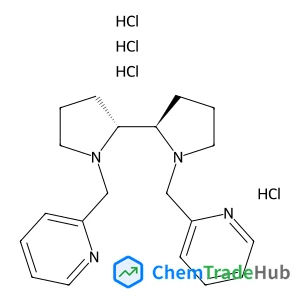
(2R,2'R)-1,1'-Bis(2-pyridinylmethyl)-2,2'-bipyrrolidine tetrahydrochloride
CAS番号:
1228077-88-0
分子式:
C20H30Cl4N4
おすすめサプライヤー






免責事項
このページに表示される学術雑誌情報は、参考および研究目的のみを目的としています。当社は雑誌出版社とは提携しておらず、投稿の取り扱いも行っておりません。出版に関するお問い合わせは、各雑誌出版社に直接ご連絡ください。
表示されている情報に誤りがある場合は、support@chemtradehub.com までご連絡ください。迅速に確認し、対応いたします。