












![2-(5-Bromo-1H-pyrrolo[2,3-B]pyridin-3-YL)acetic acid structure](https://static.chemtradehub.com/structs/106/1060795-03-0-0589.webp "2-(5-Bromo-1H-pyrrolo[2,3-B]pyridin-3-YL)acetic acid structure")
Bio-derived 3D TiO2 hollow spheres with a mesocrystal nanostructure to achieve improved electrochemical performance of Na-ion batteries in ether-based electrolytes
文献情報
出版日
2019-01-22
DOI
10.1039/C9TA00334G
インパクトファクター
12.732
著者
Rongrong Yang, Lanju Sun, Wei Liu, Yuan Zhang, Yongpeng Cui, Yongxiu Du, Shuang Liu, Huanlei Wang, Minghua Huang
原文を見る
要旨
On the way to pursue advanced energy storage cells, an ingenious design and exquisite structure of electrode materials are key to success. In this work, we rationally prepared a unique mesocrystal TiO2 hollow sphere with a mesoporous shell by employing sulfonated-squid ink as templates. This is the first mesocrystal example with a hollow and porous sphere-like scaffold, which contributes to the synthetic coupling effect of SOx2− species and unique marine bio-templates. The specific combination of the 3D hierarchical porous architecture and mesocrystal nature not only offers large surface areas and rich porosity for the transfer of Na-ions during the electrochemical process, but also improves electronic conductivity and structural integrity owing to the little lattice mismatch of mesocrystals. As anode materials for sodium ion batteries, the obtained mesocrystal hollow TiO2 spheres exhibited a higher initial coulombic efficiency and sodium storage capacity (143 mA h g−1 at 2 A g−1), better rate performance and cycling stability (110 mA h g−1 after 1000 cycles at 1 A g−1) in an ether-based electrolyte than in an ester-based one, demonstrating a good match between the electrode materials and ether-based electrolyte. Therefore, these findings could open a new gate for rationally preparing new electrode materials for Na-ion batteries in new electrolyte systems.
関連文献
Dynamics of aqueous binary glass-formers confined in MCM-41
Khalid Elamin, Helén Jansson, Jan Swenson
2015-04-20
Paper
DOI: 10.1039/C5CP00751H
Lasing in DNA–CTMA doped with Rhodamine 610 in butanol
T. Bazaru Rujoiu, A. Petris, V. I. Vlad, I. Rau, A.-M. Manea, F. Kajzar
2015-04-20
Paper
DOI: 10.1039/C5CP01727K
Concentration effects on spontaneous and amplified emission in benzo[c]fluorenes
Karolis Kazlauskas, Gediminas Kreiza, Edvinas Radiunas, Povilas Adomėnas, Ona Adomėnienė, Karolis Karpavičius, Jonas Bucevičius, Vygintas Jankauskas, Saulius Juršėnas
2015-04-09
Paper
DOI: 10.1039/C5CP01325A
Influence of the interface in quantum corrections on the low-temperature resistance of La2/3Sr1/3MnO3 trilayer masking thin films
Yuan Jin, Xiao-Peng Cui, Wei-Hua Han, Shi-Xun Cao, Yu-Ze Gao, Jin-Cang Zhang
2015-04-09
Paper
DOI: 10.1039/C5CP00842E
Spectral dependence of nonlinear optical properties of symmetrical octatetraynes with p-substituted phenyl end-groups
Agata Arendt, Marek Samoc, Sławomir Szafert
2015-04-20
Paper
DOI: 10.1039/C5CP01661D
In silico prediction of MOFs with high deliverable capacity or internal surface area
Yi Bao, Richard L. Martin, Maciej Haranczyk
2015-02-19
Paper
DOI: 10.1039/C5CP00002E
Graphene networks and their influence on free-volume properties of graphene–epoxidized natural rubber composites with a segregated structure: rheological and positron annihilation studies
Jieping Zhong, Shuangquan Liao, Wei Gong, Jianhe Liao, Lingxue Kong
2015-04-09
Paper
DOI: 10.1039/C5CP00465A
Photocarrier recombination dynamics in ternary chalcogenide CuInS2 quantum dots
Michio Ikezawa, Xiuying Wang, Pengtao Jing, Haibo Li, Yasuaki Masumoto
2015-02-17
Paper
DOI: 10.1039/C5CP00034C
Towards multielectron photocatalysis: a porphyrin array for lateral hole transfer and capture on a metal oxide surface
Bradley J. Brennan, Alec C. Durrell, Matthieu Koepf, Robert H. Crabtree, Gary W. Brudvig
2015-04-16
Paper
DOI: 10.1039/C5CP01683E
Investigation of thermal evolution of copper nanoclusters encapsulated in carbon nanotubes: a molecular dynamics study
Hamed Akbarzadeh, Mohsen Abbaspour, Sirous Salemi, Mousareza Abroodi
2015-04-16
Paper
DOI: 10.1039/C5CP01294E
こちらもおすすめ
化合物よくある質問
オステニ二甲磺酸塩に適用される法規ガイドラインは何ですか?
オステニ二甲磺酸塩は、GHS分類に基づき corrosive 物質として分類されます。REACH規則では、該当物質の登録が要求される可能性があります。また、FD...
2070014-82-1N-(2-{[2-(Dimethylam...
化合物よくある質問
環丁基肼盐酸盐は安全ですか?
環丁基肼盐酸盐は毒性があり、吸入や皮膚接触は有害です。使用時の安全対策として、密閉システムを使用し、適切な排気設備を備えた場所で作業することが推奨されます。
1156980-49-2Cyclobutylhydrazine ...
化合物よくある質問
N-(4-パリドン基ソニルフェニル)硫代イソシアネートを取り扱う際の実験室安全事項は何ですか?
N-(4-パリドン基ソニルフェニル)硫代イソシアネートは高毒性で、皮膚や吸入による毒性があります。取り扱う際は防毒マスク、保護用手袋、保護眼鏡などのPPEを着用...
7356-55-01-[(4-Isothiocyanato...
化合物よくある質問
5-ヒドロキシ-1,3-ジヒドロ-2H-インドン-2-酮の物理化学的性質は何ですか?
CAS番号3416-18-0の5-ヒドロキシ-1,3-ジヒドロ-2H-インドン-2-酮は、結晶性の白色粉末です。分子量は228.25であり、 aqueous m...
3416-18-05-Hydroxy-1,3-dihydr...
化合物よくある質問
O-苄基-D-丝氨醇はどのように合成されますか?
O-苄基-D-丝氨醇は、D-アミノ酸とベンゼン環の経由で合成されます。触媒としてジメチルアミノピリジンが使用され、選択性は高いです。一般的な収率は約90%です。
58577-88-1(s)-2-Amino-3-benzyl...
化合物よくある質問
ナトリウム3-ヒドロキシbutano酸とは何ですか?
ナトリウム3-ヒドロキシbutano酸は、CAS番号13613-65-5で登録されている化合物です。この化合物は、(3R)-3-ヒドロキシbutano酸とナトリ...
13613-65-5sodium;(3R)-3-hydrox...
化合物よくある質問
1-(二苯甲基)-4-甲基ベンゼンの物理化学的性質は何ですか?
CAS番号603-37-2の1-(二苯甲基)-4-甲基ベンゼンは、結晶性の固体で、分子量は244.28であり、水中的には微溶です。この化合物は有機反応において中...
603-37-21-(Diphenylmethyl)-4...
化合物よくある質問
ネアミン塩酸塩の物理化学的性質は何ですか?
ネアミン塩酸塩の分子量は321.19であり、結晶性の白色粉末です。この化合物は水に溶けやすく、pHが低くなると不溶性になります。反応活性は高く、水溶液中の酸化還...
15446-43-2NEAMINE HYDROCHLORID...
化合物よくある質問
偶氮二甲酰二哌啶の主な用途は何ですか?
偶氮二甲酰二哌啶は、医薬品、染料、高 Então 剤、触媒、溶媒、量論試薬など、様々な分野で使用されています。特に、高 Enough 反応において、グリコール酸...
10465-81-3(E)-1,2-Diazenediylb...
664969-54-44-[(2E)-3-Phenyl-2-p...
掲載誌
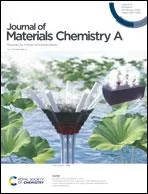
Journal of Materials Chemistry A
CiteScore:
19.5
自己引用率:
4.7%
年間論文数:
2211
Journal of Materials Chemistry A, B & C cover high quality studies across all fields of materials chemistry. The journals focus on those theoretical or experimental studies that report new understanding, applications, properties and synthesis of materials. The journals have a strong history of publishing quality reports of interest to interdisciplinary communities and providing an efficient and rigorous service through peer review and publication. The journals are led by an international team of Editors-in-Chief and Associate Editors who are all active researchers in their fields. Journal of Materials Chemistry A, B & C are separated by the intended application of the material studied. Broadly, applications in energy and sustainability are of interest to Journal of Materials Chemistry A, applications in biology and medicine are of interest to Journal of Materials Chemistry B, and applications in optical, magnetic and electronic devices are of interest to Journal of Materials Chemistry C. More than one Journal of Materials Chemistry journal may be suitable for certain fields and researchers are encouraged to submit their paper to the journal that they feel best fits for their particular article. Example topic areas within the scope of Journal of Materials Chemistry A are listed below. This list is neither exhaustive nor exclusive. Artificial photosynthesis Batteries Carbon dioxide conversion Catalysis Fuel cells Gas capture/separation/storage Green/sustainable materials Hydrogen generation Hydrogen storage Photocatalysis Photovoltaics Self-cleaning materials Self-healing materials Sensors Supercapacitors Thermoelectrics Water splitting Water treatment
おすすめ化合物
![N-[2,6-Di(9-anthryl)-4-oxido-8,9,10,11,12,13,14,15-octahydrodinaphtho[2,1-d:1',2'-f][1,3,2]dioxaphosphepin-4-yl]-1,1,1-trifluoromethanesulfonamide structure](https://static.chemtradehub.com/structs/122/1227374-64-2-cdb5.webp "N-[2,6-Di(9-anthryl)-4-oxido-8,9,10,11,12,13,14,15-octahydrodinaphtho[2,1-d:1',2'-f][1,3,2]dioxaphosphepin-4-yl]-1,1,1-trifluoromethanesulfonamide structure")
おすすめサプライヤー





免責事項
このページに表示される学術雑誌情報は、参考および研究目的のみを目的としています。当社は雑誌出版社とは提携しておらず、投稿の取り扱いも行っておりません。出版に関するお問い合わせは、各雑誌出版社に直接ご連絡ください。
表示されている情報に誤りがある場合は、support@chemtradehub.com までご連絡ください。迅速に確認し、対応いたします。