












Protein–water electrostatics and principles of bioenergetics
文献情報
出版日
2010-10-25
DOI
10.1039/C0CP01004A
インパクトファクター
3.676
著者
David N. LeBard, Dmitry V. Matyushov
原文を見る
要旨
Despite its diversity, life universally relies on a simple basic mechanism of energy transfer in its energy chains—hopping electron transport between centers of electron localization on hydrated proteins and redox cofactors. Since many such hops connect the point of energy input with a catalytic site where energy is stored in chemical bonds, the question of energy losses in (nearly activationless) electron hops, i.e., energetic efficiency, becomes central for the understanding of the energetics of life. We show here that standard considerations based on rules of Gibbs thermodynamics are not sufficient, and the dynamics of the protein and the protein–water interface need to be involved. The rate of electronic transitions is primarily sensitive to the electrostatic potential at the center of electron localization. Numerical simulations show that the statistics of the electrostatic potential produced by hydration water are strongly non-Gaussian, with the breadth of the electrostatic noise far exceeding the expectations of the linear response. This phenomenon, which dramatically alters the energetic balance of a charge-transfer chain, is attributed to the formation of ferroelectric domains in the protein's hydration shell. These dynamically emerging and dissipating domains make the shell enveloping the protein highly polar, as gauged by the variance of the shell dipole which correlates with the variance of the protein dipole. The Stokes-shift dynamics of redox-active proteins are dominated by a slow component with the relaxation time of 100–500 ps. This slow relaxation mode is frozen on the time-scale of fast reactions, such as bacterial charge separation, resulting in a dramatically reduced reorganization free energy of fast electronic transitions. The electron transfer activation barrier becomes a function of the corresponding rate, self-consistently calculated from a non-ergodic version of the transition-state theory. The peculiar structure of the protein–water interface thus provides natural systems with two “non's”—non-Gaussian statistics and non-ergodic kinetics—to tune the efficiency of the redox energy transfer. Both act to reduce the amount of free energy released as heat in electronic transitions. These mechanisms are shown to increase the energetic efficiency of protein electron transfer by up to an order of magnitude compared to the “standard picture” based on canonical free energies and the linear response approximation. In other words, the protein–water tandem allows both the formation of a ferroelectric mesophase in the hydration shell and an efficient control of the energetics by manipulating the relaxation times.
関連文献
Controllable fabrication of nanostructured materials for photoelectrochemical water splitting via atomic layer deposition
Tuo Wang, Zhibin Luo, Chengcheng Li, Jinlong Gong
2014-02-06
Tutorial Review
DOI: 10.1039/C3CS60370A
Podoviridae bacteriophage for the biocontrol of Pseudomonas aeruginosa in rainwater
Brandon Reyneke, Sehaam Khan, Pilar Fernández-Ibáñez, Wesaal Khan
2019-11-13
Paper
DOI: 10.1039/C9EW00896A
Sulfur stereogenic centers in transition-metal-catalyzed asymmetric C–H functionalization: generation and utilization
Wentan Liu, Jie Ke, Chuan He
2021-07-07
Perspective
DOI: 10.1039/D1SC02614C
Function-oriented synthesis of two-dimensional (2D) covalent organic frameworks – from 3D solids to 2D sheets
Xing Li, Priya Yadav, Kian Ping Loh
2020-06-03
Review Article
DOI: 10.1039/D0CS00236D
Splitting growth of novel CuO straw sheaves and their improved photocatalytic activity due to exposed active {110} facets and crystallinity
Yunxuan Zhao, Huaxia Shi, Mingdong Chen, Fei Teng
2014-01-10
Paper
DOI: 10.1039/C3CE42271B
Selective gelation of N-(4-pyridyl)nicotinamide by copper(ii) salts
Dipankar Ghosh, Ieva Lebedytė, Dmitry S. Yufit, Krishna K. Damodaran, Jonathan W. Steed
2015-08-18
Paper
DOI: 10.1039/C5CE00901D
Directed holey and ordered g-C3N4.5 nanosheets by a hard template nanocasting approach for sustainable visible-light hydrogen evolution with prominent quantum efficiency
Bindu Antil, Sasanka Deka
2020-06-15
Paper
DOI: 10.1039/D0TA02734K
Floating, highly efficient, and scalable graphene membranes for seawater desalination using solar energy
Guijun Li, Wing-Cheung Law, Kang Cheung Chan
2018-07-09
Communication
DOI: 10.1039/C8GC01347K
こちらもおすすめ
化合物よくある質問
オステニ二甲磺酸塩に適用される法規ガイドラインは何ですか?
オステニ二甲磺酸塩は、GHS分類に基づき corrosive 物質として分類されます。REACH規則では、該当物質の登録が要求される可能性があります。また、FD...
2070014-82-1N-(2-{[2-(Dimethylam...
化合物よくある質問
環丁基肼盐酸盐は安全ですか?
環丁基肼盐酸盐は毒性があり、吸入や皮膚接触は有害です。使用時の安全対策として、密閉システムを使用し、適切な排気設備を備えた場所で作業することが推奨されます。
1156980-49-2Cyclobutylhydrazine ...
化合物よくある質問
N-(4-パリドン基ソニルフェニル)硫代イソシアネートを取り扱う際の実験室安全事項は何ですか?
N-(4-パリドン基ソニルフェニル)硫代イソシアネートは高毒性で、皮膚や吸入による毒性があります。取り扱う際は防毒マスク、保護用手袋、保護眼鏡などのPPEを着用...
7356-55-01-[(4-Isothiocyanato...
化合物よくある質問
5-ヒドロキシ-1,3-ジヒドロ-2H-インドン-2-酮の物理化学的性質は何ですか?
CAS番号3416-18-0の5-ヒドロキシ-1,3-ジヒドロ-2H-インドン-2-酮は、結晶性の白色粉末です。分子量は228.25であり、 aqueous m...
3416-18-05-Hydroxy-1,3-dihydr...
化合物よくある質問
O-苄基-D-丝氨醇はどのように合成されますか?
O-苄基-D-丝氨醇は、D-アミノ酸とベンゼン環の経由で合成されます。触媒としてジメチルアミノピリジンが使用され、選択性は高いです。一般的な収率は約90%です。
58577-88-1(s)-2-Amino-3-benzyl...
化合物よくある質問
ナトリウム3-ヒドロキシbutano酸とは何ですか?
ナトリウム3-ヒドロキシbutano酸は、CAS番号13613-65-5で登録されている化合物です。この化合物は、(3R)-3-ヒドロキシbutano酸とナトリ...
13613-65-5sodium;(3R)-3-hydrox...
化合物よくある質問
1-(二苯甲基)-4-甲基ベンゼンの物理化学的性質は何ですか?
CAS番号603-37-2の1-(二苯甲基)-4-甲基ベンゼンは、結晶性の固体で、分子量は244.28であり、水中的には微溶です。この化合物は有機反応において中...
603-37-21-(Diphenylmethyl)-4...
化合物よくある質問
ネアミン塩酸塩の物理化学的性質は何ですか?
ネアミン塩酸塩の分子量は321.19であり、結晶性の白色粉末です。この化合物は水に溶けやすく、pHが低くなると不溶性になります。反応活性は高く、水溶液中の酸化還...
15446-43-2NEAMINE HYDROCHLORID...
化合物よくある質問
偶氮二甲酰二哌啶の主な用途は何ですか?
偶氮二甲酰二哌啶は、医薬品、染料、高 Então 剤、触媒、溶媒、量論試薬など、様々な分野で使用されています。特に、高 Enough 反応において、グリコール酸...
10465-81-3(E)-1,2-Diazenediylb...
664969-54-44-[(2E)-3-Phenyl-2-p...
掲載誌
Physical Chemistry Chemical Physics

CiteScore:
5.5
自己引用率:
10.3%
年間論文数:
3036
Physical Chemistry Chemical Physics (PCCP) is an international journal co-owned by 19 physical chemistry and physics societies from around the world. This journal publishes original, cutting-edge research in physical chemistry, chemical physics and biophysical chemistry. To be suitable for publication in PCCP, articles must include significant innovation and/or insight into physical chemistry; this is the most important criterion that reviewers and Editors will judge against when evaluating submissions. The journal has a broad scope and welcomes contributions spanning experiment, theory, computation and data science. Topical coverage includes spectroscopy, dynamics, kinetics, statistical mechanics, thermodynamics, electrochemistry, catalysis, surface science, quantum mechanics, quantum computing and machine learning. Interdisciplinary research areas such as polymers and soft matter, materials, nanoscience, energy, surfaces/interfaces, and biophysical chemistry are welcomed if they demonstrate significant innovation and/or insight into physical chemistry. Joined experimental/theoretical studies are particularly appreciated when complementary and based on up-to-date approaches.
おすすめ化合物
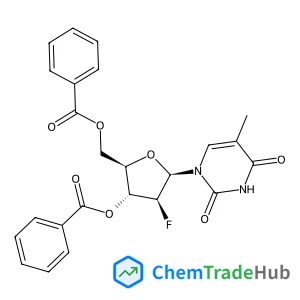
1-(3',5'-Di-O-benzoyl-2'-deoxy-2'-fluoro-b-D-arabinofuranosyl)thymine
CAS番号:
97614-47-6
分子式:
C24H21FN2O7
![5,7-Dihydroxy-3-(4-hydroxyphenyl)-6-[(1R,6R)-3-methyl-6-prop-1-en-2-ylcyclohex-2-en-1-yl]chromen-4-one structure](https://static.chemtradehub.com/structs/191/1914963-20-4-2b05.webp "5,7-Dihydroxy-3-(4-hydroxyphenyl)-6-[(1R,6R)-3-methyl-6-prop-1-en-2-ylcyclohex-2-en-1-yl]chromen-4-one structure")
おすすめサプライヤー






免責事項
このページに表示される学術雑誌情報は、参考および研究目的のみを目的としています。当社は雑誌出版社とは提携しておらず、投稿の取り扱いも行っておりません。出版に関するお問い合わせは、各雑誌出版社に直接ご連絡ください。
表示されている情報に誤りがある場合は、support@chemtradehub.com までご連絡ください。迅速に確認し、対応いたします。