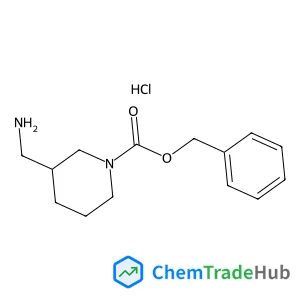
![Benzyl spiro[indole-3,4'-piperidine]-1(2H)-carboxylate hydrochloride (1:1) structure](https://static.chemtradehub.com/structs/159/159635-46-8-8de0.webp "Benzyl spiro[indole-3,4'-piperidine]-1(2H)-carboxylate hydrochloride (1:1) structure")
Benzyl spiro[indole-3,4'-piperidine]-1(2H)-carboxylate hydrochloride (1:1)
CAS番号:
159635-46-8
分子式:
C20H23ClN2O2
Frédéric Hasché, Mehtap Oezaslan
Understanding and improving durability of fuel cell catalysts are currently one of the major goals in fuel cell research. Here, we present a comparative stability study of multi walled carbon nanotube (MWCNT) and conventional carbon supported platinum nanoparticle electrocatalysts for the oxygen reduction reaction (ORR). The aim of this study was to obtain insight into the mechanisms controlling degradation, in particular the role of nanoparticle coarsening and support corrosion effects. A MWCNT-supported 20 wt.% Pt catalyst and a Vulcan XC 72R-supported 20 wt.% Pt catalyst with a BET surface area of around 150 m2 g−1 and with a comparable Pt mean particle size were subjected to electrode potential cycling in a “lifetime” stability regime (voltage cycles between 0.5 to 1.0 V vs. RHE) and a “start-up” stability regime (cycles between 0.5 to 1.5 V vs. RHE). Before, during and after potential cycling, the ORR activity and structural/morphological (XRD, TEM) characteristics were recorded and analyzed. Our results did not indicate any activity benefit of MWCNT support for the kinetic rate of ORR. In the “lifetime” regime, the MWCNT supported Pt catalyst showed clearly smaller electrochemically active surface area (ECSA) and mass activity losses compared to the Vulcan XC 72R supported Pt catalyst. In the “start-up” regime, Pt on MWCNT exhibited a reduced relative ECSA loss compared to Pt on Vulcan XC 72R. We directly imaged the trace of a migrating platinum particle inside a MWCNT suggesting enhanced adhesion between Pt atoms and the graphene tube walls. Our data suggests that the ECSA loss differences between the two catalysts are not controlled by particle growth. We rather conclude that over the time scale of our stability tests (10 000 potential cycles and beyond), the macroscopic ECSA loss is primarily controlled by carbon corrosion associated with Pt particle detachment and loss of electrical contact.
Hamzeh Yaghoubi, Masumeh Foroutan
DOI: 10.1039/C8CP03762K
Christopher D. Daub, Natalie M. Cann, D. Bratko, Alenka Luzar
DOI: 10.1039/C8CP03791D
Arindam Mukhopadhyay, Krishna J. Mandal, Jarugu Narasimha Moorthy
DOI: 10.1039/C7CP06766F
Omer Meroz, Yaniv Gelbstein
DOI: 10.1039/C7CP06176E
Yang Wang, Xiangyun Ma, Huijie Wang, Da Chen, Keng C. Chou, Qifeng Li
DOI: 10.1039/C8CP02519C
Sergey V. Zybin, William A. Goddard, III, Tao Cheng, Saber Naserifar, Andres Jaramillo-Botero, Fenglei Huang
DOI: 10.1039/C7CP07321F
Guili He, Da Huang, Zhi Yang, Yutong Han, Jun Hu, Nantao Hu, Yanjie Su, Zhihua Zhou, Yafei Zhang, Yan Zhang
DOI: 10.1039/C7CP07125F
Urška Jug, Janez Mavri, Jernej Stare
DOI: 10.1039/C7CP07069A
DOI: 10.1039/C7CP07584G
3-(2-オキサプロピル)ベンzoic酸は、ベンzoic酸とプロパノ酸をヒドロキシム化合物として反応させて生成します。具体的には、ベンzoic酸とプロパノ酸を反...
4-メチル-4-ピペリジニル-1-ピロリドイン甲酸は、主に医薬品の合成材料や研究用物質として使用されます。さらに、一部の薬理学的研究にも応用されています。
Biotin-PEG3-oxyamine HCl塩は、GHS( Globally Harmonized System of Classification and...
N-(4-イソチオシアネートフェニル)-2-メトキシアリニンは、4-イソチオシアノフェノールと2-メトキシアリニルアミンのアミニド反応を用いて合成されます。この...
金粉蕨亭2'-O-葡萄糖甙は主に薬理研究や医薬品製造に使用され、抗炎症作用や抗がん作用などがあります。また、その構造や性質から、合成化学や化学生理学の研究にも用...
2-(2-ニトロフェニル)酢酸ヒドライドのCAS番号は114953-81-0です。この化合物は白色結晶性粉末で、分子量は244.12です。水溶性は限られており、...
この化合物は高活性のため、取り扱いには注意が必要です。PPE(個人保護具)としてゴーグル、ガントリー、および防滴シールドを着用することが推奨されます。ドラフトチ...
11-脱氢血栓烷 b2は、血栓溶解・抗凝固作用に関する研究で注目を集めています。特に心血管疾患の治療法開発において、市場の需要が高まっています。研究トレンドとし...
3,3-二甲基哌啶-4-酮は避光、常温、乾燥した場所で保存してください。容器は密閉し、遠くから火源を離して保管することを確認してください。

Physical Chemistry Chemical Physics (PCCP) is an international journal co-owned by 19 physical chemistry and physics societies from around the world. This journal publishes original, cutting-edge research in physical chemistry, chemical physics and biophysical chemistry. To be suitable for publication in PCCP, articles must include significant innovation and/or insight into physical chemistry; this is the most important criterion that reviewers and Editors will judge against when evaluating submissions. The journal has a broad scope and welcomes contributions spanning experiment, theory, computation and data science. Topical coverage includes spectroscopy, dynamics, kinetics, statistical mechanics, thermodynamics, electrochemistry, catalysis, surface science, quantum mechanics, quantum computing and machine learning. Interdisciplinary research areas such as polymers and soft matter, materials, nanoscience, energy, surfaces/interfaces, and biophysical chemistry are welcomed if they demonstrate significant innovation and/or insight into physical chemistry. Joined experimental/theoretical studies are particularly appreciated when complementary and based on up-to-date approaches.
![2-Methyl-2-propanyl [(2S)-1-hydroxy-3-(4-hydroxyphenyl)-2-propanyl]carbamate structure](https://static.chemtradehub.com/structs/833/83345-46-4-eec2.webp "2-Methyl-2-propanyl [(2S)-1-hydroxy-3-(4-hydroxyphenyl)-2-propanyl]carbamate structure")