


High water mobility on the ice-binding surface of a hyperactive antifreeze protein
文献情報
出版日
2010-07-29
DOI
10.1039/C002970J
インパクトファクター
3.676
著者
Kristofer Modig, Johan Qvist, Christopher B. Marshall, Peter L. Davies, Bertil Halle
原文を見る
要旨
Antifreeze proteins (AFPs) prevent uncontrolled ice formation in organisms exposed to subzero temperatures by binding irreversibly to specific planes of nascent ice crystals. To understand the thermodynamic driving forces and kinetic mechanism of AFP activity, it is necessary to characterize the hydration behavior of these proteins in solution. With this aim, we have studied the hyperactive insect AFP from Tenebrio molitor (TmAFP) with the 17O magnetic relaxation dispersion (MRD) method, which selectively monitors the rotational motion and exchange kinetics of water molecules on picosecond–microsecond time scales. The global hydration behavior of TmAFP is found to be similar to non-antifreeze proteins, with no evidence of ice-like or long-ranged modifications of the solvent. However, two sets of structural water molecules, located within the core and on the ice-binding face in the crystal structure of TmAFP, may have functional significance. We find that 2 of the 5 internal water molecules exchange with a residence time of 8 ± 1 μs at 300 K and a large activation energy of ∼50 kJ mol−1, reflecting intermittent large-scale conformational fluctuations in this exceptionally dense and rigid protein. Six water molecules arrayed with ice-like spacing in the central trough on the ice-binding face exchange with bulk water on a sub-nanosecond time scale. The combination of high order and fast exchange may allow these water molecules to contribute entropically to the ice-binding affinity without limiting the absorption rate.
おすすめジャーナル

Chemistry Education Research and Practice

Russian Journal of Applied Chemistry

Russian Journal of Coordination Chemistry

Drug Discovery Today

Russian Journal of Organic Chemistry

Russian Chemical Bulletin

Current Opinion in Colloid & Interface Science

Nature Medicine

Saudi Pharmaceutical Journal

Acta Materialia
関連文献
Fluorination reactions in microreactors
Tomas Gustafsson, Ryan Gilmour, Peter H. Seeberger
2008-04-29
Communication
DOI: 10.1039/B803695K
Photophysical properties and tunable colour changes of silica single layers doped with lanthanide(iii) complexes
Lidia Armelao, Gregorio Bottaro, Silvio Quici, Marco Cavazzini, Maria Concetta Raffo, Francesco Barigelletti, Gianluca Accorsi
2007-03-23
Communication
DOI: 10.1039/B702238G
Rhodium-catalyzed enantioselective desymmetrization of bicyclic hydrazines with alkynylboronic esters
Stefano Crotti, Ferruccio Bertolini, Franco Macchia, Mauro Pineschi
2008-05-08
Communication
DOI: 10.1039/B803693D
Electronic communication in “chain-like” trimetallic ruthenium complexes with two C7 carbon-rich conjugated bridges
Céline Olivier, Sylvie Choua, Philippe Turek, Daniel Touchard, Stéphane Rigaut
2007-05-17
Communication
DOI: 10.1039/B704241H
One-step synthesis of ordered mesoporous carbonaceous spheres by an aerosol-assisted self-assembly
Yan Yan, Fuqiang Zhang, Yan Meng, Bo Tu, Dongyuan Zhao
2007-04-25
Communication
DOI: 10.1039/B702232H
Copper-free click chemistry for the in situ crosslinking of photodegradable star polymers
Jeremiah A. Johnson, Jeremy M. Baskin, Jeffrey T. Koberstein
2008-04-24
Communication
DOI: 10.1039/B803043J
A conjugated polyelectrolyte-based fluorescence sensor for pyrophosphate
Xiaoyong Zhao, Yan Liu, Kirk S. Schanze
2007-06-21
Communication
DOI: 10.1039/B706629E
Synthesis of an open-framework copper–germanium phosphate [Cu(H2O)2(OH)]2Ge(PO4)2
Yan Liu, Xiao-Li Yang, Jun Zhang, Yi-Zhi Li, You Song, Hong-Bin Du, Xiao-Zeng You
2008-05-19
Communication
DOI: 10.1039/B801542B
こちらもおすすめ
化合物よくある質問
6- bromo-1-cyclopropyl-1H-benzimidazoleの市場動向や研究トレンドはどうですか?
6- bromo-1-cyclopropyl-1H-benzimidazoleは、抗炎症、抗ウイルス作用を持つことが報告されており、新薬開発の研究対象として注目...
1416713-53-56-Bromo-1-cyclopropy...
化合物よくある質問
環氧プロpanol-d5を取り扱う際の実験室安全事項は何ですか?
取り扱う際には、防護眼鏡と手袋を使用し、ドラフトチャンバー内で操作することを推奨します。漏洩時には適切な手順で処理し、安全データシートを常に参照してください。
1246819-20-4Glycidol-d5
化合物よくある質問
2,2’-ジメチル-3,3’-ビピリジンはどのように合成されますか?
2,2’-ジメチル-3,3’-ビピリジンは、ピリジンと2-メチルアクリルアミドを有機合成反応で合成します。この反応では、ピリジンと2-メチルアクリルアミドを含有...
86156-55-02,2’-Dimethyl-3,3’-b...
化合物よくある質問
6-甲基ピリジン-2-ボリック酸の主な用途は何ですか?
6-甲基ピリジン-2-ボリック酸は、合成化学、医薬品合成、以及研究用途などに広く使用され、特に組換えDNA技術や分子生物学の研究において重要な役割を果たします。
372963-50-3(6-Methyl-2-pyridiny...
化合物よくある質問
(R)-3-(1-甲基-2-氧環己基)プロpano酸メチルは安全ですか?
(R)-3-(1-甲基-2-氧環己基)プロpano酸メチルは一定の安全性がありますが、直接的な皮膚接触や吸入は避けるべきです。使用する際は適切な個々の安全データ...
94089-47-1methyl 3-[(1R)-1-met...
化合物よくある質問
ketorolacはどのように保存すればよいですか?
ketorolacは、密封して遮光容器に保管し、直射日光や高温を避けて保存してください。温度は常温で保存し、湿度をなるべく低く保つことが推奨されます。
74103-06-3rac Ketorolac
化合物よくある質問
L-2,3-二氨基丙酸二盐酸盐を取り扱う際の実験室安全事項は何ですか?
L-2,3-二氨基丙酸二盐酸盐は腐食性が強く、皮膚や粘膜に刺激を与える可能性があります。取り扱う際は、防塵マスク、ゴーグル、手袋を使用し、適切な排気設備を使用し...
19777-68-5(S)-2,3-Diaminopropa...
化合物よくある質問
2-(4-溴ピリジン-2-基)乙腈の物理化学的性質は何ですか?
2-(4-溴ピリジン-2-基)乙腈のCAS番号は312325-73-8です。主に結晶形態で存在し、分子量は159.01 g/molです。この化合物は水に溶けやす...
312325-73-8(4-Bromo-2-pyridinyl...
化合物よくある質問
3-フローロ-[1,1-ベンジレン]-3,4-ジカルボン酸を取り扱う際の実験室安全事項は何ですか?
この化合物は毒性は低いですが、直接的な接触や吸入に注意が必要です。PPE(個人防護具)を着用し、ドラフトチャンバーを使用して操作することを推奨します。また、漏洩...
1261915-32-53'-Fluoro-[1,1'-biph...
化合物よくある質問
3-(1-氧代-1,3-二氢-2H-2-异吲哚)丙酸の主な用途は何ですか?
3-(1-氧代-1,3-二氢-2H-2-异吲哚)丙酸は、薬理学研究や医薬品製造において広く用いられる化合物です。また、工業的な用途でも一部の化学反応の触媒や助剤...
83747-30-23-(1-Oxo-1,3-dihydro...
掲載誌
Physical Chemistry Chemical Physics

CiteScore:
5.5
自己引用率:
10.3%
年間論文数:
3036
Physical Chemistry Chemical Physics (PCCP) is an international journal co-owned by 19 physical chemistry and physics societies from around the world. This journal publishes original, cutting-edge research in physical chemistry, chemical physics and biophysical chemistry. To be suitable for publication in PCCP, articles must include significant innovation and/or insight into physical chemistry; this is the most important criterion that reviewers and Editors will judge against when evaluating submissions. The journal has a broad scope and welcomes contributions spanning experiment, theory, computation and data science. Topical coverage includes spectroscopy, dynamics, kinetics, statistical mechanics, thermodynamics, electrochemistry, catalysis, surface science, quantum mechanics, quantum computing and machine learning. Interdisciplinary research areas such as polymers and soft matter, materials, nanoscience, energy, surfaces/interfaces, and biophysical chemistry are welcomed if they demonstrate significant innovation and/or insight into physical chemistry. Joined experimental/theoretical studies are particularly appreciated when complementary and based on up-to-date approaches.
おすすめ化合物
![2-{[(1R,2S)-2-Aminocyclohexyl]amino}-4-{[3-(2H-1,2,3-triazol-2-yl)phenyl]amino}-5-pyrimidinecarboxamide structure](https://static.chemtradehub.com/structs/137/1370261-96-3-40df.webp "2-{[(1R,2S)-2-Aminocyclohexyl]amino}-4-{[3-(2H-1,2,3-triazol-2-yl)phenyl]amino}-5-pyrimidinecarboxamide structure")
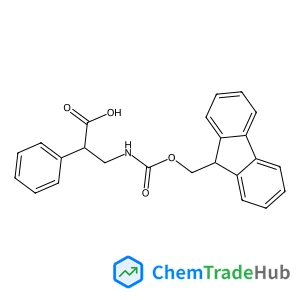
(S)-3-((((9H-Fluoren-9-yl)methoxy)carbonyl)amino)-2-phenylpropanoic acid
CAS番号:
1217663-60-9
分子式:
C24H21NO4
おすすめサプライヤー







免責事項
このページに表示される学術雑誌情報は、参考および研究目的のみを目的としています。当社は雑誌出版社とは提携しておらず、投稿の取り扱いも行っておりません。出版に関するお問い合わせは、各雑誌出版社に直接ご連絡ください。
表示されている情報に誤りがある場合は、support@chemtradehub.com までご連絡ください。迅速に確認し、対応いたします。