












The effects of perfluorination on carbohydrate–π interactions: computational studies of the interaction of benzene and hexafluorobenzene with fucose and cyclodextrin
文献情報
出版日
2010-06-02
DOI
10.1039/C002058C
インパクトファクター
3.676
著者
Rajesh K. Raju, Ian H. Hillier, Neil A. Burton, Mark A. Vincent, Slimane Doudou, Richard A. Bryce
原文を見る
要旨
The effect of benzene fluorination on C–H⋯π interactions is studied using a number of computational methods applied to a range of intermolecular complexes. High level wavefunction methods (CCSD(T)) predict a slightly greater interaction energy for complexes of benzene with methane or fucose, compared to corresponding complexes involving hexafluorobenzene. A number of more approximate treatments, DFT with the M06-2X functional, PM3-D* and MM methods, give interaction energies within 1 kcal mol−1 of the high level values, and also correctly predict that the interaction energy is slightly greater for benzene compared to hexafluorobenzene. However, the DFT-D model used here predicts that the interaction energy is slightly greater for hexafluorobenzene. Molecular dynamics simulations, employing the GLYCAM-06 force field, validated here, are used to model the complexes of benzene and hexafluorobenzene with β-cyclodextrin in aqueous solution. We predict the binding free energies of the complexes to be within 0.5 kcal mol−1, and suggest that the different chemical shifts of the H5 protons observed in the two complexes arise from their slightly different structures, rather than from different binding energies.
関連文献
Cu2ZnSnS4 monograin layer solar cells for flexible photovoltaic applications
Marit Kauk-Kuusik, Kristi Timmo, Maris Pilvet, Katri Muska, Mati Danilson, Jüri Krustok, Raavo Josepson, Valdek Mikli, Maarja Grossberg-Kuusk
2023-10-23
Review Article
DOI: 10.1039/D3TA04541B
Sulfonate compounds embraced from acid copper electroplating baths as innovative additives for alkaline Zn batteries
Katerina Bogomolov, Ekaterina Grishina
2023-10-18
Paper
DOI: 10.1039/D3TA04612E
Industrial total synthesis of natural medicines
Xiao-Yu Liu, Yong Qin
2023-08-09
Viewpoint
DOI: 10.1039/D3NP00020F
Recent advances of hydrogels as smart dressings for diabetic wounds
Xu Wang, Yuhan Yang, Weifeng Zhao, Zhou Zhu, Xibo Pei
2024-01-11
Review Article
DOI: 10.1039/D3TB02355A
Electron transfer between neptunium and sodium chlorite in acidic chloride media
David Dan, Sara L. Adelman, David B. Kimball, Stosh A. Kozimor, Jenifer C. Shafer
2023-12-22
Paper
DOI: 10.1039/D3NJ03730D
The preparation and performance evaluation of flame-retardant antistatic composites based on polyurethane
Zhaoshun Zhan, Qixing Shi, Lei Wang, Jinfeng Shen, Tianyou Bao, Lixin Li, Fanna Meng
2024-01-02
Paper
DOI: 10.1039/D3NJ04981G
Design and numerical-phase analysis of an SPR system for direct detection of SARS-CoV-2 virus in pharyngeal swab solution
Yansheng Liu, Xiaobo Jia, Jin Zhou, Hongli Li, Xiaohong Wang, Yating Chen, Zhenle Qin, Zhichen Jin, Guofu Wang
2023-12-18
Paper
DOI: 10.1039/D3NJ05083A
Composite membranes based on polyvinyl alcohol and lamellar solids for water decontamination
Maria Bastianini, Michele Sisani, Annarita Petracci, Irene Di Guida, Riccardo Narducci
2023-12-21
Paper
DOI: 10.1039/D3NJ04942F
Exploring the potential of triple conducting perovskite cathodes for high-performance solid oxide fuel cells: a comprehensive review
Yujie Xu
2023-10-07
Review Article
DOI: 10.1039/D3TA05035A
Iodine-loaded ZIF-7-coated cotton substrates show sustained iodine release as effective antibacterial textiles
Donya Mohammadi Amidi, Kamran Akhbari
2023-12-13
Paper
DOI: 10.1039/D3NJ05198F
こちらもおすすめ
化合物よくある質問
2-メトキシ-4-(メチルスルフィニル)アミンの主な用途は何ですか?
2-メトキシ-4-(メチルスルフィニル)アミンは、主に医薬品および農薬の製造に使用されます。また、合成化学の一部として研究用材料としても利用されます。
41608-73-52-Methoxy-4-(methyls...
118684-13-24-(Bromomethyl)-3-me...
化合物よくある質問
4,6-二氯-N-甲基ピラミジンアミンの代替品はありますか?
代替品としては、4,6-二クロロピラミジンアミンや他のピラミジン系化合物が考えられます。ただし、目的と用途によって最適な代替品は異なります。
10397-15-64,6-Dichloro-N-methy...
化合物よくある質問
6-氯-4-甲基-1H-吲哚を含む廃棄物はどのように処理すべきですか?
6-氯-4-甲基-1H-吲哚の廃棄物は、適切な容器に収集し、密閉して保管します。温度は常温、湿度は低く、直射日光を避けて保管することを推奨します。廃棄処理は専門...
885520-84-36-chloro-4-methyl-1H...
化合物よくある質問
2-フローユロ-4-(トリフルオロメチル)ベンゾイドについて「に適用される法規ガイドラインは何ですか」
2-フローユロ-4-(トリフルオロメチル)ベンゾイドのCAS番号は207974-08-1です。この化合物はGHS分類で毒性物質と有害な反応物質として分類されます...
207974-08-1[2-Fluoro-4-(trifluo...
化合物よくある質問
4-ニトロフェニルN-[(ベンゼルオキシルカーボンイル]グリシングリシングリシン酸はどのように保存すればよいですか?
4-ニトロフェニルN-[(ベンゼルオキシルカーボンイル]グリシングリシングリシン酸は、室温で暗所に保管し、乾燥した環境で保存することを推奨します。容器は密閉性の...
19811-64-44-Nitrophenyl N-[(be...
化合物よくある質問
イソデスロラタドリンの代替品はありますか?
イソデスロラタドリンの代替品としては、デスロラタドリンや他の抗ヒスタミン薬が挙げられます。具体的には、デスロラタドリン、ラセカミド、フェルタドリンなどが、症状や...
183198-49-4Iso Desloratadine
化合物よくある質問
5-甲氧基-1,2,3,4-四氢异喹啉盐酸盐はどのように合成されますか?
5-甲氧基-1,2,3,4-四氢异喹啉盐酸盐の一般的な合成方法は、メタノール中で5-メトキシ-1,2,3,4-四ヒュドロイソキシンを塩酸で塩化します。この反応で...
103030-69-95-Methoxy-1,2,3,4-te...
化合物よくある質問
4-アミノ-5-メトキシ-2-トルエンサルホニック酸についての法規ガイドラインは何ですか?
CAS番号6471-78-9の4-アミノ-5-メトキシ-2-トルエンサルホニック酸は、GHS分類では corrosive(腐食性)と識別されます。EUのREAC...
6471-78-94-Amino-5-Methoxy-2-...
化合物よくある質問
甲基孕酮を取り扱う際の実験室安全事項は何ですか?
甲基孕酮の取り扱いは、PPE(個人保護具)の使用が必要な重要な安全事項を伴います。防塵マスク、ゴーグル、手袋を着用することが推奨されます。ドラフトチャンバーを使...
204063-33-22-[(Diphenylmethyl)a...
掲載誌
Physical Chemistry Chemical Physics

CiteScore:
5.5
自己引用率:
10.3%
年間論文数:
3036
Physical Chemistry Chemical Physics (PCCP) is an international journal co-owned by 19 physical chemistry and physics societies from around the world. This journal publishes original, cutting-edge research in physical chemistry, chemical physics and biophysical chemistry. To be suitable for publication in PCCP, articles must include significant innovation and/or insight into physical chemistry; this is the most important criterion that reviewers and Editors will judge against when evaluating submissions. The journal has a broad scope and welcomes contributions spanning experiment, theory, computation and data science. Topical coverage includes spectroscopy, dynamics, kinetics, statistical mechanics, thermodynamics, electrochemistry, catalysis, surface science, quantum mechanics, quantum computing and machine learning. Interdisciplinary research areas such as polymers and soft matter, materials, nanoscience, energy, surfaces/interfaces, and biophysical chemistry are welcomed if they demonstrate significant innovation and/or insight into physical chemistry. Joined experimental/theoretical studies are particularly appreciated when complementary and based on up-to-date approaches.
おすすめ化合物
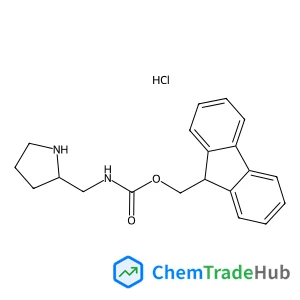
(S)-(9H-Fluoren-9-yl)methyl (pyrrolidin-2-ylmethyl)carbamate hydrochloride
CAS番号:
1217813-15-4
分子式:
C20H23ClN2O2
おすすめサプライヤー



免責事項
このページに表示される学術雑誌情報は、参考および研究目的のみを目的としています。当社は雑誌出版社とは提携しておらず、投稿の取り扱いも行っておりません。出版に関するお問い合わせは、各雑誌出版社に直接ご連絡ください。
表示されている情報に誤りがある場合は、support@chemtradehub.com までご連絡ください。迅速に確認し、対応いたします。