












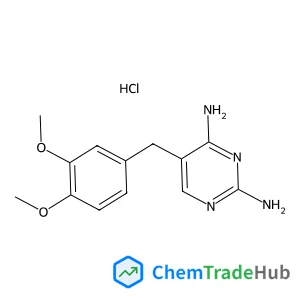
Intrinsic acidity and electrophilicity of gaseous propargyl/allenyl carbocations
文献情報
出版日
2010-03-29
DOI
10.1039/C001985B
インパクトファクター
3.876
著者
Priscila M. Lalli, Yuri E. Corilo, Patrícia V. Abdelnur, Marcos N. Eberlin
原文を見る
要旨
The ion/molecule chemistry of four representative propagyl/allenyl cations 1–4 of the general formula R1CH+-CC-R (a) ↔ R1CHCC+-R (b), that is, the reactive C3H3+ ions of m/z 39 from EI of propargyl chloride (H2C+-CC–H, 1a), isomeric C4H5+ ions of m/z 53 from EI of 3-butyne-2-ol (2a, H2C+-CC-CH3) and 2-butyne-1-ol (CH3-CH+-CC–H, 3a), and Ph-C3H2+ ions of m/z 115 from 3-phenyl-2-propyn-1-ol (H2C+-CC-Ph, 4a) was studied via pentaquadrupole mass spectrometry. With pyridine, proton transfer was observed as the predominant process for 1 and the sole reaction channel for the isomeric 2 and 3, whereas 4 reacted preferentially by adduct formation. These outcomes were rationalized using DFT calculations from isodesmic proton transfer reactions. Similar reaction tendencies were observed with acetonitrile and acrylonitrile, with adduct formation appearing again as a minor pathway for 1, 2 and 3, and as a major reaction channel for 4. With 1,3-dioxolane, hydride abstraction was a dominant reaction, with proton transfer and adduct formation competing as side reactions. With 2,2-dimethyl-1,3-dioxolane, an interplay of reactions including methyl anion abstraction, proton transfer, hydride abstraction and adduct formation were observed depending on the ion structure, with 4 reacting again mainly by adduct formation. Proton transfer was also observed as a dominant process in reactions with ethanol for 1, 2 and 3, with 4 being nearly unreactive whereas no adduct formation was observed for any of the carbocations studied. Limited reactivity was exhibited by these ions in cycloaddition reaction with isoprene.
関連文献
An efficient entry to 1,2-benzisoxazoles via1,3-dipolar cycloaddition of in situ generated nitrile oxides and benzyne
Christopher Mason, Fengzhi Zhang, Dougal J. Ritson, Steve Keeling, John E. Moses
2010-04-07
Paper
DOI: 10.1039/B927235F
Salt, pH and thermoresponsive supramolecular hydrogel of N-(4-n-tetradecyloxybenzoyl)-l-carnosine
Amrita Pal, Saurabh Shrivastava, Joykrishna Dey
2009-10-06
Communication
DOI: 10.1039/B914665B
Assembling chirality into magnetic nanowires: cyano-bridged iron(iii)–nickel(ii) chains exhibiting slow magnetization relaxation and ferroelectricity
Cai-Feng Wang, Dong-Ping Li, Xin Chen, Xiao-Ming Li, Yi-Zhi Li, Jing-Lin Zuo, Xiao-Zeng You
2009-10-22
Communication
DOI: 10.1039/B916637H
Molecular recognition of cationic phenothiazinium and phenoxazinium dyes with π-extended 2′-deoxyadenosine nucleotides
Karina Mondragón-Vásquez, Hugo Morales-Rojas
2009-10-06
Communication
DOI: 10.1039/B913315A
Long wavelength red fluorescent dyes from 3,5-diiodo-BODIPYs
Lijuan Jiao, Changjiang Yu, Timsy Uppal, Mingming Liu, Yan Li, Yunyou Zhou, Erhong Hao, Xiaoke Hu, M. Graça H. Vicente
2010-04-14
Communication
DOI: 10.1039/C001068E
Facile preparation of linear polystyrene-stabilized Pd nanoparticles in water
Atsushi Ohtaka, Takuto Teratani, Ryohei Fujii, Kanako Ikeshita, Osamu Shimomura
2009-10-15
Communication
DOI: 10.1039/B915039K
Abiesatrines A–J: anti-inflammatory and antitumor triterpenoids from Abies georgei Orr
Su-Mei Li, Liang Wu, Yong-Li Li, Lin Feng, Yun-Heng Shen, Jun-Mian Tian, Jian Tang, Ning Wang, Yonghong Liu, Wei-Dong Zhang
2010-04-07
Paper
DOI: 10.1039/C001885F
Combination of chiroptical, absorption and fluorescence spectroscopic methods reveals multiple, hydrophobicity-driven human serum albumin binding of the antimalarial atovaquone and related hydroxynaphthoquinone compounds
Ferenc Zsila, Ilona Fitos
2010-08-24
Paper
DOI: 10.1039/C0OB00124D
Pyrimidine based highly sensitive fluorescent receptor for Al3+ showing dual signalling mechanism
K. K. Upadhyay, Ajit Kumar
2010-08-31
Paper
DOI: 10.1039/C0OB00171F
こちらもおすすめ
化合物よくある質問
環戊烷-1,3-二甲酸甲酯はどのように合成されますか?
環戊烷-1,3-二甲酸甲酯は、環戊烷と塩酸によるヒンデンブルク反応を経由して合成されます。この反応では、環戊烷が塩酸と作用し、1,3-ジカルボキシ基が導入されま...
2435-36-1Dimethyl 1,3-cyclope...
化合物よくある質問
4-メトキシ-1,2,3-スチアゼ-3,5-ジオンとは何ですか?
4-メトキシ-1,2,3-スチアゼ-3,5-ジオンは、CAS番号107843-77-6の化合物で、(E)-ベンジル3-(3,4-ジヒドロキシフェニル) acry...
107843-77-6(E)-Benzyl 3-(3,4-di...
化合物よくある質問
プロスタグランジンA2について「に適用される法規ガイドラインは何ですか?'
プロスタグランジンA2 (CAS番号: 41691-92-3) は、化学物質の安全管理に関する規制として、GHS (危険物質の国際的ハザード分類・ラベル付けシス...
41691-92-316,16-DIMETHYL PROST...
化合物よくある質問
4-アミノ-1-ナフタレン sulfonic 酸についての物理化学的性質は何ですか?
4-アミノ-1-ナフタレン sulfonic 酸のCAS番号は84-86-6です。この化合物は結晶性で、分子量は212.15 g/molです。アルコールや水など...
84-86-64-Amino-1-naphthalen...
化合物よくある質問
N-GlcNAc-生物素を取り扱う際の実験室安全事項は何ですか?
N-GlcNAc-生物素は吸収性があり、皮膚や目への接触を避けることが重要です。PPE(個体保護具)は使用し、ドラフトチャンバーは必要に応じて使用します。漏洩時...
1272755-69-72-Acetamido-2-deoxy-...
化合物よくある質問
3-アミノメチルフローラノピペリジン-1-カルボニル酸テルブチルエステルとは何ですか?
CAS番号1209781-11-2の3-アミノメチルフローラノピペリジン-1-カルボニル酸テルブチルエステルは、有機化合物の一種で、化学式はC10H17FNO3...
1209781-11-22-Methyl-2-propanyl ...
化合物よくある質問
6-溴-1-甲基-1H-ベンゾ[d][1,2,3]三氮唑はどのように合成されますか?
6- bromo-1-methyl-1H-benzotriazoleは、ブロモフリオリンと1-メチル-1H-ベンゾ[d][1,2,3]三氮唑の反応により合成され...
944718-32-56-Bromo-1-methyl-1H-...
化合物よくある質問
4-硫代尿苷はどのように合成されますか?
4-硫代尿苷は、尿素とD-リボシルヒドロキシアルデヒドを用いてスルホン化反応を経て合成されます。通常は塩酸ヒドロキシチオニルスルホン酸などの触媒を使用し、選択性...
6741-73-71-(4-thio-beta-D-rib...
化合物よくある質問
ブレインナトリユリックペプチド32ラットとは何ですか?
ブレインナトリユリックペプチド32ラット(CAS番号: 133448-20-1)は、心臓で作られるホルモンの一つで、心不全の診断や予後評価に使用されます。
133448-20-1Brain Natriuretic Pe...
化合物よくある質問
1-(3-氮杂啶)-4-羟基哌啶双盐酸盐の物理化学的性質は何ですか?
CAS番号810680-60-5の1-(3-氮杂啶)-4-羟基哌啶双盐酸盐は、白色の結晶性粉末である。分子量は360.84 g/molで、水に溶けやすい。反応活...
810680-60-51-(3-Azetidinyl)-4-p...
掲載誌
Organic & Biomolecular Chemistry

CiteScore:
3.4
自己引用率:
10.3%
年間論文数:
1041
Organic & Biomolecular Chemistry (OBC) publishes original and high impact research and reviews in organic chemistry. We welcome research that shows new or significantly improved protocols or methodologies in total synthesis, synthetic methodology or physical and theoretical organic chemistry as well as research that shows a significant advance in the organic chemistry or molecular design aspects of chemical biology, catalysis, supramolecular and macromolecular chemistry, theoretical chemistry, mechanism-oriented physical organic chemistry, medicinal chemistry or natural products. Articles published in the journal should report new work which makes a highly-significant impact in the field. Routine and incremental work is generally not suitable for publication in the journal. More details about key areas of our scope are below. In all cases authors should include in their article clear rationale for why their research has been carried out.
おすすめ化合物
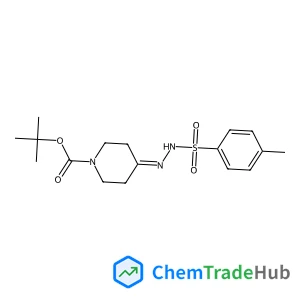
tert-Butyl 4-(2-(p-Tolylsulfonyl)hydrazono)piperidine-1-carboxylate
CAS番号:
1046478-89-0
分子式:
C17H25N3O4S
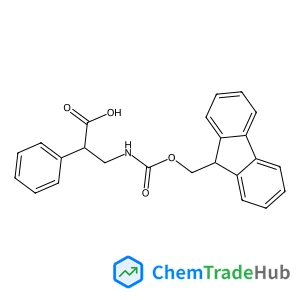
(S)-3-((((9H-Fluoren-9-yl)methoxy)carbonyl)amino)-2-phenylpropanoic acid
CAS番号:
1217663-60-9
分子式:
C24H21NO4
おすすめサプライヤー






免責事項
このページに表示される学術雑誌情報は、参考および研究目的のみを目的としています。当社は雑誌出版社とは提携しておらず、投稿の取り扱いも行っておりません。出版に関するお問い合わせは、各雑誌出版社に直接ご連絡ください。
表示されている情報に誤りがある場合は、support@chemtradehub.com までご連絡ください。迅速に確認し、対応いたします。