












Reference MP2/CBS and CCSD(T) quantum-chemical calculations on stacked adenine dimers. Comparison with DFT-D, MP2.5, SCS(MI)-MP2, M06-2X, CBS(SCS-D) and force field descriptions
文献情報
出版日
2010-02-12
DOI
10.1039/B924461A
インパクトファクター
3.676
著者
原文を見る
要旨
We have performed reference quantum-chemical calculations for about 130 structures of adenine dimers in stacked conformations, with special attention given to dimers that are either vertically compressed (parallel structures) or contain close interatomic contacts (non-parallel structures). Such geometries are sampled during thermal fluctuations of nucleic acids and contribute to the local conformational variability of these systems. Their theoretical characterization requires a good description of interaction energies in the short-range repulsion region. The reference calculations have been performed with the CBS(T) method, i.e., MP2/CBS computations corrected for higher-order electron-correlation effects using the CCSD(T) method. These benchmark data have been used to examine the performance of the DFT-D, SCS(MI)-MP2, MP2.5, M06-2X and CBS(SCS-D) quantum-mechanical methods, and of the AMBER Cornell et al. force field. The present results, as well as those of our previous study on stacked uracil dimers, confirm that the force field severely exaggerates the repulsion at short intermolecular distances. This behavior complicates the use of the force field in scans of the stacking-energy dependence on local conformational parameters in nucleic acids. Compared against the previous results obtained in the uracil dimer study, the performance of DFT-D to describe stacking at short intermolecular distances has worsened, showing for the adenine dimers a larger exaggeration of the repulsion, especially for structures where the monomers are parallel to each other. Despite these deviations, the performance of DFT-D is still reasonably good and this method provides, for example, a relatively inexpensive way to monitor stacking energies along molecular dynamics trajectories. The best performers are the MP2.5, SCS(MI)-MP2, and CBS(SCS-D) methods. In addition, the energy profiles given by the SCS(MI)-MP2 and CBS(SCS-D) methods are the ones that most closely resemble the CBS(T) data. Interestingly, the performance of the SCS(MI)-MP2 method for stacked adenine dimers is better than for stacked uracil dimers, indicating that the quality of the description may vary with the nucleobase composition. Even though the SCS(MI)-MP2 method cannot match the speed of DFT-D, the results so far render it a promising tool to study intrinsic interactions in systems of moderate size. In general, for most applications all the QM methods tested here are of sufficient accuracy.
関連文献
Probing the methanol-assisted autocatalytic formation of methanol over Cu/ZnO/Al2O3 by high-pressure methanol and methyl formate pulses
Philipp Schwiderowski, Sascha Stürmer
2022-07-13
Paper
DOI: 10.1039/D2RE00185C
Catalyst and reactor design considerations for selective production of acids by oxidative cleavage of alkenes and unsaturated fatty acids with H2O2
Danim Yun, Zhongyao Zhang, David W. Flaherty
2022-06-10
Paper
DOI: 10.1039/D2RE00160H
A practical guide to automating fluorine-18 PET radiochemistry using commercially available cassette-based platforms
Chris Barnes, Manoj Nair, Eric O. Aboagye
2022-07-13
Tutorial Account
DOI: 10.1039/D2RE00219A
Developing flow photo-thiol–ene functionalizations of cinchona alkaloids with an autonomous self-optimizing flow reactor
Abollé Abollé, Elvina Barré, Vincent Coeffard, François-Xavier Felpin
2022-02-28
Paper
DOI: 10.1039/D1RE00509J
Synthesis of boron-doped carbon nanotubes by thermocatalytic decomposition of ethanol using a floating catalyst chemical vapor deposition method: kinetic study
Shrilekha V. Sawant, Ashwin W. Patwardhan
2022-07-04
Paper
DOI: 10.1039/D1RE00536G
Dehydrogenation of the liquid organic hydrogen carrier perhydrodibenzyltoluene – reaction pathway over Pt/Al2O3
Suitao Qi, Kevin J. Smith, Yiming Zhou
2022-09-30
Paper
DOI: 10.1039/D2RE00345G
Single event kinetic modeling for paraffin hydrocracking over an industrial Ni–W silica–aluminum catalyst
Liping Zhou
2022-10-07
Paper
DOI: 10.1039/D2RE00286H
A scalable twin surface dielectric barrier discharge system for pollution remediation at high gas flow rates
Alexander Böddecker, Arisa Bodnar, Lars Schücke, Jonas Giesekus, Katja Wenselau, Ryan T. Nguyen-Smith, Timothy Oppotsch, Christian Oberste-Beulmann, Martin Muhler, Peter Awakowicz
2022-08-01
Paper
DOI: 10.1039/D2RE00167E
Synthesis, combined theoretical and spectral characterization of some new 1,3,5 triazine compounds, and their in vitro biological analysis
Sadia Noureen, Shaukat Ali, Muhammad Anjum Zia, Muhammad Afzal, Ali Raza Ayub
2022-11-24
Paper
DOI: 10.1039/D2RE00389A
こちらもおすすめ
化合物よくある質問
環戊烷-1,3-二甲酸甲酯はどのように合成されますか?
環戊烷-1,3-二甲酸甲酯は、環戊烷と塩酸によるヒンデンブルク反応を経由して合成されます。この反応では、環戊烷が塩酸と作用し、1,3-ジカルボキシ基が導入されま...
2435-36-1Dimethyl 1,3-cyclope...
化合物よくある質問
4-メトキシ-1,2,3-スチアゼ-3,5-ジオンとは何ですか?
4-メトキシ-1,2,3-スチアゼ-3,5-ジオンは、CAS番号107843-77-6の化合物で、(E)-ベンジル3-(3,4-ジヒドロキシフェニル) acry...
107843-77-6(E)-Benzyl 3-(3,4-di...
化合物よくある質問
プロスタグランジンA2について「に適用される法規ガイドラインは何ですか?'
プロスタグランジンA2 (CAS番号: 41691-92-3) は、化学物質の安全管理に関する規制として、GHS (危険物質の国際的ハザード分類・ラベル付けシス...
41691-92-316,16-DIMETHYL PROST...
化合物よくある質問
4-アミノ-1-ナフタレン sulfonic 酸についての物理化学的性質は何ですか?
4-アミノ-1-ナフタレン sulfonic 酸のCAS番号は84-86-6です。この化合物は結晶性で、分子量は212.15 g/molです。アルコールや水など...
84-86-64-Amino-1-naphthalen...
化合物よくある質問
N-GlcNAc-生物素を取り扱う際の実験室安全事項は何ですか?
N-GlcNAc-生物素は吸収性があり、皮膚や目への接触を避けることが重要です。PPE(個体保護具)は使用し、ドラフトチャンバーは必要に応じて使用します。漏洩時...
1272755-69-72-Acetamido-2-deoxy-...
化合物よくある質問
3-アミノメチルフローラノピペリジン-1-カルボニル酸テルブチルエステルとは何ですか?
CAS番号1209781-11-2の3-アミノメチルフローラノピペリジン-1-カルボニル酸テルブチルエステルは、有機化合物の一種で、化学式はC10H17FNO3...
1209781-11-22-Methyl-2-propanyl ...
化合物よくある質問
6-溴-1-甲基-1H-ベンゾ[d][1,2,3]三氮唑はどのように合成されますか?
6- bromo-1-methyl-1H-benzotriazoleは、ブロモフリオリンと1-メチル-1H-ベンゾ[d][1,2,3]三氮唑の反応により合成され...
944718-32-56-Bromo-1-methyl-1H-...
化合物よくある質問
4-硫代尿苷はどのように合成されますか?
4-硫代尿苷は、尿素とD-リボシルヒドロキシアルデヒドを用いてスルホン化反応を経て合成されます。通常は塩酸ヒドロキシチオニルスルホン酸などの触媒を使用し、選択性...
6741-73-71-(4-thio-beta-D-rib...
化合物よくある質問
ブレインナトリユリックペプチド32ラットとは何ですか?
ブレインナトリユリックペプチド32ラット(CAS番号: 133448-20-1)は、心臓で作られるホルモンの一つで、心不全の診断や予後評価に使用されます。
133448-20-1Brain Natriuretic Pe...
化合物よくある質問
1-(3-氮杂啶)-4-羟基哌啶双盐酸盐の物理化学的性質は何ですか?
CAS番号810680-60-5の1-(3-氮杂啶)-4-羟基哌啶双盐酸盐は、白色の結晶性粉末である。分子量は360.84 g/molで、水に溶けやすい。反応活...
810680-60-51-(3-Azetidinyl)-4-p...
掲載誌
Physical Chemistry Chemical Physics

CiteScore:
5.5
自己引用率:
10.3%
年間論文数:
3036
Physical Chemistry Chemical Physics (PCCP) is an international journal co-owned by 19 physical chemistry and physics societies from around the world. This journal publishes original, cutting-edge research in physical chemistry, chemical physics and biophysical chemistry. To be suitable for publication in PCCP, articles must include significant innovation and/or insight into physical chemistry; this is the most important criterion that reviewers and Editors will judge against when evaluating submissions. The journal has a broad scope and welcomes contributions spanning experiment, theory, computation and data science. Topical coverage includes spectroscopy, dynamics, kinetics, statistical mechanics, thermodynamics, electrochemistry, catalysis, surface science, quantum mechanics, quantum computing and machine learning. Interdisciplinary research areas such as polymers and soft matter, materials, nanoscience, energy, surfaces/interfaces, and biophysical chemistry are welcomed if they demonstrate significant innovation and/or insight into physical chemistry. Joined experimental/theoretical studies are particularly appreciated when complementary and based on up-to-date approaches.
おすすめ化合物
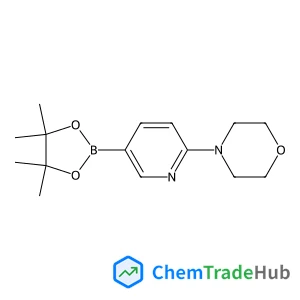
4-(5-(4,4,5,5-tetramethyl-1,3,2-dioxaborolan-2-yl)pyridin-2-yl)morpholine
CAS番号:
485799-04-0
分子式:
C15H23BN2O3
おすすめサプライヤー






免責事項
このページに表示される学術雑誌情報は、参考および研究目的のみを目的としています。当社は雑誌出版社とは提携しておらず、投稿の取り扱いも行っておりません。出版に関するお問い合わせは、各雑誌出版社に直接ご連絡ください。
表示されている情報に誤りがある場合は、support@chemtradehub.com までご連絡ください。迅速に確認し、対応いたします。