


![4-{2-[4-(2-Methyl-2-propanyl)phenyl]ethoxy}quinazoline structure](https://static.chemtradehub.com/structs/120/120928-09-8-d3db.webp "4-{2-[4-(2-Methyl-2-propanyl)phenyl]ethoxy}quinazoline structure")
Zinc-doping in TiO2 films to enhance electron transport in dye-sensitized solar cells under low-intensity illumination
文献情報
出版日
2009-08-18
DOI
10.1039/B912672D
インパクトファクター
3.676
著者
Kai-Ping Wang, Hsisheng Teng
原文を見る
要旨
A nanocrystalline TiO2 film with highly dispersed Zn-doping shows its capability for efficient electron transport in dye-sensitized solar cells (DSSCs). The Zn-doping is conducted viaZn2+ introduction into a layered titanate followed by hydrothermal treatment and calcination. The Zn-doped films exhibit an elevated electron Fermi level, which may enhance band bending to lower the density of empty trap states. Because of this Zn-doping, the consequent DSSCs can alleviate the decay of light-to-electric energy conversion efficiency due to light intensity reduction. Intensity-modulated spectroscopic analysis reveals that enhanced transport of photogenerated electrons as a result of the trap density minimization is responsible for the high cell performance under low-intensity illumination. A Zn-doping content of ca. 0.4 at% Zn/Ti can enhance the light conversion efficiency by 23% at a solar light intensity as low as 11 mW cm−2. This technique can significantly extend the indoor application of DSSCs.
おすすめジャーナル

Molecular Pharmacology

Journal of Organometallic Chemistry

Proceedings of the National Academy of Sciences of the United States of America

Journal of Heterocyclic Chemistry

Helvetica Chimica Acta

Russian Chemical Reviews

Science Progress

Planta Medica

Kinetics and Catalysis

Organic Preparations and Procedures International
関連文献
A thermodynamic model to predict electron mobility in superfluid helium
Frédéric Aitken, Ferdinand Volino, Luis Guillermo Mendoza-Luna, Klaus von Haeften, Jussi Eloranta
2017-05-23
Paper
DOI: 10.1039/C7CP03067C
Buckling behaviour of composites with double walled nanotubes from carbon and phosphorus
Jing Wan, Likui Yang, Ning Wei, Jiao Shi, Qing-Hua Qin
2017-03-28
Paper
DOI: 10.1039/C7CP01274H
Path integral-GC-AdResS simulation of a large hydrophobic solute in water: a tool to investigate the interplay between local microscopic structures and quantum delocalization of atoms in space
Animesh Agarwal, Cecilia Clementi, Luigi Delle Site
2017-04-28
Paper
DOI: 10.1039/C7CP01629H
Reduction and oxidation of Au adatoms on the CeO2(111) surface – DFT+U versus hybrid functionals
Christopher Penschke, Joachim Paier
2017-04-24
Paper
DOI: 10.1039/C7CP01785E
Electrode potential dependent desolvation and resolvation of germanium(100) in contact with aqueous perchlorate electrolytes
Fang Niu, Rainer Schulz, Arcesio Castañeda Medina, Rochus Schmid
2017-05-10
Paper
DOI: 10.1039/C6CP08908A
DFT-D3 study of H2 and N2 chemisorption over cobalt promoted Ta3N5-(100), (010) and (001) surfaces
Constantinos D. Zeinalipour-Yazdi, Justin S. J. Hargreaves, Said Laassiri
2017-04-24
Paper
DOI: 10.1039/C7CP00806F
Phonons spreading from laser-heated gold nanoparticle array accelerate diffusion of excitons in an underlying polythiophene thin film
David Rais, Miroslav Menšík, Bartosz Paruzel, Dharmalingam Kurunthu, Jiří Pfleger
2017-03-24
Paper
DOI: 10.1039/C7CP00286F
Visualization of structural evolution and phase distribution of a lithium vanadium oxide (Li1.1V3O8) electrode via an operando and in situ energy dispersive X-ray diffraction technique
Qing Zhang, Andrea M. Bruck, David C. Bock, Jing Li, Varun Sarbada, Eric A. Stach
2017-05-03
Paper
DOI: 10.1039/C7CP02239E
Growth of low doped monolayer graphene on SiC(0001) via sublimation at low argon pressure
Périne Landois, Tianlin Wang, Abir Nachawaty, Maxime Bayle, Jean-Manuel Decams, Wilfried Desrat, Ahmed-Azmi Zahab, Benoît Jouault, Matthieu Paillet, Sylvie Contreras
2017-05-12
Paper
DOI: 10.1039/C7CP01012E
Surface chemistry of propanal, 2-propenol, and 1-propanol on Ru(001)
Dominic A. Esan, Michael Trenary
2017-03-06
Paper
DOI: 10.1039/C6CP08893G
こちらもおすすめ
化合物よくある質問
2-メトキシ-4-(メチルスルフィニル)アミンの主な用途は何ですか?
2-メトキシ-4-(メチルスルフィニル)アミンは、主に医薬品および農薬の製造に使用されます。また、合成化学の一部として研究用材料としても利用されます。
41608-73-52-Methoxy-4-(methyls...
118684-13-24-(Bromomethyl)-3-me...
化合物よくある質問
4,6-二氯-N-甲基ピラミジンアミンの代替品はありますか?
代替品としては、4,6-二クロロピラミジンアミンや他のピラミジン系化合物が考えられます。ただし、目的と用途によって最適な代替品は異なります。
10397-15-64,6-Dichloro-N-methy...
化合物よくある質問
6-氯-4-甲基-1H-吲哚を含む廃棄物はどのように処理すべきですか?
6-氯-4-甲基-1H-吲哚の廃棄物は、適切な容器に収集し、密閉して保管します。温度は常温、湿度は低く、直射日光を避けて保管することを推奨します。廃棄処理は専門...
885520-84-36-chloro-4-methyl-1H...
化合物よくある質問
2-フローユロ-4-(トリフルオロメチル)ベンゾイドについて「に適用される法規ガイドラインは何ですか」
2-フローユロ-4-(トリフルオロメチル)ベンゾイドのCAS番号は207974-08-1です。この化合物はGHS分類で毒性物質と有害な反応物質として分類されます...
207974-08-1[2-Fluoro-4-(trifluo...
化合物よくある質問
4-ニトロフェニルN-[(ベンゼルオキシルカーボンイル]グリシングリシングリシン酸はどのように保存すればよいですか?
4-ニトロフェニルN-[(ベンゼルオキシルカーボンイル]グリシングリシングリシン酸は、室温で暗所に保管し、乾燥した環境で保存することを推奨します。容器は密閉性の...
19811-64-44-Nitrophenyl N-[(be...
化合物よくある質問
イソデスロラタドリンの代替品はありますか?
イソデスロラタドリンの代替品としては、デスロラタドリンや他の抗ヒスタミン薬が挙げられます。具体的には、デスロラタドリン、ラセカミド、フェルタドリンなどが、症状や...
183198-49-4Iso Desloratadine
化合物よくある質問
5-甲氧基-1,2,3,4-四氢异喹啉盐酸盐はどのように合成されますか?
5-甲氧基-1,2,3,4-四氢异喹啉盐酸盐の一般的な合成方法は、メタノール中で5-メトキシ-1,2,3,4-四ヒュドロイソキシンを塩酸で塩化します。この反応で...
103030-69-95-Methoxy-1,2,3,4-te...
化合物よくある質問
4-アミノ-5-メトキシ-2-トルエンサルホニック酸についての法規ガイドラインは何ですか?
CAS番号6471-78-9の4-アミノ-5-メトキシ-2-トルエンサルホニック酸は、GHS分類では corrosive(腐食性)と識別されます。EUのREAC...
6471-78-94-Amino-5-Methoxy-2-...
化合物よくある質問
甲基孕酮を取り扱う際の実験室安全事項は何ですか?
甲基孕酮の取り扱いは、PPE(個人保護具)の使用が必要な重要な安全事項を伴います。防塵マスク、ゴーグル、手袋を着用することが推奨されます。ドラフトチャンバーを使...
204063-33-22-[(Diphenylmethyl)a...
掲載誌
Physical Chemistry Chemical Physics

CiteScore:
5.5
自己引用率:
10.3%
年間論文数:
3036
Physical Chemistry Chemical Physics (PCCP) is an international journal co-owned by 19 physical chemistry and physics societies from around the world. This journal publishes original, cutting-edge research in physical chemistry, chemical physics and biophysical chemistry. To be suitable for publication in PCCP, articles must include significant innovation and/or insight into physical chemistry; this is the most important criterion that reviewers and Editors will judge against when evaluating submissions. The journal has a broad scope and welcomes contributions spanning experiment, theory, computation and data science. Topical coverage includes spectroscopy, dynamics, kinetics, statistical mechanics, thermodynamics, electrochemistry, catalysis, surface science, quantum mechanics, quantum computing and machine learning. Interdisciplinary research areas such as polymers and soft matter, materials, nanoscience, energy, surfaces/interfaces, and biophysical chemistry are welcomed if they demonstrate significant innovation and/or insight into physical chemistry. Joined experimental/theoretical studies are particularly appreciated when complementary and based on up-to-date approaches.
おすすめ化合物
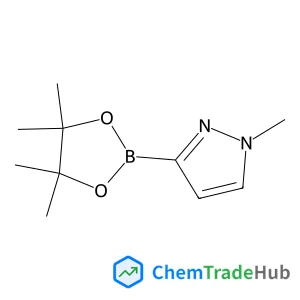
1-Methyl-3-(4,4,5,5-tetramethyl-1,3,2-dioxaborolan-2-yl)-1H-pyrazole
CAS番号:
1020174-04-2
分子式:
C10H17BN2O2
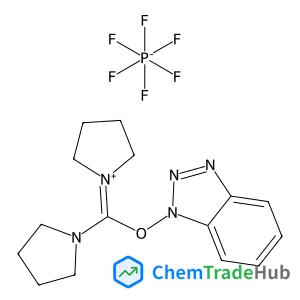
(1H-Benzotriazol-1-yloxy)(di-1-pyrrolidinyl)methylium hexafluorophosphate
CAS番号:
105379-24-6
分子式:
C15H21F6N5OP
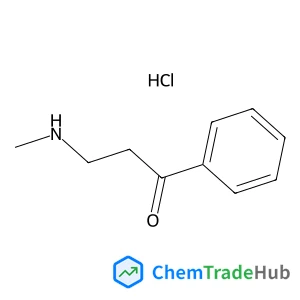
![N-[(Benzyloxy)carbonyl]serine structure](https://static.chemtradehub.com/structs/276/2768-56-1-77f7.webp "N-[(Benzyloxy)carbonyl]serine structure")
おすすめサプライヤー




免責事項
このページに表示される学術雑誌情報は、参考および研究目的のみを目的としています。当社は雑誌出版社とは提携しておらず、投稿の取り扱いも行っておりません。出版に関するお問い合わせは、各雑誌出版社に直接ご連絡ください。
表示されている情報に誤りがある場合は、support@chemtradehub.com までご連絡ください。迅速に確認し、対応いたします。