












Evaluation of molecular modelling methods to predict the sequence-selectivity of DNA minor groove binding ligands
文献情報
出版日
2009-10-14
DOI
10.1039/B911702D
インパクトファクター
3.676
著者
Hao Wang, Charles A. Laughton
原文を見る
要旨
The accurate prediction of ligand–receptor interaction energies by molecular modelling methods remains challenging. Predicting and understanding the sequence-selectivity of DNA minor groove-binding ligands constitutes a particularly interesting and potentially valuable aspect of this. Here, we use experimental data on the binding of Hoechst 33258 to the minor groove of various A/T-rich DNA duplexes to evaluate the reliability of a popular class of molecular modelling methods based on the energetic analysis of molecular dynamics (MD) simulations. We examine how performance depends on the use of explicit versus implicit solvent models, on the use of generalised Born versus Poisson–Boltzmann models to evaluate solvent-associated energetic terms, and the use of normal mode analysis to evaluate entropic factors. Quantitatively evaluating many different combinations of methodologies, we find that the most reliable results are obtained when the MD simulations are performed in explicit solvent, when the data is processed using the MM-PB/SA approach, and when normal mode analysis is used to estimate configurational entropy changes.
関連文献
Anisotropic and amphoteric characteristics of diverse carbenes
D. ChangMo Yang, Jenica Marie L. Madridejos, Amir Hajibabaei, Chunggi Baig, Kwang S. Kim
2018-03-15
Paper
DOI: 10.1039/C8CP00457A
Temperature dependence of phonon properties in CVD MoS2 nanostructures – a statistical approach
Jarosław Judek, Arkadiusz P. Gertych, Karolina Czerniak, Mariusz Zdrojek
2018-05-16
Paper
DOI: 10.1039/C8CP01232F
La–La bonded dimetallofullerenes [La2@C2n]−: species for stabilizing C2n (2n = 92–96) besides La2C2@C2n
Qiao-Zhi Li, Ling He, Shigeru Nagase, Xiang Zhao
2018-04-23
Paper
DOI: 10.1039/C8CP01371C
Anionic merocyanine dyes based on thiazol-2-hydrazides: reverse solvatochromism, preferential solvation and multiparametric approaches to spectral shifts
Arindam Mukhopadhyay, Krishna J. Mandal, Jarugu Narasimha Moorthy
2018-01-15
Paper
DOI: 10.1039/C7CP06766F
Ab initio calculations of heavy-actinide hexahalide compounds: do these heavy actinides behave like their isoelectronic lanthanide analogues?
Cristian Celis-Barros, María J. Beltrán-Leiva
2017-12-22
Paper
DOI: 10.1039/C7CP06585J
Group-VIII transition metal boride as promising hydrogen evolution reaction catalysts
Guang-Feng Wei, Ling-Ran Zhang, Zhi-Pan Liu
2018-09-04
Paper
DOI: 10.1039/C8CP05079A
Thermodynamic evidence of flexibility in H2O and CO2 absorption of transition metal ion exchanged zeolite LTA
Xin Guo, Lili Wu, Alexandra Navrotsky
2018-01-11
Paper
DOI: 10.1039/C7CP08188J
Short-range ion dynamics in methylammonium lead iodide by multinuclear solid state NMR and 127I NQR
Alessandro Senocrate, Igor Moudrakovski, Joachim Maier
2018-07-11
Paper
DOI: 10.1039/C8CP01535J
Ordering of lipid membranes altered by boron nitride nanosheets
Yonghui Zhang, Zhen Li, Chun Chan, Jiale Ma, Chunyi Zhi, Xiaolin Cheng
2017-11-22
Paper
DOI: 10.1039/C7CP07136A
Potential of polarizable force fields for predicting the separation performance of small hydrocarbons in M-MOF-74
Tim M. Becker, Azahara Luna-Triguero, Jose Manuel Vicent-Luna, Li-Chiang Lin, David Dubbeldam, Sofia Calero, Thijs J. H. Vlugt
2018-10-30
Paper
DOI: 10.1039/C8CP05750H
こちらもおすすめ
化合物よくある質問
3-(2-オキサプロピル)ベンzoic酸はどのように合成されますか?
3-(2-オキサプロピル)ベンzoic酸は、ベンzoic酸とプロパノ酸をヒドロキシム化合物として反応させて生成します。具体的には、ベンzoic酸とプロパノ酸を反...
205927-63-53-(2-Oxopropyl)benzo...
114873-01-73-Fluoro-N-{[(2-meth...
化合物よくある質問
4-メチル-4-ピペリジニル-1-ピロリドイン甲酸の主な用途は何ですか?
4-メチル-4-ピペリジニル-1-ピロリドイン甲酸は、主に医薬品の合成材料や研究用物質として使用されます。さらに、一部の薬理学的研究にも応用されています。
885523-47-7(4-Methyl-4-piperidi...
化合物よくある質問
Biotin-PEG3-oxyamine HCl塩について、適切な化合物名称に適用される法規ガイドラインは何ですか?
Biotin-PEG3-oxyamine HCl塩は、GHS( Globally Harmonized System of Classification and...
1786206-22-1Biotin-PEG3-oxyamine...
化合物よくある質問
N-(4-イソチオシアネートフェニル)-2-メトキシアリニンはどのように合成されますか?
N-(4-イソチオシアネートフェニル)-2-メトキシアリニンは、4-イソチオシアノフェノールと2-メトキシアリニルアミンのアミニド反応を用いて合成されます。この...
915919-57-2N-(4-Isothiocyanatop...
化合物よくある質問
金粉蕨亭2'-O-葡萄糖甙の主な用途は何ですか?
金粉蕨亭2'-O-葡萄糖甙は主に薬理研究や医薬品製造に使用され、抗炎症作用や抗がん作用などがあります。また、その構造や性質から、合成化学や化学生理学の研究にも用...
76947-60-92-(7-Hydroxy-2,2,4,6...
化合物よくある質問
2-(2-ニトロフェニル)酢酸ヒドライドの物理化学的性質は何ですか?
2-(2-ニトロフェニル)酢酸ヒドライドのCAS番号は114953-81-0です。この化合物は白色結晶性粉末で、分子量は244.12です。水溶性は限られており、...
114953-81-02-(2-Nitrophenyl)ace...
化合物よくある質問
5-(ヒドロキシメチル)-2-チオキソ-2,3-ジヒドロピリミジン-4(1H)-オンを取り扱う際の実験室安全事項は何ですか?
この化合物は高活性のため、取り扱いには注意が必要です。PPE(個人保護具)としてゴーグル、ガントリー、および防滴シールドを着用することが推奨されます。ドラフトチ...
93185-31-05-(Hydroxymethyl)-2-...
化合物よくある質問
11-脱氢血栓烷 b2の市場動向や研究トレンドはどうですか?
11-脱氢血栓烷 b2は、血栓溶解・抗凝固作用に関する研究で注目を集めています。特に心血管疾患の治療法開発において、市場の需要が高まっています。研究トレンドとし...
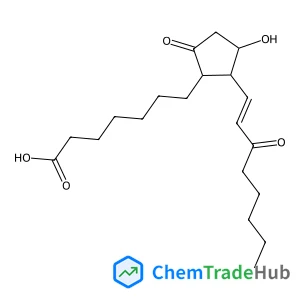
67910-12-77-{(2R,3S,4S)-4-Hydr...
化合物よくある質問
3,3-二甲基哌啶-4-酮はどのように保存すればよいですか?
3,3-二甲基哌啶-4-酮は避光、常温、乾燥した場所で保存してください。容器は密閉し、遠くから火源を離して保管することを確認してください。
150668-82-93,3-Dimethyl-4-piper...
掲載誌
Physical Chemistry Chemical Physics

CiteScore:
5.5
自己引用率:
10.3%
年間論文数:
3036
Physical Chemistry Chemical Physics (PCCP) is an international journal co-owned by 19 physical chemistry and physics societies from around the world. This journal publishes original, cutting-edge research in physical chemistry, chemical physics and biophysical chemistry. To be suitable for publication in PCCP, articles must include significant innovation and/or insight into physical chemistry; this is the most important criterion that reviewers and Editors will judge against when evaluating submissions. The journal has a broad scope and welcomes contributions spanning experiment, theory, computation and data science. Topical coverage includes spectroscopy, dynamics, kinetics, statistical mechanics, thermodynamics, electrochemistry, catalysis, surface science, quantum mechanics, quantum computing and machine learning. Interdisciplinary research areas such as polymers and soft matter, materials, nanoscience, energy, surfaces/interfaces, and biophysical chemistry are welcomed if they demonstrate significant innovation and/or insight into physical chemistry. Joined experimental/theoretical studies are particularly appreciated when complementary and based on up-to-date approaches.
おすすめ化合物
おすすめサプライヤー




免責事項
このページに表示される学術雑誌情報は、参考および研究目的のみを目的としています。当社は雑誌出版社とは提携しておらず、投稿の取り扱いも行っておりません。出版に関するお問い合わせは、各雑誌出版社に直接ご連絡ください。
表示されている情報に誤りがある場合は、support@chemtradehub.com までご連絡ください。迅速に確認し、対応いたします。