












![[4-(Heptyloxy)phenyl]boronic acid structure](https://static.chemtradehub.com/structs/136/136370-19-9-ad33.webp "[4-(Heptyloxy)phenyl]boronic acid structure")
The origin of the large bending enhancement of the reaction of C2H2+ with methane: the effects of bending momentum, ruling out the precursor mechanism, and steps toward “Polanyi rules” for polyatomic reactions
文献情報
出版日
2009-07-28
DOI
10.1039/B908328F
インパクトファクター
3.676
著者
Jianbo Liu, Scott L. Anderson
原文を見る
要旨
Quasi-classical trajectories for the hydrogen abstraction (HA) reaction C2H2++ CH4→ C2H3++ CH3, were analyzed to probe the mechanistic origins of the large, mode-specific reactivity enhancement observed experimentally following excitation of the C2H2+cis-bending mode. The trajectories show the correct trend in reactivity vs. CC stretch and bending excitations, and also reproduce the experimental recoil velocity map. Analysis of the trajectories shows that at collision energy of 0.5 eV hydrogen abstraction is dominated by a direct mechanism, but ∼15% of the reaction is mediated by a precursor complex. The vibrational enhancement mostly comes from direct collisions. The bending vibration enhances the reactivity in two ways. Collisions in bent geometries (of C2H2+) are more reactive; however, the dominant vibrational effect is a consequence of the momentum associated with the bending vibration. Enhancement by vibrational momentum is reminiscent of the behavior seen by Polanyi and co-workers for late barrier A + BC reactions, and indeed, the atom transfer event in the C2H2++ CH4 system does occur late in the collision. We, therefore, explore the possibilities for interpreting polyatomic vibrational dynamics in a “Polanyi Rule” context, using trajectories to guide the construction of a reduced dimensionality surface.
おすすめジャーナル
関連文献
Atomistic non-adiabatic dynamics of the LH2 complex with a GPU-accelerated ab initio exciton model
Clem Stross, Simon McIntosh-Smith, Edward G. Hohenstein, Fred R. Manby
2017-03-28
Paper
DOI: 10.1039/C7CP00492C
Local pH and effective pKA of weak polyelectrolytes – insights from computer simulations
Lucie Nová, Filip Uhlík, Peter Košovan
2017-02-28
Paper
DOI: 10.1039/C7CP00265C
A thermodynamic model to predict electron mobility in superfluid helium
Frédéric Aitken, Ferdinand Volino, Luis Guillermo Mendoza-Luna, Klaus von Haeften, Jussi Eloranta
2017-05-23
Paper
DOI: 10.1039/C7CP03067C
Single-layer MoS2 formation by sulfidation of molybdenum oxides in different oxidation states on Au(111)
Norberto Salazar, Igor Beinik, Jeppe V. Lauritsen
2017-04-20
Paper
DOI: 10.1039/C7CP00958E
Electrode potential dependent desolvation and resolvation of germanium(100) in contact with aqueous perchlorate electrolytes
Fang Niu, Rainer Schulz, Arcesio Castañeda Medina, Rochus Schmid
2017-05-10
Paper
DOI: 10.1039/C6CP08908A
Multichromophoric hybrid species made of perylene bisimide derivatives and Ru(ii) and Os(ii) polypyridine subunits
Francesco Nastasi, Giuseppina La Ganga, Sebastiano Campagna, Zois Syrgiannis, Francesco Rigodanza, Stefania Vitale, Antonino Licciardello
2017-05-03
Paper
DOI: 10.1039/C7CP01597F
Determination of paramagnetic concentrations inside a diamagnetic matrix using solid-state NMR
Sébastien Maron, Nadège Ollier, Thierry Gacoin, Géraldine Dantelle
2017-04-11
Paper
DOI: 10.1039/C7CP00451F
Electron transfer in silicon-bridged adjacent chromophores: the source for blue-green emission
Malgorzata Bayda, Gonzalo Angulo, Jerzy Karolczak, Jacek Koput, Jacek Dobkowski, Bronislaw Marciniak
2017-04-03
Paper
DOI: 10.1039/C7CP00590C
On exo-cyclic aromaticity
Tamal Goswami, Manoswita Homray, Satadal Paul, Debojit Bhattacharya, Anirban Misra
2017-04-18
Communication
DOI: 10.1039/C7CP02031G
Intrinsic ferromagnetism and quantum anomalous Hall effect in a CoBr2 monolayer
2017-05-11
Communication
DOI: 10.1039/C7CP02158E
こちらもおすすめ
化合物よくある質問
2-メトキシ-4-(メチルスルフィニル)アミンの主な用途は何ですか?
2-メトキシ-4-(メチルスルフィニル)アミンは、主に医薬品および農薬の製造に使用されます。また、合成化学の一部として研究用材料としても利用されます。
41608-73-52-Methoxy-4-(methyls...
118684-13-24-(Bromomethyl)-3-me...
化合物よくある質問
4,6-二氯-N-甲基ピラミジンアミンの代替品はありますか?
代替品としては、4,6-二クロロピラミジンアミンや他のピラミジン系化合物が考えられます。ただし、目的と用途によって最適な代替品は異なります。
10397-15-64,6-Dichloro-N-methy...
化合物よくある質問
6-氯-4-甲基-1H-吲哚を含む廃棄物はどのように処理すべきですか?
6-氯-4-甲基-1H-吲哚の廃棄物は、適切な容器に収集し、密閉して保管します。温度は常温、湿度は低く、直射日光を避けて保管することを推奨します。廃棄処理は専門...
885520-84-36-chloro-4-methyl-1H...
化合物よくある質問
2-フローユロ-4-(トリフルオロメチル)ベンゾイドについて「に適用される法規ガイドラインは何ですか」
2-フローユロ-4-(トリフルオロメチル)ベンゾイドのCAS番号は207974-08-1です。この化合物はGHS分類で毒性物質と有害な反応物質として分類されます...
207974-08-1[2-Fluoro-4-(trifluo...
化合物よくある質問
4-ニトロフェニルN-[(ベンゼルオキシルカーボンイル]グリシングリシングリシン酸はどのように保存すればよいですか?
4-ニトロフェニルN-[(ベンゼルオキシルカーボンイル]グリシングリシングリシン酸は、室温で暗所に保管し、乾燥した環境で保存することを推奨します。容器は密閉性の...
19811-64-44-Nitrophenyl N-[(be...
化合物よくある質問
イソデスロラタドリンの代替品はありますか?
イソデスロラタドリンの代替品としては、デスロラタドリンや他の抗ヒスタミン薬が挙げられます。具体的には、デスロラタドリン、ラセカミド、フェルタドリンなどが、症状や...
183198-49-4Iso Desloratadine
化合物よくある質問
5-甲氧基-1,2,3,4-四氢异喹啉盐酸盐はどのように合成されますか?
5-甲氧基-1,2,3,4-四氢异喹啉盐酸盐の一般的な合成方法は、メタノール中で5-メトキシ-1,2,3,4-四ヒュドロイソキシンを塩酸で塩化します。この反応で...
103030-69-95-Methoxy-1,2,3,4-te...
化合物よくある質問
4-アミノ-5-メトキシ-2-トルエンサルホニック酸についての法規ガイドラインは何ですか?
CAS番号6471-78-9の4-アミノ-5-メトキシ-2-トルエンサルホニック酸は、GHS分類では corrosive(腐食性)と識別されます。EUのREAC...
6471-78-94-Amino-5-Methoxy-2-...
化合物よくある質問
甲基孕酮を取り扱う際の実験室安全事項は何ですか?
甲基孕酮の取り扱いは、PPE(個人保護具)の使用が必要な重要な安全事項を伴います。防塵マスク、ゴーグル、手袋を着用することが推奨されます。ドラフトチャンバーを使...
204063-33-22-[(Diphenylmethyl)a...
掲載誌
Physical Chemistry Chemical Physics

CiteScore:
5.5
自己引用率:
10.3%
年間論文数:
3036
Physical Chemistry Chemical Physics (PCCP) is an international journal co-owned by 19 physical chemistry and physics societies from around the world. This journal publishes original, cutting-edge research in physical chemistry, chemical physics and biophysical chemistry. To be suitable for publication in PCCP, articles must include significant innovation and/or insight into physical chemistry; this is the most important criterion that reviewers and Editors will judge against when evaluating submissions. The journal has a broad scope and welcomes contributions spanning experiment, theory, computation and data science. Topical coverage includes spectroscopy, dynamics, kinetics, statistical mechanics, thermodynamics, electrochemistry, catalysis, surface science, quantum mechanics, quantum computing and machine learning. Interdisciplinary research areas such as polymers and soft matter, materials, nanoscience, energy, surfaces/interfaces, and biophysical chemistry are welcomed if they demonstrate significant innovation and/or insight into physical chemistry. Joined experimental/theoretical studies are particularly appreciated when complementary and based on up-to-date approaches.
おすすめ化合物

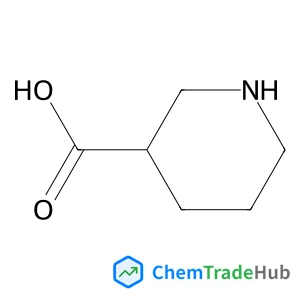
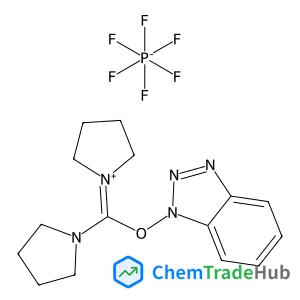
(1H-Benzotriazol-1-yloxy)(di-1-pyrrolidinyl)methylium hexafluorophosphate
CAS番号:
105379-24-6
分子式:
C15H21F6N5OP
おすすめサプライヤー



免責事項
このページに表示される学術雑誌情報は、参考および研究目的のみを目的としています。当社は雑誌出版社とは提携しておらず、投稿の取り扱いも行っておりません。出版に関するお問い合わせは、各雑誌出版社に直接ご連絡ください。
表示されている情報に誤りがある場合は、support@chemtradehub.com までご連絡ください。迅速に確認し、対応いたします。